Exposition Art Blog

Jakob Weidemann - Abstract Expressionism


 Jakob Weidemann (1923 –2001) was a Norwegian artist. Jakob Weidemann is regarded as one of Norway's more important artists of post-war Modernism. Weidemann's work Storfuglen letter (1959) was selected as one of the twelve most important Norwegian artworks by Morgenbladet.
His first solo exhibition was at Paus Knudsens Kunsthandel in 1942. Weidemann joined the Norwegian resistance movement during the Occupation of Norway by Nazi Germany, was arrested but escaped to Sweden in 1944. While there he was the victim of an accident in which an explosive charge blew up in such a way that he was blinded. He regained his sight, but then only in the left eye. The experience of being blind may have been decisive for the direction his art was later to take – towards an explosion of color and light
 Weidemann is considered to have been become one of the more influential artists within Norwegian modernism in the 1950s. After some experimentation with different styles in the 1940s and 1950, Weidemann finally settled in what can be called expressive, lyrically abstract art. Abstract expressionism with nature as inspiration and basis became characteristic of work by Weidemann.Wikipedia


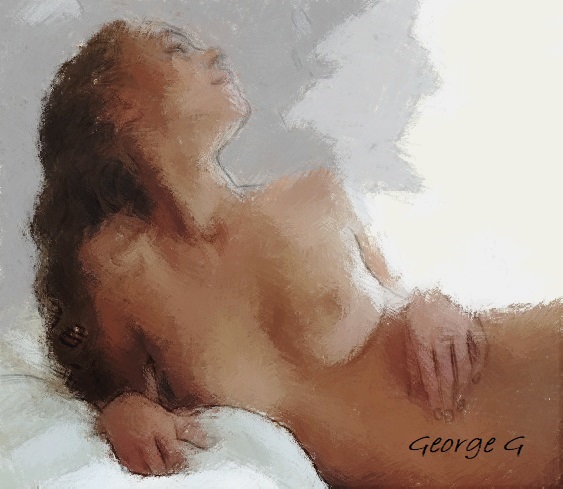
George Georgiou


 Accomplish professional Artist/Sculptor, Landscape Architect and Interior Designer with over forty five years of experience, working with numerous mediums. Giorgos has undertaken numerous art and sculpting commissions worldwide. He has exhibited in numerous galleries internationally in both solo and joint exhibitions with many fellow accomplished artists, including Lilia Pissaro, the great, great, great granddaughter of Camille Pissaro (the father of Impressionism).
He has undertaken work for several world famous establishments, including Madame Tussards (London), Disneyworld (USA) and many more; including TV and movie film companies. Clients include Sheiks, politicians, footballers and many well-known celebrities.
Devoted life to his Art and giving his public the pleasures and happiness that they will experience from his work. He seeks perfection in the vast variety of mediums and techniques he applies to his work. He believes that there is never a time when you can say your work is perfect, because that's the day you give up seeking the best. From detailed artwork (in the style of the Classics), to impressionistic forms and figures to catch the onlookers attention.With years, Giorgos has mastered various mediums and techniques, which are reflected in his work. He revels in using soft pastels, oils, watercolours, oil pastels, charcoal, or a combinations of each to produce dramatic and stunning art pieces that offer hours of pleasure to those fortunate enough to view or own some of his work.
Whether landscape or figurative, his work seeks to open our minds and senses to reality of the mood or the beauty of the characters. Monochrome or colour. Each of his works offer a mystery; a variety of feelings and senses that compel the viewer to search within themselves for meanings.
Currently, based in Cyprus, Giorgos is working continuously at his Studio. He undertakes private commissions for work; both at home and overseas; whether portrait, landscape, figurative or themed.
Recent work has been based on figurative monochromes in either pastels, watercolour; or combined; that are created to enhance the beauty of the female figure. It leaves it to your imagination as to whether the female is large/petite, shapely or slim.

 More works by this artist


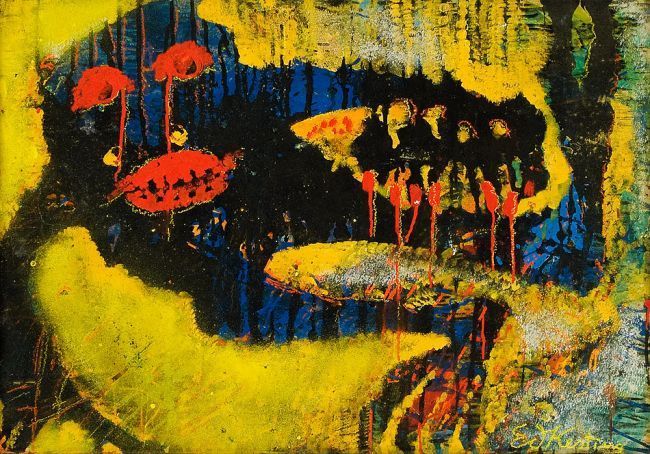
Edmund Kesting - European Avant-Garde Art


 Edmund Kesting ( 1892 –1970 ) was a German photographer, painter and art professor.
He studied until 1916 at the Dresden Academy of Fine Arts before participating as a soldier in the First World War, upon returning his painting teachers were Richard Müller and Otto Gussmann and in 1919 he began to teach as a professor at the private school Der Weg. In 1923 he had his first exposition in the gallery Der Sturm in which he showed photograms. When Der Weg opened a new academy in Berlin in 1927, he moved to the capital.He formed relations with other vanguardists in Berlin and practiced various experimental techniques such as solarization, multiple images and photograms, for which reason twelve of his works were considered degenerate art by the Nazi regime and were prohibited. He participated in the controversy between socialist realism and formalism that took place in the German Democratic Republic, therefore his work was not realist and could not be shown in the country between 1949 and 1959. In 1955 he began to experiment with chemical painting, making photographs without the use of a camera and only with the use of chemical products such as the developer and the fixer and photographic paper, for which he made exposures to light using masks and templates. Between 1956 and 1967 he was a professor at the Academy of Cinema and Television of Potsdam.His artistic work was not recognized by the authorities of the German Democratic Republic until 1980, ten years after his death.Wikipedia