Exposition Art Blog: illustrator
Showing posts with label illustrator. Show all posts

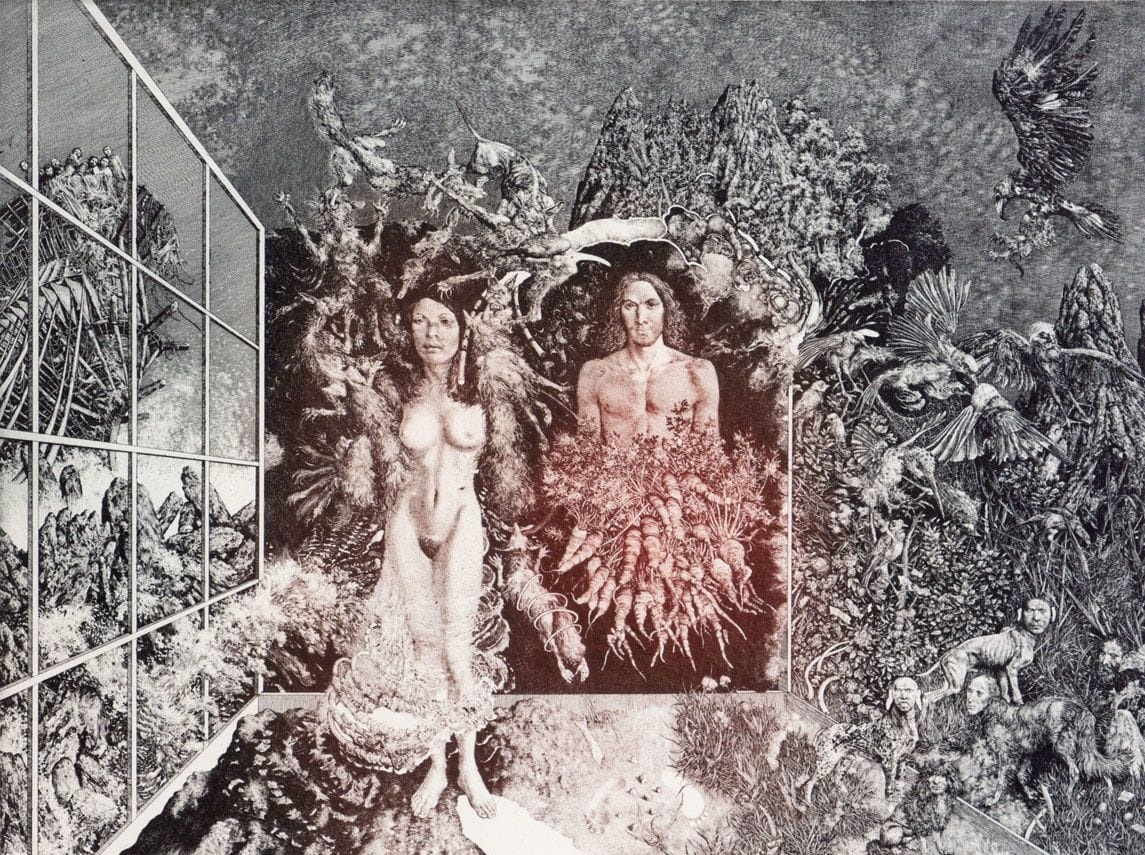
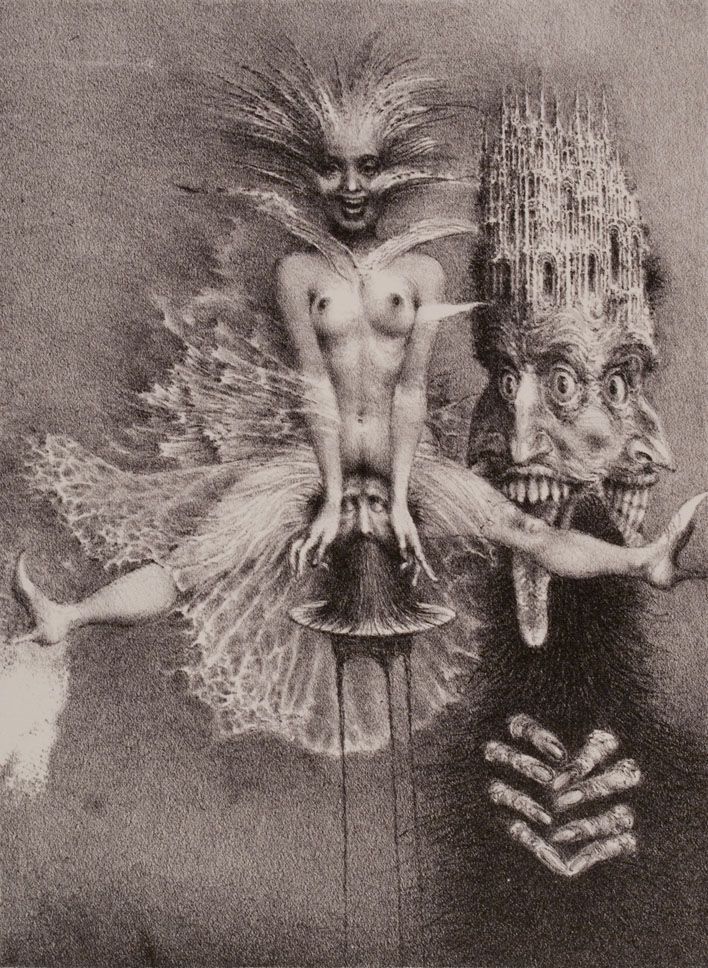
Albin Brunovsky


 Albin Brunovsky (1935 - 1997) was a Slovak painter, graphic artist, lithographer, illustrator and pedagogue, considered one of the greatest Slovak painters of the 20th century.
Over the course of his career, Brunovsky experimented with various graphic techniques and was highly influenced in his subject matter by poetry and literature, as well, of course, as by other artists. While at school he used the techniques of woodcuts and linocuts. Soon after, however, he began experimenting with "scraper" and chalk lithography. Etching were the characteristic mode of his graphic art work during the mid-1960s. He was, however, a painter too. Many of his illustrations were done in watercolor and he eventually began to paint major works. 


Jean Fautrier - Art Informel


 Jean Fautrier (1898 –1964) was a French painter, illustrator, printmaker, and sculptor. He was one of the most important practitioners of Tachisme.Jean Fautrier was born in Paris in 1898. He was given his unwed mother's surname and raised by his grandmother until she and his father both died in 1908. He then moved to London to be with his mother. There, in 1912, he began to study at the Royal Academy of Arts. Unsatisfied by instruction he thought too rigid, he left to study briefly at the Slade School, which was reputed to be more avant-garde. He was disappointed again and decided to go it alone, devoting himself to painting. The works he saw in the Tate Gallery made a far greater impression on him; he especially admired the paintings of J. M. W. Turner. He was called up for the French Army in 1917, but was discharged in 1921 due to his poor health. He first exhibited his paintings at the Salon d'Automne in 1922 and at the Fabre Gallery in 1923. It was at the Galerie Fabre that he met art dealer Jeanne Castel, his first collector and friend. In 1923 he began producing etchings and engravings. His first solo exhibition was at the Galerie Visconti in Paris, in 1924.
In 1927, he painted a series of pictures (still lifes, nudes, landscapes) in which black dominates. In 1928 he met André Malraux through Castel. Malraux asked Fautrier to illustrate a text of his choice, but copyright issues kept him from using his first choice, Arthur Rimbaud’s ‘’Les Illuminations’’, and he settled instead with Dante’s Inferno. He produced 34 lithographs, but the publication, proposed by Gallimard, was deemed impossible and the project was abandoned in 1930. Until 1933 he divided his efforts between sculpture and painting. Short on funds, he spent the years 1934–1936 living in the resort of Tignes, where he made his living as a ski instructor and started a jazz club.
In 1939, just as World War II was beginning, Fautrier left the mountains, moving to Marseille, Aix-en-Provence, and Bordeaux before finally returning to Paris in 1940 and starting to paint once again. In Paris he met several poets and writers for whom he created illustrations. In January 1943, he was arrested by the German Gestapo. After brief imprisonment, he fled Paris and found refuge in Châtenay-Malabry, where he began work on the project of the Otages (or "Hostages"). These paintings were a response to the torture and execution of French citizens by the Nazis outside his residence, and were exhibited in 1945 with the Drouin gallery. In the years that followed, Fautrier worked on the illustrations of several works, among them L'Alleluiah by Georges Bataille, and made a series of paintings devoted to small familiar objects.
His late work is abstract, generally small in scale, often combining mixed media on paper. In 1960 he won the international grand prize at the Venice Biennale as well as another major award at the Tokyo Biennale the following year. He died in Châtenay-Malabry in 1964, the same year in which he had made donations to the Musée de l’Ile-de-France in Sceaux and Musée d’Art Moderne de la Ville de Paris. A retrospective of his work opened there later that year. and was organized by the Gianadda Foundation at Martigny in January–March 2005.Wikipedia


André Thomkins - European Abstract Art


André Thomkins (1930 - 1985) was a Swiss painter, illustrator, and poet.
"André Thomkins belongs to the most versatile Swiss artists of the 20th century. One of his most self-willed inventions is the Lackskins: A way of painting with liquid paint on water.
André Thomkins (1930-1985) is known as a superb draughtsman and word artist. Like no other he mastered all the classical image media. At the same time, however, he also experimented with different techniques and materials. In the middle 1950s, for example, he developed his Lackskins, in which he painted and drew on water with lacquer paint, and created pictures of enormous imaginative impact. The lacquer falls as drops or runs in a string onto the water and forms a skin, which continuously changes and at the same time can be manipulated. At a certain point Thomkins fixed the movement by lifting off the floating image onto a piece of paper. In this way the Lackskins offer themselves to both chance and artistic exploration. They require patience and willingness on the part of both the artist and the viewer, to take in the play of forms created by the paint and to discover the rich world of images therein.
With his Lackskins André Thomkins drew on old techniques such as the manufacture of marble paper and then expanded on these. During the heyday of abstract painting he concurrently found his own way and created links to the discussions among the artistic avant-garde of his time. For the first time ever, this magnificent body of work is shown in a comprehensive way in an exhibition. It reveals the surprisingly numerous facets of André Thomkins’ art and opens up a new approach to this fascinating œuvre. “Seen geographically”, said André Thomkins, “Lackskin floats just off the land of milk and honey…”(buendner-kunstmuseum.ch)


https://milenaolesinska.blogspot.com/p/blog-page_50.html

Meinrad Craighead - Artist, Scholar, and Vsionar


Meinrad Craighead (1936–2019) was an artist, scholar, and visionary, influential in the field of woman-centered religious art. Her work explores the human relationship to the Divine, particularly feminine images of God
Craighead moved to the Southwest after graduating from the University of Wisconsin to accept a teaching job in the art department at the College of St. Joseph on the Rio Grande in Albuquerque. Here, she taught classes, began printing gesso relief prints, and explored Native American traditions in the Southwest.
"Her approach to her work, as a sacred calling, as a communication with the many spirits she was in contact with, is an inspiration. 
She wrote:
My personal vision of God the Mother, incarnated in my mother and her mother, gave me, from childhood, the clearest certainty of woman as the truer image of Divine Spirit. Because she was a force living within me, she was more real, more powerful than the remote Fathergod I was educated to have faith in. I believed in her because I experienced her.…
I draw and pain from my own myth of personal origin. Each painting I make begins from some deep source where my mother and and grandmother, and all my fore-mothers, still live; it is as if the line moving from pen or brush coils back to the original Matrix. Sometimes I feel like a cauldron of ripening images where memories turn into faces and emerge from my vessel. So my creative life is itself an image of God the Mother and her unbroken story of emergence in our lives. "