Exposition Art Blog: modernist painter
Showing posts with label modernist painter. Show all posts

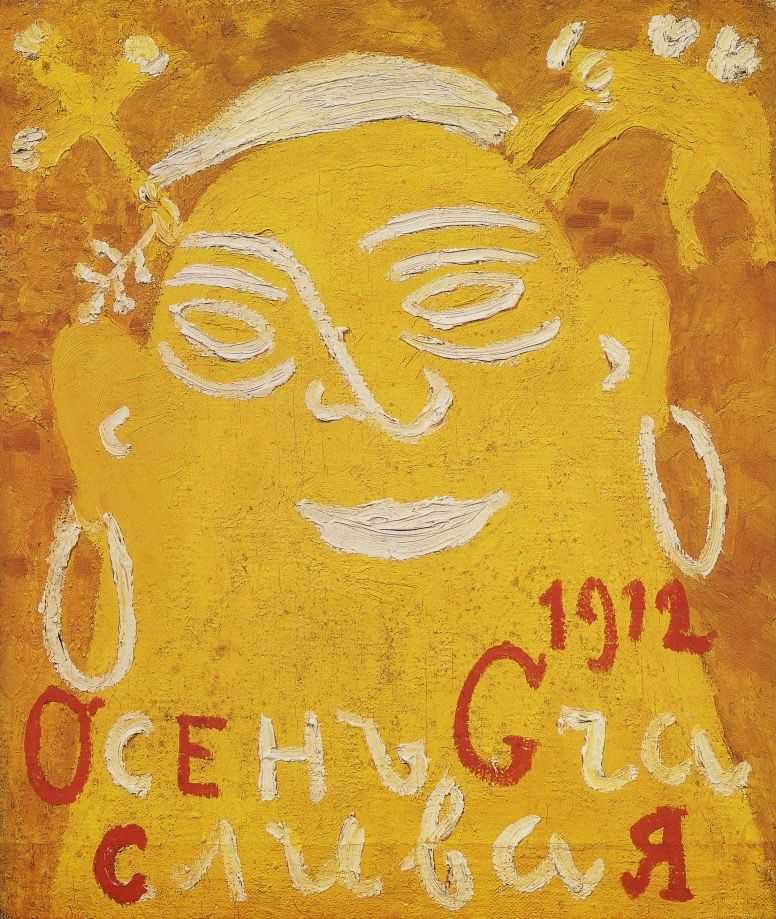
Rayonism Mikhail Larionov

Mikhail Fyodorovich Larionov (June 3, 1881 – May 10, 1964) was an avant-garde Russian painter.
Larionov was born at Tiraspol, in the Kherson Governorate of the Russian Empire. In 1898 he entered the Moscow School of Painting, Sculpture and Architecture under Isaac Levitan and Valentin Serov. He was suspended three times for his radical outlook. In 1900 he met Natalia Goncharova and formed a lifelong relationship with her.


 From 1902 his style was Impressionism. After a visit to Paris in 1906 he moved into Post-Impressionism and then a Neo-primitive style which derived partly from Russian sign painting. In 1908 he staged the Golden Fleece exhibition in Moscow, which included paintings by international avant-garde artists such as Matisse, Derain, Braque, Gauguin and Van Gogh. Other group shows promoted by him included Tatlin, Chagall and Malevich.
Larionov was a founding member of two important Russian artistic groups Jack of Diamonds (1909–1911) and the more radical Donkey's Tail (1912–1913). He gave names to both groups. His first solo show was for one day in Moscow in 1911. Larionov was influenced by the Georgian artist Niko Pirosmani.


 In 1913 he created Rayonism, which was the first creation of near-abstract art in Russia. He had a one-man show at the Omega Workshops.[1] In 1915 he left Russia and worked with the ballet owner Sergei Diaghilev in Paris on the productions of the Ballets Russes. He spent the rest of his life in France and obtained the French citizenship. He died, aged 82, in the Paris suburb of Fontenay-aux-Roses.
In 2001, the Central Bank of Transnistria minted a silver coin honoring this native of today's Transnistria, as part of a series of memorable coins called The Outstanding People of Pridnestrovie.
The highest price paid for a Larionov painting at auction is 2,200,000 British pounds.Wikipedia




Gregorio Prestopino

Gregorio Prestopino, (1907–1984) was an American artist, according to the art historian Irma B. Jaffe:"one of the major American painters who refused to reject the image, has devoted his career to depicting the human condition with a warmth tempered only by honesty"
By the mid-1940s and the 1950s he concentrated on large, solid images that were able to function as universals with heightened drama while preserving their qualities as specific expressionistic images. His more realistic studies are largely black and white and detail poor urban suffering. Exemplifying this style is the series of paintings done in 1957 for “Life” magazine in connection with an article on Green Haven, a New York state prison. During this time Prestopino received high recognition along with Ben Shahn and Philip Evergood, well-known social realist painters. In the late 1950s Prestopino used Harlem as his subject. He created paintings that inspired the well-known American movie makers, John Hubley and Faith Elliot. During the filming they never took the camera off the paintings. The film, "Harlem Wednesday", with a jazz score by Benny Carter, won first prize at the First International Festival of Art Film in Venice.


 In 1954, he became a director of the MacDowell Colony, beginning a lifelong association that profoundly influenced his art. In the MacDowell Colony he made friends with the painters Milton Avery, Sally Avery, Giorgio Cavllon, Linda Lindeberg and many others who were among the Fellows of MacDowell Colony.In 1958 Prestopino's landscape paintings were showing abstract tendencies. There is a noticeable cubist influence in his work as well. Much of his more cubist work uses brightly contrasting colors and involves human forms. Wet, sensuous color areas appeared on his canvases. Mythological figures, woods, brooks, fields, islands, mountains were joined-on powerful canvases that showed Prestopino’s new vitality. According to the celebrated photographer Russel Lynes “the sound of the city…gave way to the sounds of the country, the relentless of bricks and pavement and steel to the happy disorder of dappled things.Wikipedia


Hedda Sterne

Hedda Sterne (born Hedwig Lindenberg; August 4, 1910 – April 8, 2011)[1] was an artist best remembered as the only woman in a famous photograph of a group of Abstract Expressionists known as "The Irascibles" which consisted of Jackson Pollock, Willem de Kooning, Barnett Newman, Mark Rothko, and others. In her artistic endeavors she created a body of work known for exhibiting a stubborn independence from styles and trends, including Surrealism and Abstract Expressionism, with which she is often associated.Sterne has been almost completely overlooked in art historical narratives of the post-war American art scene. At the time of her death, possibly the last surviving artist of the first generation of the New York School, Hedda Sterne viewed her widely varied works more as in flux than as definitive statements. Wikipedia


 Hedda Sterne was a prolific artist whose independent approach to painting and drawing provides insight into our evolving understanding of the history of modern art. Born in Bucharest, Romania, Sterne began her formal artistic education in Vienna in the 1920s, and in Paris in the 1930s, where she exhibited with the Surrealists. Following her emigration to the United States in 1941, she became an active member of the New York School. Sterne’s work has been shown in more than 40 solo exhibitions, many at the Betty Parsons Gallery, and more than 70 group exhibitions in museums and galleries in the U.S. and abroad. Throughout her eight-decade-long career, Sterne’s artistic practice was a path of discovery in which her prolific oeuvre would defy any single categorization. She once said, “I use my work to delve into the deep questions of existence. My life is a work of art.”  Hedda Sterne’s varied and fluid styles reflect this artistic philosophy of “flux,” and distinguish Sterne as a unique figure in the history of 20th century art.(The Hedda Sterne Foundation)


Hedda Sterne was a key participant in influential movements of 20th-century art, including European Surrealism and the New York School. However, throughout her long career, Sterne was unconcerned with finding a signature style in her artistic practice. Unique among her contemporaries, Sterne chose to explore various techniques and sources of inspiration. The following select artworks represent various periods and themes from seven decades.
   “Hedda was always searching, never satisfied. She had many ways; most artists just have one way to go.”
    – Betty Parsons(The Hedda Sterne Foundation)


Charles Alston

Charles Henry Alston (November 28, 1907 – April 27, 1977) was an African-American painter, sculptor, illustrator, muralist and teacher who lived and worked in the New York City neighborhood of Harlem. Alston was active in the Harlem Renaissance; Alston was the first African-American supervisor for the Works Progress Administration's Federal Art Project. Alston designed and painted murals at the Harlem Hospital and the Golden State Mutual Life Insurance Building. In 1990 Alston's bust of Martin Luther King, Jr. became the first image of an African American displayed at the White House.Wikipedia


Alston's artistic style defies simple categorization and definition. His works range from detailed drawings concerned with realism, depth and modeling to extreme abstraction concerned with simplicity, flatness and pure expression. His art always remained to him an outlet for personal expression and growth, unbound by the restrictions of one particular genera. To Alston, "The whole creative thing is one of exploration of new or different areas," and in "developing or exploring an idea until you've gotten out of it everything you can, and beyond that, looking for unexplored areas." 


 The diversity of Alston's style reflects influences ranging from Egyptian and Oceanic art to more contemporary artistic styles like Cubism and Abstract Expressionism. However, his figures characteristically maintain a sculpture like quality derived from his earlier studies in African sculpture. His subjects, however, were derived mainly from the experiences of his life and time. As such they deal with the toils and triumphs of African Americans in the decades of the 50's, 60's and 70's. Alston states, "As an artist . . . I am intensely interested in probing, exploring the problems of color, space and form, which challenge all contemporary painters. However, as a black American . . . I cannot but be sensitive and responsive in my painting to the injustice, the indignity, and the hypocrisy suffered by black citizens." (.dropbears.com)


Carlos Catasse

Carlos Catasse (1944 – January 19, 2010), born Carlos Tapia Sepúlveda in Santiago, Chile, formed his new last name by combining the first two letters of his first, middle and last names. Catasse is a Chilean painter of international recognition. Since 1969, he has lived and painted in Quito, Ecuador, the country that in 1986 granted him with Ecuador’s National Prize for Painting, the Premio Eugenio Espejo.Catasse has had a great number of individual exhibitions throughout Latin America, as well as, Switzerland, Italy, Germany, Spain, and the United States. After Catasse died in Quito, Ecuador at the age of 65, his remains were cremated in a cemetery in the Ecuadorian capital, and there are plans to open a gallery exhibition of his works.Wikipedia


Frances Hodgkins

Frances Mary Hodgkins (28 April 1869 – 13 May 1947) was a painter chiefly of landscape and still life, and for a short period was a designer of textiles. She was born in New Zealand, but spent most of her working life in Britain. She is considered one of New Zealand's most prestigious and influential painters, although it is the work from her life in Europe, rather than her home country, on which her reputation rests.


 Hodgkins was born in Dunedin, New Zealand in 1869, the daughter of W. M. Hodgkins, a lawyer, amateur painter, and a leading figure in the city's art circles.
In 1901 she left New Zealand for Europe, travelling to Britain but also visiting France, the Netherlands, Italy and Morocco in the company of Dorothy Kate Richmond; whom she described as "the dearest woman with the most beautiful face and expression. I am a lucky beggar to have her as a travelling companion."While in Britain she intermittently met up with Margaret Stoddart, another expatiate artist.She returned to New Zealand and established a studio in Wellington, where she held a joint exhibition with Richmond in 1904. Among her pupils was Edith Kate Bendall, lover of Katherine Mansfield. In the same year Hodgkins became engaged to a British man, T. Boughton Wilby, after the briefest of courtships. She planned to go overseas to marry him, but the engagement was broken off at the last moment for unknown reasons.
Frances Hodgkins with her brother-in-law, William Field


 From the late 1920s she began to develop her own style, characterised by strong use of colour and lyrical treatment of form. In 1929 she joined the Seven and Five Society and worked alongside younger artists including Barbara Hepworth, Ben Nicholson and Henry Moore. In 1930, it is said, she was the person who finally "goaded" her friend Lucy Wertheim into opening her gallery in London to exhibit "artists who had not yet arrived".During the 1930s Hodgkins exhibited with many important London galleries and gained a contract from the Lefevre Gallery to produce work for a full-scale exhibition every second year. In 1934 she became a painting companion of fellow New Zealand artist Maude Burge and painted at Burge's garden in Saint-Tropez.In 1939 she was invited to represent Britain at the 1940 Venice Biennale, but wartime travel restrictions meant that her work could not be transported to Venice.She was highly considered among British avant-garde society and by the later stages of her career was known as a key figure in British Modernism.


 Because of World War II she spent the rest of her life in Britain. She continued to paint into her seventies, despite suffering from rheumatism and bronchitis. She died in Dorchester, Dorset on 13 May 1947. When she died she was regarded as one of Britain’s leading artists. In 1948 Myfanwy Evans (later Piper) wrote a study entitled Frances Hodgkins, as part of the 'Penguin Modern Painters' series.
Frances Hodgkins is most admired for the freely painted works of her later life. She is an artistic descendant of Henri Matisse and a lyrical colourist.Wikipedia


Alfred Pellan

Alfred Pellan (born Alfred Pelland; 16 May 1906 – 31 October 1988) was an important figure in twentieth-century Quebec painting. He was born in Quebec City in 1906. From the age of fourteen until his graduation in 1926 he studied at the École des Beaux-Arts de Québec. His early canvases, from his first visit to Paris, show a marked fauvist tendency.
In 1926 Pellan received the first fine arts scholarship in Quebec, which allowed him to spend several years in Paris and visit Venice. He studied at the École nationale supérieure des Beaux-Arts in Paris (1926–1930), where he received a first prize in painting in 1928 (Lucien Simon's studio). When his scholarship ended he prolonged his stay in Paris till 1940 with the help of his father, often working alone while attending the Grande Chaumière, Colarossi and Ranson art academies. He won first prize at the exhibition of mural art in 1935 in Paris and rubbed elbows with the most famous artists of the time. Traveling Europe, he became "permeated by the mainstream art of the era".


 Returning to Quebec in 1936 hoping to be appointed professor at the École des Beaux-Arts in his hometown, he was rejected by the jury, who found him too "modern". With the outbreak of war he again returned to Quebec in 1940 and settled in Montreal. Works he brought back with him were praised in exhibitions in Quebec and Montreal but the cubist and surrealist works were considered too avant-garde and most did not find a buyer. From 1943 to 1952 he taught at the École des Beaux-Arts in Montreal. His active opposition to the theories of Charles Maillard, the school's director, succeeded in pressuring Maillard to resign in 1944. The school then became more liberal in its approach. Pellan committed himself to an independent art, more open to universality and evolution.


 During the 1940s, Pellan illustrated poetry books and designed costumes and sets for the theatre. His style matured and developed during this period. Surrealism began to attract him more strongly: his imagery became more erotic and his paintings, always vivid and striking, became larger, more complex and more textured. No longer believing in art schools, in early 1948 he co-signed Prism of Eyes, a manifesto written by Jacques de Tonnancour advocating freedom of expression in art, speaking for a group that called for art free of any ideology.


 Later that year, an even more radical group was formed, which produced the manifesto Refus global first set out by Borduas, which completely overshadowed the earlier manifesto. Pellan received a scholarship in 1952 from the Royal Society of Canada and returned to Paris until 1955, with his wife Madeleine, whom he had married in 1949. During this stay, the National Museum of Modern Art in Paris presented an exhibition of 181 of his works, sponsored by the governments of France and Canada. Pellan became the first Canadian to have such a solo exhibition in Paris.Wikipedia


Grace Crowley

Grace Crowley (28 May 1890 – 21 April 1979) was an Australian artist and modernist painter.Crowley studied in Paris in 1927 with the Cubist André Lhote,and took part in Exhibition I in 1939, the self-proclaimed first show of abstract art in Australia. Others in her circle included Ralph Balsom, Dorrit Black, Rah Fizelle, Frank Hinder and her best friend, ceramicist Anne Dangar. "The Artist and his model" The subject of Crowley's painting is fellow artist Ralph Balson, painting an elegantly posed model on the roof terrace of Crowley's studio in George Street, Sydney. Revealing a disintegration of figurative forms and division of the pictorial space into decorative areas, this work signalled a growing commitment, shared by both artists, towards complete abstraction. In 1939 Crowley and Balson participated in the important Exhibition I at David Jones Art Gallery, Sydney which summarised the concerns of local painters of the 1930s, then moving towards geometric abstraction.


 During a period of study in Europe, Crowley was influenced particularly by her studies with French Cubist painter André Lhote whose teaching emphasised the importance of subsuming colour to geometric structure. The Crowley-Fizelle school, subsequently established with Rah Fizelle to teach the principles and practice of modern art according to these constructionist, cubist-inspired principles, became the principle centre for modernist painting in Sydney until its closure in 1937.
There was an exhibition of her work at the National Gallery of Australia in December 2006 to May 2007 called Grace Crowley.Wikipedia


Eduardo Abela

Eduardo Abela (1889–1965) was a Cuban painter and comics artist. Born in San Antonio de los Baños, he studied at the San Alejandro Academy of Fine Arts, graduating in 1921. For the next decade he lived abroad, first in Spain and then in France. In Paris he became acquainted with numerous Cuban intellectuals; among them was Alejo Carpentier, who encouraged him to develop his talent to depict native Cuban themes. Encounters with the work of Jules Pascin and Marc Chagall further shaped his style. Upon his return to Cuba, Abela created the character of "El Bobo" ("The Fool") as a protest against the Machado government. This he drew for El Diario de la Marina from 1930 until 1934. Abela's criollo character played the fool to satirize the difficult social and political situation in Cuba under Machado.


 In the second half of the 1930s Abela returned to painting, employing a naturalistic style influenced by early Renaissance painting and the Mexican mural movement. At this time he focused on an idealized view of the Cuban peasant and the countryside, as seen in his most renowned painting, Los Guajiros (1938), in which the Classical sobriety and order is the result of his contact with Italian medieval and Renaissance art.He also continued to paint, serving later in his career as a cultural attaché to Mexico and Guatemala, and in 1937 operating the short-lived Free Studio of Painting and Sculpture. Abela died in 1965.Wikipedia