Exposition Art Blog: abstract paintings
Showing posts with label abstract paintings. Show all posts

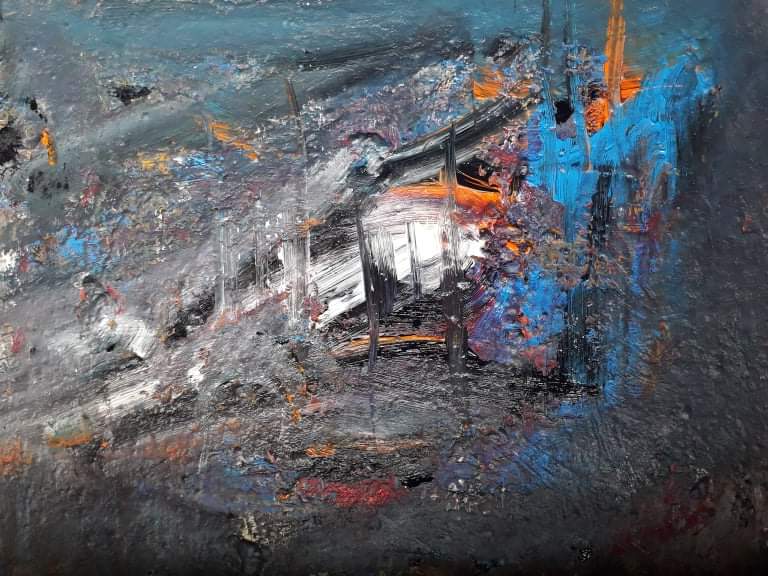
Lengani Salifou


 Abstract expressionism painting - original works

 More works by the artist


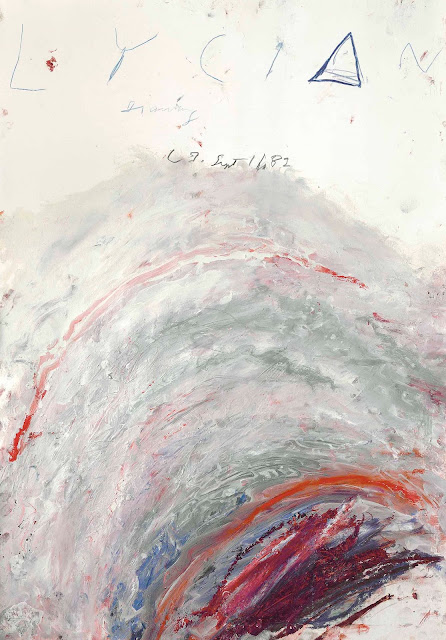
Cy Twombly - Abstract Expressionism Painting


Edwin Parker "Cy" Twombly Jr. ( 1928 – 2011) was an American painter, sculptor and photographer. He belonged to the generation of Robert Rauschenberg and Jasper Johns.
Twombly is said to have influenced younger artists such as Anselm Kiefer, Francesco Clemente, and Julian Schnabel. His paintings are predominantly large-scale, freely-scribbled, calligraphic and graffiti-like works on solid fields of mostly gray, tan, or off-white colors. His later paintings and works on paper shifted toward "romantic symbolism", and their titles can be interpreted visually through shapes and forms and words. Twombly often quoted poets such as Stéphane Mallarmé, Rainer Maria Rilke and John Keats, as well as classical myths and allegories in his works. Examples of this are his Apollo and The Artist and a series of eight drawings consisting solely of inscriptions of the word "VIRGIL".Twombly's works are in the permanent collections of modern art museums globally, including the Menil Collection in Houston, the Tate Modern in London, New York City's Museum of Modern Art and Munich's Museum Brandhorst. He was commissioned for the ceiling at the Musée du Louvre in Paris.In a 1994 retrospective, curator Kirk Varnedoe described Twombly's work as "influential among artists, discomfiting to many critics and truculently difficult not just for a broad public, but for sophisticated initiates of postwar art as well."Wikipedia




https://milenaolesinska.blogspot.com/p/blog-page_50.html

Key Sato - Japanese Contemporary Art - Lyrical Abstraction


Key Sato 1906 – 1978) was a Japanese artist who spent most of his life living and working in France. He was a part of the second wave of lyrical abstraction.
The key innovations formed in the early years of the 20th century were developed further in the 1920s and 1930s. This period began the careers of many innovative and inspiring practitioners in the pictorial arts. However it was a period of reflection following the horrors of the First World War, and major shifts in politics took place across the world. The philosophy of Marxism was widespread among artist communities and groups. Founded in 1919, the Bauhaus became an essential place for the development of ideas concerning the unification of art, craft and design – an idea which became known as the Gesamtkunstwerk.
Sato attended the Académie Colarossi in Paris where he remained until 1934. Upon his return to Japan, he co-founded the New Creation Association (Shin-Seisaku Kyokai) with Kayama Matazō (1927–2004). In 1952 Sato moved back to Paris, where he was inspired by Cubism and Abstraction. He returned to Japan in 1978 and died later that year. The Ōita Prefectural Art Museum (Ōitakenritsu Bijutsukan) held a retrospective exhibition of Sato’s oeuvre in 1979.
Sato exhibited works at the Salon d'Automne in Paris 1931-33, the Carnegie International Exhibitions in Pittsburgh 1952 and 1964, the Salon de Mai in Paris 1956-59 and the 30th Venice Biennale in 1960. In 1963 he participated in the Japanese Avant Garde Art Exhibition in Milan and the Sao Paulo Biennale [remove e from Biennale]. He staged solo shows at the Sanmaido Gallery in Tokyo in 1934, the Tokyo Gallery in 1951 and 1954, the Galerie Mirador in Paris in 1954, the Galerie Jacques Massol 1959-61 and 1964 in Paris, the Hamilton Galleries in London in 1964, and the World House Galleries in New York in 1965.


https://milenaolesinska.blogspot.com/p/blog-page_50.html