Exposition Art Blog: avant-garde
Showing posts with label avant-garde. Show all posts

Tarō Okamoto

Tarō Okamoto (February 26, 1911 – January 7, 1996) was a Japanese artist noted for his abstract and avant-garde paintings and sculpture.


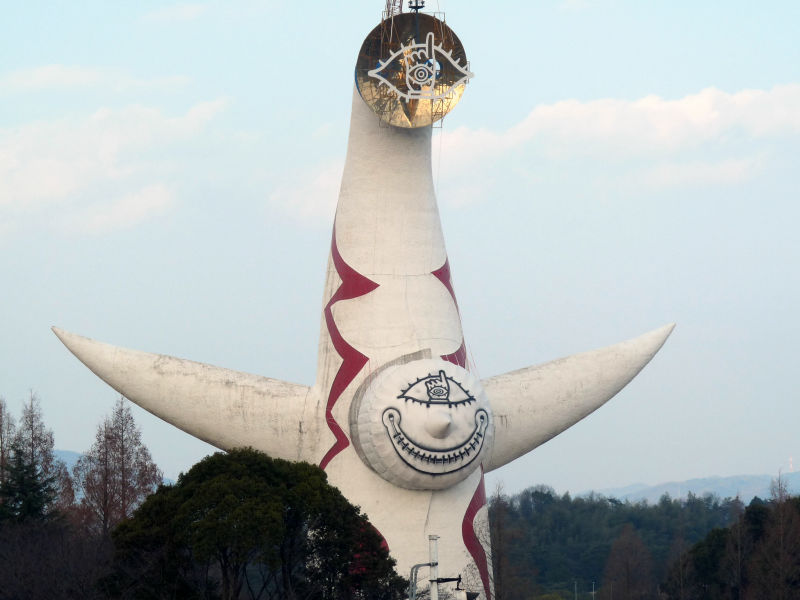
One of his most famous works, Tower of the Sun, became the symbol of Expo '70 in Suita, Osaka, 1970. It shows the past (lower part), present (middle part), and future (the face) of the human race. It still stands in the center of the Expo Memorial Park.
After being lost for 30 years in Mexico, on November 17, 2008, his mural "The Myth of Tomorrow", depicting the effects of an atomic bomb, was unveiled in its new permanent location at Shibuya Station, Tokyo. In it, a human figure burns and others appear to run from flames. The work was made for the Hotel de Mexico in Mexico city by Manuel Suarez y Suarez.



Alternative

The Alternative  - avant-garde are people or works that are experimental or innovative, particularly with respect to art, culture, and politics.
The avant-garde pushes the boundaries of what is accepted as the norm or the status quo, primarily in the cultural realm. The avant-garde is considered by some to be a hallmark of modernism, as distinct from postmodernism. Many artists have aligned themselves with the avant-garde movement and still continue to do so, tracing a history from Dada through the Situationists to postmodern artists


Günter Brus


COBRA

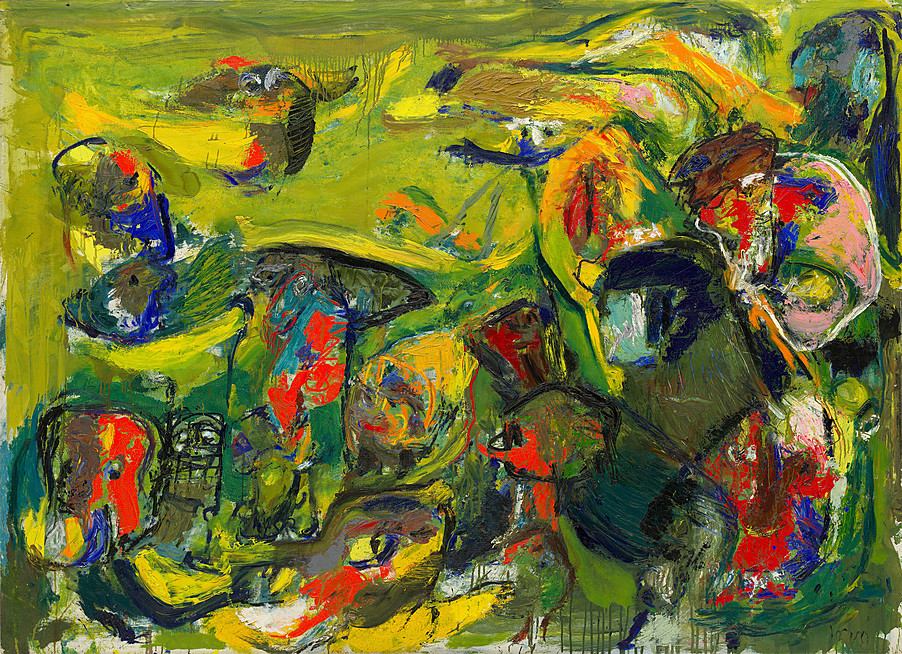
COBRA was a European avant-garde movement active from 1948 to 1951. The name was coined in 1948 by Christian Dotremont from the initials of the members' home cities: Copenhagen (Co), Brussels (Br), Amsterdam (A).
COBRA was formed by Karel Appel, Constant, Corneille, Christian Dotremont, Asger Jorn, and Joseph Noiret on 8 November 1948 in the Café Notre-Dame, Paris,[1] with the signing of a manifesto, "La Cause Était Entendue" ("The Case Was Settled"),drawn up by Dotremont. Formed with a unifying doctrine of complete freedom of colour and form, as well as antipathy towards Surrealism, the artists also shared an interest in Marxism as well as modernism.
Their working method was based on spontaneity and experiment, and they drew their inspiration in particular from children’s drawings, from primitive art forms and from the work of Paul Klee and Joan Miró.
Coming together as an amalgamation of the Dutch group Reflex, the Danish group Høst and the Belgian Revolutionary Surrealist Group, the group only lasted a few years but managed to achieve a number of objectives in that time: the periodical Cobra, a series of collaborations between various members called Peintures-Mot and two large-scale exhibitions. The first of these was held at the Stedelijk Museum in Amsterdam, November 1949, the other at the Palais des Beaux-Arts in Liège in 1951.
In November 1949 the group officially changed its name to Internationale des Artistes Expérimentaux with membership having spread across Europe and the USA, although this name has never stuck. The movement was officially disbanded in 1951, but many of its members remained close, with Dotremont in particular continuing collaborations with many of the leading members of the group. The primary focus of the group consisted of semi-abstract paintings with brilliant color, violent brushwork, and distorted human figures inspired by primitive and folk art and similar to American action painting. Cobra was a milestone in the development of Tachisme and European abstract expressionism.Wikipedia