Exposition Art Blog: abstract expressionism paintings
Showing posts with label abstract expressionism paintings. Show all posts

Cleve Gray - Lyrical Abstraction


 "Cleve Gray (1918–2004) was an American painter best known for his calligraphic abstractions which melded elements of Abstract Expressionism, Color Field painting, and traditional Chinese scroll painting. Often contrasting flat applications of colors with gestural brushstrokes, Gray’s marks appears to float above the picture plane. Born Cleve Ginsberg on September 22, 1918 in New York, NY, he went on to study at the Phillips Academy in Andover,MA and later art history at Princeton University. In 1942, he enlisted in the army, going on to serve in Britain, France, and Germany during World War II. After the war ended, he remained in Paris, falling under the influence of Cubist painters like André Lhote before returning New York in 1946. In the 1960s, Gray developed a close friendship with the artist Barnett Newman, and slowly abandoned his Cubist tendencies, developed during his time in Paris, in favor of more color-based and gestural compositions. Gray gradually thinned his oil paints and eventually switched to acrylic to create washes of pigment. Gray died on December 4, 2004 in Hartford, CT. Today, his works are held in the collections of the Albright-Knox Art Gallery in Buffalo, The Museum of Modern Art in New York, the Phillips Collection in Washington, D.C., the Museum of Fine Arts in Boston, and the Whitney Museum of American Art in New York among others."(artnet.com)


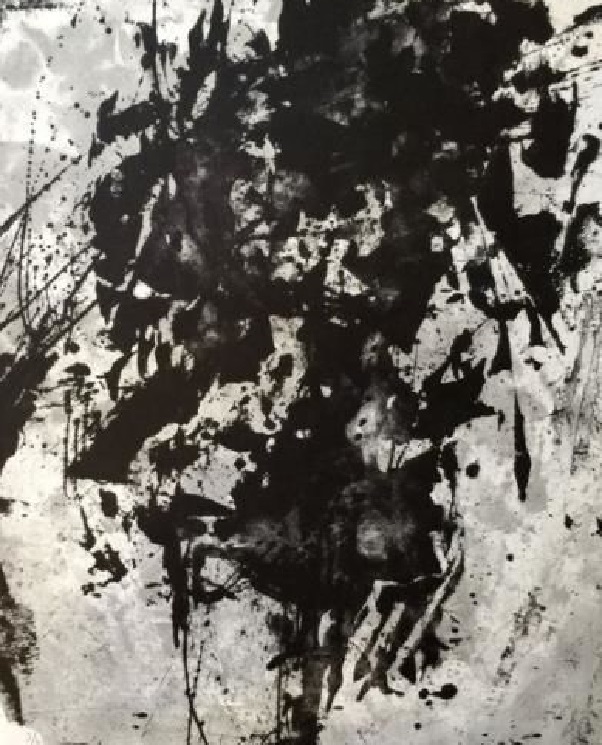
Fred Thieler - European Abstract Art - Art Informel & Abstract Expressionism Painting


"Born Fritz Wilhelm Richard Thieler on March 7, 1916 in Konigsberg, East Prussia, the artist was drafted by the German army in 1939, assisting the invasions of Poland and France. Upon learning of his Jewish heritage, the Nazis released the artist from military service and he instead contributed to the underground resistance in Munich. After World War II, Thieler received formal training at the Academy of Fine Arts in Munich, where he became a member of the Zen 49 group of abstract painters, working alongside artists Fritz Winter, Willi Baumeister, and Rupprecht Geiger."(artnet.com)
"To be a painter means to me to lead the existence of a contemporary,
who spends the bulk of his life trying to the impulses of his life:
suggestions like depression, Intuitions like calculating considerations,
To show reactions of single experiences like creating adventure chains -or win in the painting process. "
Fred Thieler was a German painter known for his engagement with Art Informel styles of painting, including lyrical and expressive abstraction. The artist’s paintings showcased the fluidity of the medium through long, dramatic brushstrokes and watery splashes of pigment , creating a sense of movement across the canvas.


https://milenaolesinska.blogspot.com/p/blog-page_50.html

Grace Hartigan - American Abstract Expressionism


American artist Grace Hartigan (1922-2008) was a second-generation abstract expressionist. A member of the New York avant-garde and a close friend of artists like Jackson Pollock and Mark Rothko, Hartigan was deeply influenced by the ideas of abstract expressionism. However, as her career progressed, Hartigan sought to combine abstraction with representation in her art. Although this shift garnered criticism from the art world, Hartigan was resolute in her convictions. She held fast to her ideas about art, forging her own path for the duration of her career.Hartigan’s first significant exposure to modern art came when a fellow draftsman offered her a book about Henri Matisse. Instantly captivated, Hartigan knew right away that she wanted to join the art world. She enrolled in evening painting classes with Isaac Lane Muse. By 1945, Hartigan had moved to the Lower East Side and immersed herself in the New York art scene.
A busy abstract surface is characteristic of Hartigan’s style, but whereas in much of her other work she allows imagery to form, here Hartigan intersperses her painterly strokes with selections of text taken from Frank O’Hara’s “Oranges No. 1.” The poem is one in a collection of twelve published in 1949 by O’Hara, in response to which Hartigan produced twelve canvases, each featuring excerpted text from the corresponding poem.
Throughout her life, Hartigan resisted the strictures of artistic fashion. The abstract expressionist movement shaped her early career, but she quickly moved beyond it and began inventing her own styles. She is best known for her ability to combine abstraction with representational elements. In the words of critic Irving Sandler, “She simply dismisses the vicissitudes of the art market, the succession of new trends in the art world. … Grace is the real thing.”