Exposition Art Blog: Canadian painter
Showing posts with label Canadian painter. Show all posts

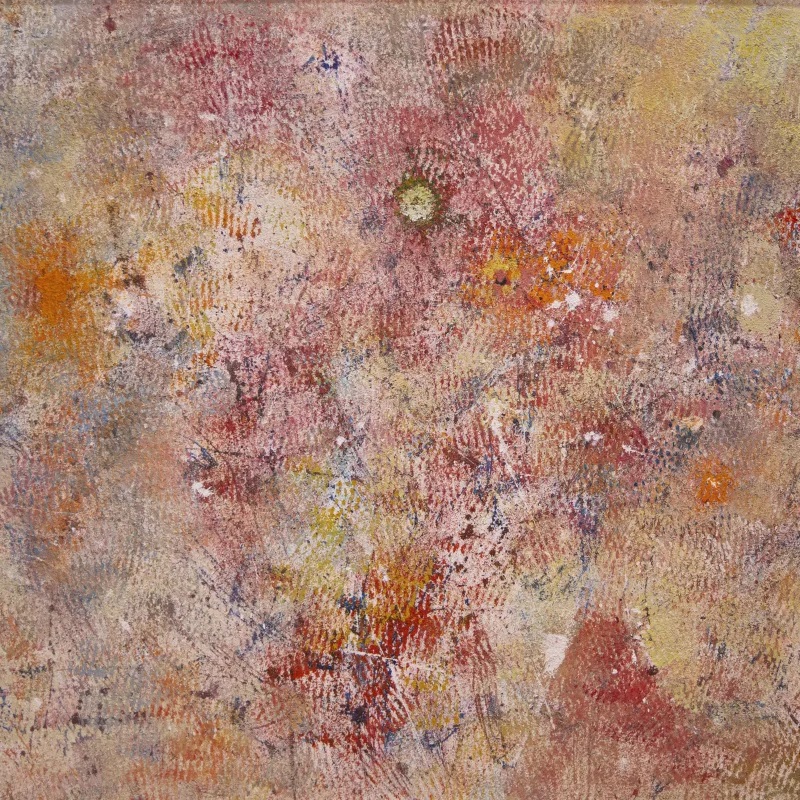
Michael Forster - Abstract Artwork


 Michael Forster (1907–2002) was an Anglo-Canadian abstract artist. Born in Kolkata, India, Forster spent most of his childhood in Meerut. He studied first at Lancing College in Sussex and then later at the Central School of Arts and Crafts (now Central St. Martins – University of the Arts), as well as the Académie Colarossi in Paris. In 1927–1928, he moved to Toronto, Ontario, Canada in hopes of avoiding The Great Depression.
"Creatively, Forster explored the changing visual face of the universe long before astronauts began their travels. For most of his career, he took inspiration from the glowing patterns and chromatic depths of space. He composed infinitely varied and rich abstract compositions from the flux and fusion of the galaxies. In this, Michael Forster is virtually unique among painters. Forster possessed a passion for colour that gained recognition from the eminent German art-historian, Paul Westheim: “Colour is the medium of his expression, he has reduced all that is visible, all that is imaginable to colour, a strange and fantastic world of visionary colour. By means of colour, he knows how to give form to a whole range of emotions and feelings.” Forster’s concern for the material of paint itself led him to create brilliant surface textures that are uniquely personal. He worked the varied luminous passages across his canvas from corner to corner, leading the eye through subtle and constant changes. These rich variations remain regardless of the dimensions of his work. His smaller compositions on paper are compelling in their lustrous presence.
In 1960, Forster was honoured with a solo-exhibition of eighty works by Mexico’s Mueso Nacional de Arte Moderno. He has also been the subject of major retrospectives in Luxembourg and Canada. Forster’s paintings have been exhibited in leading museums of the world, including the National Gallery, Washington, Musee d’art Moderne, Paris, the Stedelijk Museum, Amsterdam, the British Museum, and Sao Paulo Museum, Brazil. Loch Gallery is pleased to reintroduce this great artist to the Canadian public."(lochgallery.com)



David Bolduc - Canadian Abstract Art


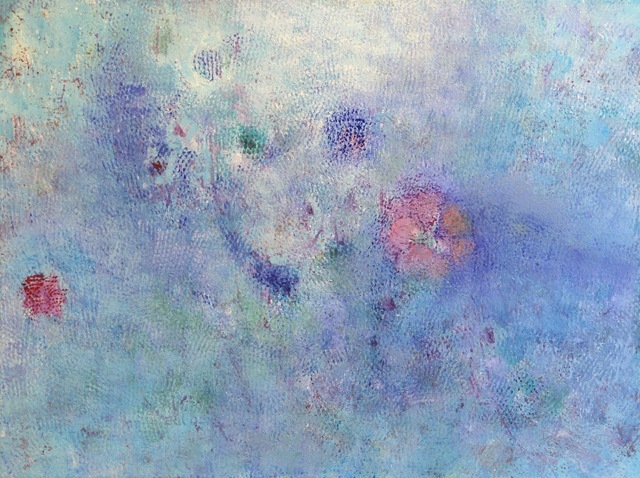
 "David Bolduc (1945-2010) was born in Toronto and attended the Ontario College of Art for one year and then studied at the Montreal Museum of Fine Arts School (1964-65).  In 1966 he returned to Toronto where he worked in the ROM’s conservation department.  A Canada Council grant in 1968 allowed him to leave work and travel in Europe and Asia for eight months.  Throughout his lifetime, he continued to travel extensively, often drawing inspiration from the exotic locations.Beginning in 1967 Bolduc started showing with Carmen Lamanna Gallery and made work featuring shaped canvases painted in simple geometric colour designs.  By the 1970s, however, he switched his focus to abstract canvases and quickly developed his signature style of drawing directly from the tube painted on top of a colourful stained background.  The bold central image or motif was always set against a textured ground.
Considered part of the third generation of Toronto abstract painters which included artists such as Alex Cameron and Paul Sloggett, Bolduc remains one of Canada’s leading lyrical abstract painters.
His work is in the public collections of the Canada Council Art Bank, Beaverbrook Art Gallery, Art Gallery of Hamilton, Art Gallery of Ontario and the National Gallery of Canada."(gibsongallery.com)


Léon Bellefleur - Abstractionism and Surrealism


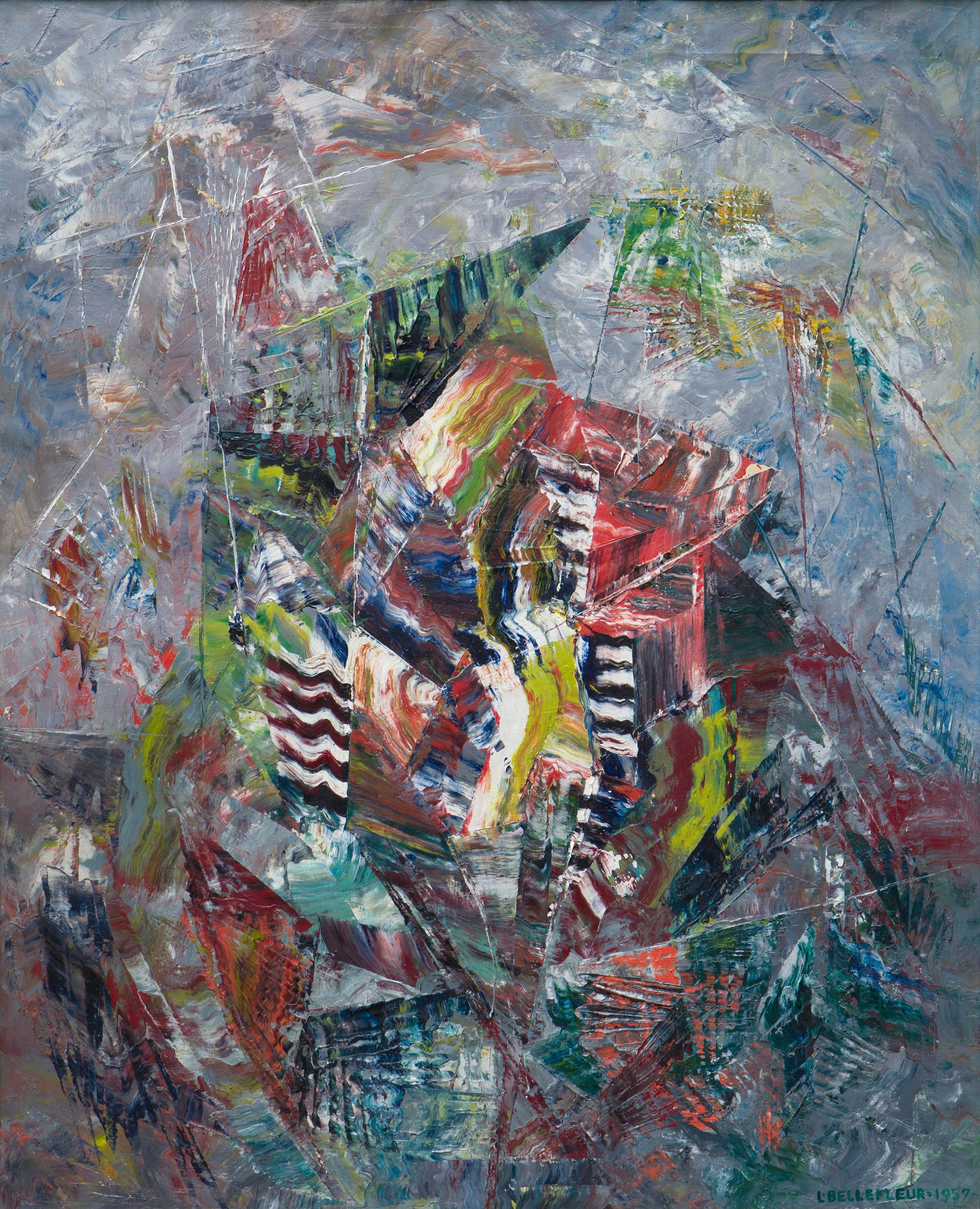
 Léon Bellefleur (1910 - 2007) was a French-Canadian painter and print-maker.
Léon Bellefleur was born in Montréal, Quebec, in 1910, and by the age of ten was drawing and painting.He earned a teaching diploma at Jacques Cartier teachers college in Montreal, graduating in 1929 and had a career in teaching for the next 25 years. He was mainly self-taught as an artist, but took evening classes from around 1929 until 1936 at the École des Beaux-Arts where he expressed his youthful admiration for the work of Rembrandt. In 1938, Bellefleur met Alfred Pellan and through a friend, the Montreal art world. In 1943, he joined the Contemporary Arts Society. He was also a member of the Canadian Group of Painters, the Canadian Society of Graphic Art and The Non-Figurative Artists' Association of Montreal (1960).
He participated in the activities of the Montreal surrealists and in Montréal in 1945, he participated in the Exquisite corpse (Cadavre exquis) experiments with Albert Dumouchel, Jean Benôit, Jean Léonard, Mimi Parent and Pellan. In 1948, he signed the manifesto Prisme d'yeux, which defended diverse approaches to art-making.
After the group dissolved, he remained friendly with the members of the Prisme d'yeux, but followed his own aesthetic, inspired by Paul Klee, Kandinsky, Joan Miró, and children`s art.Although he had been influenced in his early work by Pellan, following automatism and surrealism, he began to record the unconscious, creating coded atmospheres, states of mind and crystalline structures.[6] He once said:"The fundamental discoveries for me were poetry, surrealism and esoterism - and, in art, a certain automatism translating the life of dreams and the unconscious, the world of chance and mystery."Wikipedia 


Kazuo Nakamura - Canadian Abstract Art


Kazuo Nakamura was a Japanese-Canadian painter and sculptor (1926 - 2002) and a founding member of the Toronto-based Painters Eleven group in the 1950s.  Nakamura produced abstract paintings that were distinctive among Canadian artists of his generation in part because of their formal simplicity and rigour.
"Influenced by Jock Macdonald’s interest in Hungarian painter and photographer (and teacher at the Bauhaus art school in Germany in the 1920s and early 1930s) László Moholy-Nagy and his own reading in science journals, Nakamura was often concerned with science, time and space. As is evident in his “inner structure” paintings of the 1950s, Nakamura described himself as seeking a "fundamental universal pattern in all art and nature." Later, in the 1970s and 1980s, he increasingly emphasized grid paintings based on number structures, which came to involve the Pascal triangle, an array of number relationships associated with triangles studied by 17th-century French philosopher and mathematician Blaise Pascal. To Nakamura, these laboriously inscribed works were a quest for some ultimate order in the apparent chaos of the universe. "(thecanadianencyclopedia.ca)


https://milenaolesinska.blogspot.com/p/blog-page_50.html