Exposition Art Blog: Australian artist
Showing posts with label Australian artist. Show all posts

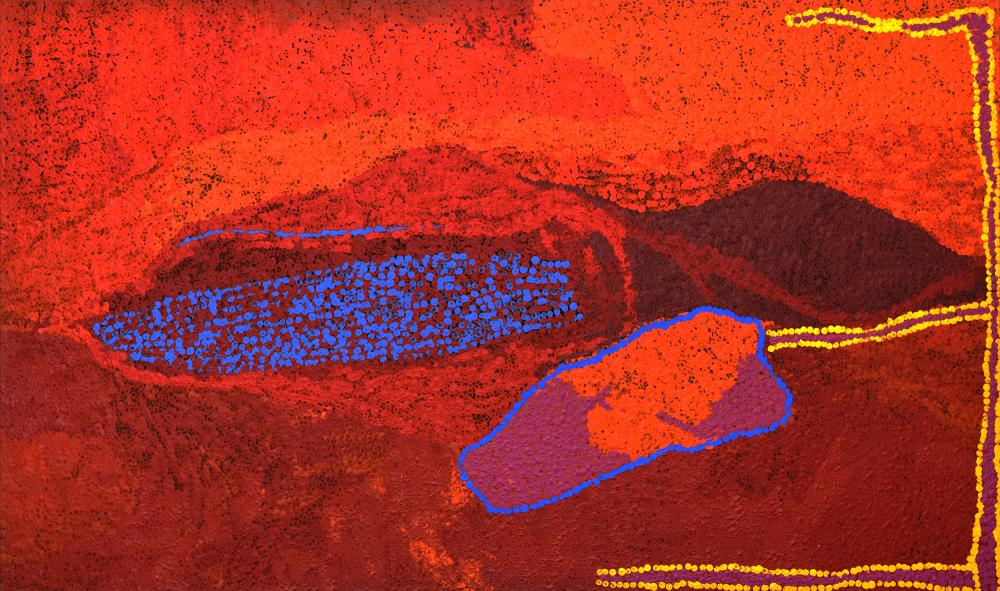
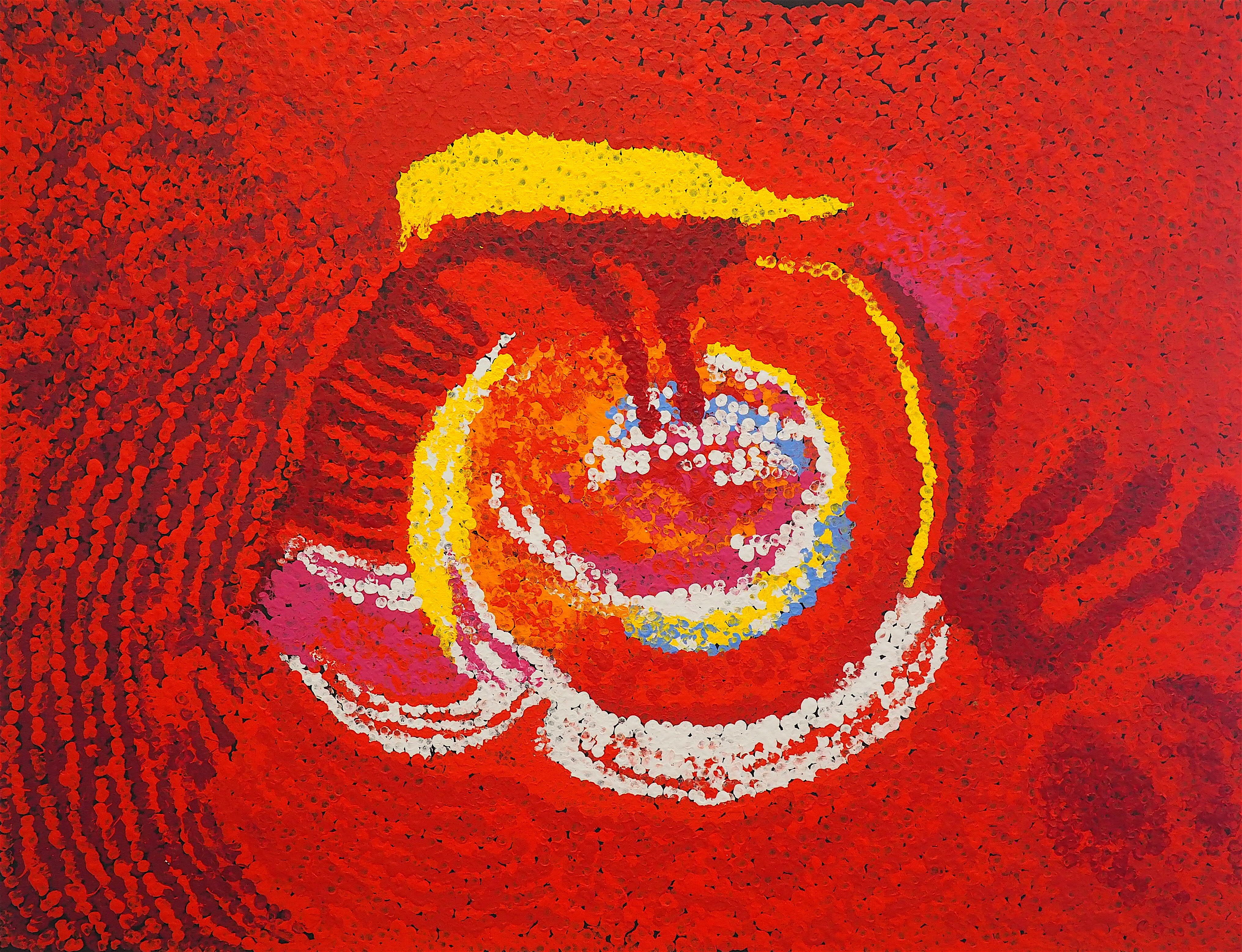
Yannima Tommy Watson - Indigenous Australian Artist


 Yannima Tommy Watson (1935 - 2017 )was a senior APY Lands painter who was born around 1935 at Anamarapiti, about 40kms from Irrunytju Community (Wingellina) in Western Australia. Watson was a Pitjantjatjara man, his skin group was Karimara."My grandfather's country, grandmother's country. When they were alive, they would take me around the country, when I was a kid. That's why we look after country, go out whenever we can. See if the rock holes are good"
"Tommy Watson was known for his use of strong vibrant colours, that symbolically represented the ancestral stories of his country. Judith Ryan, Senior Curator of Indigenous Art at the National Gallery of Victoria, has described Watson's colour as "incandescent". Watson's understanding of Australia's physical environment and its relationship with the ancestral stories came to form the central element of his paintings. Watson created his works on premium Belgian linen and favoured Ara Acrylic paint, created by the Gerrit Rietveld Academie. Tommy has been associated with the 'Colour Power' movement that developed within the Indigenous art scene between 1984 and 2004.
Watson himself stated that his art is an exploration of traditional Aboriginal culture, in which the land and spirituality are intertwined and communicated through stories passed on from generation to generation. He said, "I want to paint these stories so that others can learn and understand about our culture and country."


John Perceval - Australian Art


 John Perceval was born on 1 February 1923 with the name Linwood Robert Steven South Bruce Rock in Western Australia. His father, Robert South, was a wheat farmer, a man well known for his hard work and violent temper. His parents’ marriage was short-lived. His mother, born Dorothy Dolton, left when the boy was only 18 months old, with his older sister unhappily stayed with their father until 1934 when their mother married William de Burgh Perceval in Melbourne. John Perceval took his stepfather’s name, and began to attend Trinity Grammar. At the age of 15 he suffered from polio, and spent a year in hospital. As a part of his recovery he began to paint.He came to know the artists associated with Melbourne’s newly established Contemporary Art Society, and through them joined the circle of artists and writers around John and Sunday Reed at Heide Park. Despite his withered leg John Perceval enlisted in the Army as his skills as a draughtsman could be used in the Cartographic Company. Here he met Arthur Boyd, and then the entire extended Boyd family at Murrumbeena. He married Arthur’s youngest sister, Mary Boyd, in 1944. With Arthur Boyd and Neil Douglas he worked at the Murrumbeena pottery, making decorated pots and bowls. His paintings of this period show a strong influence of Arthur Boyd’s work, with a joyeus brush stroke and an almost naive quality.The Perceval family lived at Williamstown, at the old naval port on the mouth of the Yarra and the working harbour became a part of his subject matter. His subject matter was sometimes metaphorical, but always based in elements of his life. The city of Melbourne became the background for a nativity scene, painted in a style that quoted Breughel. His children: Matthew, Tessa, Celia and Alice all appear as reoccurring elements in his art. No more is this more evident than in his series of ceramic angels, made between 1957 and 1962. While they certainly quoted Renaissance sculptural figures and Piero della Francesca’s paintings, the joie de vivre of these (sometimes) quite naughty figures owes more to his observations of his children – although one is modelled on the satirist Barry Humphries.
In 1959, Perceval was persuaded by Bernard Smith to join with his brothers-in-law Arthur and David Boyd, John Brack, Robert Dickerson, Charles Blackman and Clifton Pugh to form the Antipodeans a celebration of the human figure, in opposition to the rise of abstract art. His own paintings however concentrated on landscapes, and increasingly he found more nourishment from Vincent Van Gogh than any other artist.
Perceval’s bad memories, alcoholism and long undiagnosed psychiatric illness meant that life was less than easy for his family and his marriage ended unhappily. In 1965 he was hospitalised for alcoholism, and in 1977 he entered the Larundal psychiatric hospital, where he stayed until 1986.
Perceval continued to paint for the rest of his life, but although he had some commercial success, these later works appear crude when placed next to his paintings of the 1940s and ’50s. (Design & Art Australia Online )


Susan Willemse


Susan Willemse  -  Australia.
"Prices for images on my website,I am happy to provide exchange rates if requested, all my artwork includes shipping, packing and warranty to any destination world wide unless otherwise stated on my website and details about the images can be found there too."
Details required for posting:

Artist name: Susan Willemse
Australian birds Art Gallery, Canberra
Email:
s_willemse@yahoo.com


Spinebill on Kangaroo Paw 20“x 16” 2018

Peacock 24“x 24” 2018

“Hope” Rainbow Lorikeet 18”x 14” 2017

Green Catbird 16“x 12” 2019


John Davis - Australian sculptor and pioneer of Environmental art.


John Davis (16 September 1936 – 17 October 1999) was an Australian sculptor and pioneer of Environmental art. An Australian exponent of Arte povera, he famously developed a new mode of Site-specific art at the Mildura Sculpture Triennial in the early 1970s. His most influential work, which was entitled Tree Piece, was made by encasing the trunks of several growing trees on the banks of the Murray River with, alternately, papier mache, mud, latex, coiled string, plastic cling wrap, and twigs bound together. The impermanent work was then allowed to weather and rot away. It was a breakthrough which lead many sculptors to reconsider the fate of outdoor works, and whether the fabrication of art might in some way adversely impact on the environment.Taking his cues from Aboriginal artifacts, Davis later became chiefly known for tender assembled works made of natural materials, including leaves and twigs, intended to highlight the fragile beauty of nature.Wikipedia


https://milenaolesinska.blogspot.com/p/blog-page_50.html