Exposition Art Blog: experimental photography
Showing posts with label experimental photography. Show all posts

Len Lye - Experimental Photography

Leonard Charles Huia Lye ( 5 July 1901 – 15 May 1980), was a Christchurch, New Zealand-born artist known primarily for his experimental films and kinetic sculpture.
"Len Lye is an artist from New Zealand who is known for his experimental films, photograms and kinetic sculpture.
In the beginning he worked with the idea of motion being an artistic language and was heavily influenced by the arts of South Pacific and African countries when he visited there.  He began to make experimental films without a camera by using manipulated and often destroyed film.
He used methods such as scratching the emulsion, dyes, stencil-work, air-brushes, pens, stamps, combs, surgical instruments, etc. to manipulate and texturize the film and celluloid. His film stills put together created a blur and motion of flashing lines and marks. Some of his famous films include: A Colour Box, Colour Flight, and Free Radicals.
Later in his work, he experimented with photograms in his films, and then began making separate photogram work. He started a series of photographic portraits using photograms including some well-known artists such as Georgia O'Keefe, Joan Miro and Le Corbusier. Exposing the light-senstive paper with the "sitter", as he calls them, in front of it, a lovely silhouette is left. With not much information or detail about the sitter in the silhouette, he added other elements to provide clues as to who the sitter is which often created new layers of meaning.Lye often was more concerned with the motion of an object or person than it's actual appearance. He was intrigued by the "notion of individuality" and "the physical factors" that inform each person's makeup.  Many consider his work to be meditations on identity and some say that he bases his abstract art on intuition and feeling, revealing parts of the subconscious."(unccphotography.blogspot.com)


Experimental Photography Todd Walker

Todd Walker (1917 – September 13, 1998) was an American photographer, printmaker and creator of artists' books who is known for his manipulated images and for his use of offset lithography to produce individual prints and limited-edition books of his work.Walker began teaching at the Art Center College of Design in Los Angeles in 1966. His interest in creative photographic processes brought him to the attention of Robert Heinecken and Robert W. Fichter at UCLA, and the three co-taught classes for a brief time. In 1970 Walker accepted a one-year teaching position at the University of Florida. There he worked with photographers Jerry Uelsmann and Douglas Prince as well as printmaker Ken Kerslake, who was at that time using photo-etching techniques in intaglio printmaking. Walker taught a photo-printmaking class and a silkscreen class. In an interview in the late 1970s Walker said, "The contact with the ideas of the printmaker have greatly altered my attitudes toward photography, and how each discipline deals with an image."  Seven years later he moved to Tucson and taught at the University of Arizona before retiring in 1985.
While in Arizona, Walker began working with some of the first Apple computers, and he used his technical skills to create some early 3-D images of his work and to create a book in which the text was mostly generated by the computer (Enthusiasm Strengthens, 1987). According to his daughter, Walker never used Photoshop or other commercial imaging software. He wrote his own computer programs and later made use of software primarily designed for cartography. With these techniques he was able to create digital works that blurred, inverted and obscured the original image, making it into an expressive rather than detailed representation of reality.Wikipedia


John Gerald Zimmerman

John Gerald Zimmerman (30 October 1927 in Pacoima, California – 3 August 2002 in Monterey, California) was an American magazine photographer.He was among the first sports photographers to use remote controlled cameras for unique camera placements, and was "a pioneer in the use of motor-driven camera sequences, slit cameras and double-shutter designs to show athletes in motion.Zimmerman was interested in photography from an early age. His father, John L. Zimmerman, a gaffer at Metro-Goldwyn-Mayer Studios, taught him the basics and bought him a 4×5 view camera. He joined a photographic hobby club in junior high school and spent afternoons developing film with friends in their mothers’ kitchens.Zimmerman took a three-year photography course at John C. Fremont High School in Los Angeles, where he was taught by Hollywood cinematographer Clarence Bach.After graduating high school, Zimmerman was a Navy photographer. In 1950, he landed a job as a staff photographer at the Time bureau in Washington D.C. On his first assignment on November 1, 1950, Zimmerman was driving away from the White House with a group of photographers when two Puerto Rican nationalists stormed nearby Blair House, attempting to assassinate President Truman. Hearing gunshots, the photographers rushed out of the car. Zimmerman had a camera around his neck where as the others had locked theirs in the trunk. Zimmerman got the first photos of the attack, which were published in both Time and Life.
In 1952, Zimmerman moved to Atlanta. During his time there he shot a series of noteworthy assignments for Ebony depicting the experiences of African Americans in the Jim Crow South and the Midwest.


From 1964 until his retirement in 1991, Zimmerman worked for all the major magazines, covering notable subjects from every aspect of American popular culture.Four of his Time covers are in the Smithsonian’s National Portrait Gallery: politician Jerry Brown,baseball player Rod Carew,actress Diane Lane[13] and Olympic figure skater Dorothy Hamill.
Photographing the Olympic Games was a constant throughout his career. He covered six Summer Olympic Games, starting with Melbourne in 1956  and ending in 1984, with four Winter Olympic Games in between. One of Zimmerman’s favorite Olympic assignments was taking the "Big Picture" for the LA Olympics in 1984. The "Big Picture" was a group portrait of 18,000 people, ranging from Mayor Tom Bradley, local community leaders, celebrities, the City Ballet and L.A. Dodgers to the UCLA Football team. It was displayed as a 30 × 80 ft. billboard at various places around the city, to welcome visitors and athletes to the Games.
On meeting Zimmerman in 1972 sports photographer Rich Clarkson said:
 had known and admired him for years, watching how he did things technically that no one had ever tried before - such as modifying a Hulcher to produce beautiful pictures of runners with colors streaking from behind them as they ran. John did this at the Olympic trials in Eugene, Or. and believe it or not, he put up a black background and lights on a curve and did this very stylized illustration during an actual competition. The pictures were beautiful.Beginning in the 1970s, Zimmerman worked in the more lucrative arena of print advertising and photographed advertising campaigns for Marlboro, Ford, Chrysler, AT&T, Exxon, G.E., Pepsi and Coca-Cola, among others.Wikipedia


Artistic and experimental photography Zofia Rydet

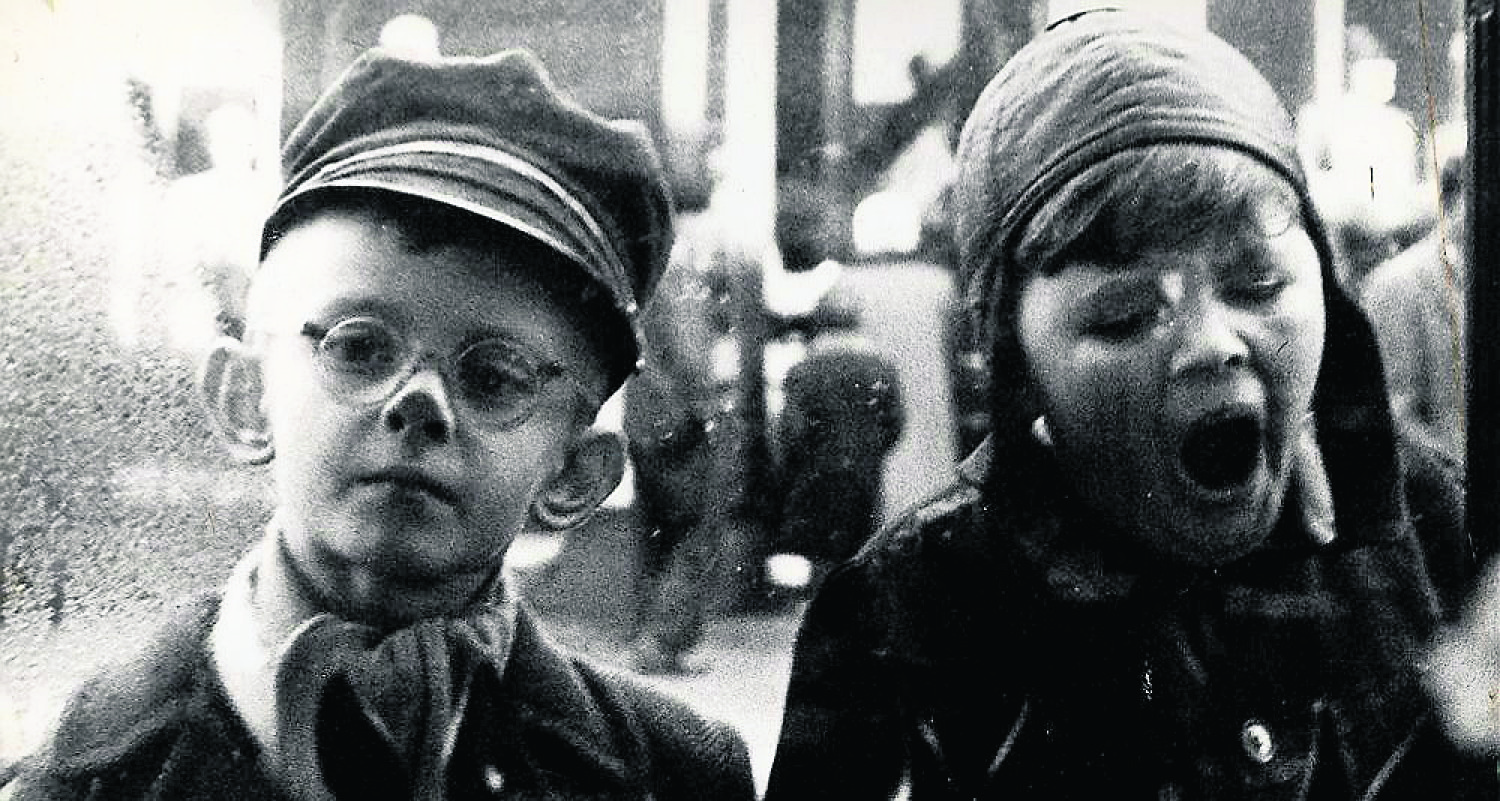
"Her photographs are deceptively simple, taking an intimate, direct approach to her subject, trailing main tropes of Pictorialism, painting during the Young Poland period, abstraction and surrealism, and applying them to photography. ofia Rydet's images of children and rural families in Poland from the 1960s and 1970s are among the insightful and well-executed photographic series of postwar Poland. Born on the 5th of May 1911 in Stanisławowo, she became a member of the Gliwice Photography Association in 1954. There she met Jerzy Lewczyński link opens page in new window , Władysław Jasieński and Piotr Janik, photographers who were active in documenting changes of postwar Poland and the implementation of socialist ideals in urban planning and society.


Her first major exhibition took place in 1961, with the Little Man series of middle-class children in Poland and other socialist nations. The series was published as an album of over 140 photographs in 1965, edited by Wojciech Zamecznik, in 1965, and the book is considered one of the important albums of 20th-century Polish photography. Rydet described her approach in the series, saying she 'wanted to move away from the stereotype of a care-free angelic childhood and show the multifaceted complexity of childhood experiences and reactions. Through appropriate synthesis, I wanted to say something about mankind, because as Korczak once said 'everything that happens in the dirty adult world also happens in the children's world', alluding to the teacher and author Dr. Janusz Korczak link opens page in new window . Rydet shifted her focus to the broader sphere of children and adults between 1978 and 1989, in her Sociological Record. The series consists of tens of thousands of negatives taken in rural regions of Poland comprise the series, and present people from all walks of life in their typical surroundings. These works were characterised by particular senses of emotion, spanning the spectrum from loneliness, fear and loss, to happiness and hope. Rydet's Sociological Record has been compared to August Sander's work throughout German society in the 1920s, and to other socially minded documentary photographers..."(Author: Agnieszka Le Nart, update: January 2016, GS. culture.pl )

Sociological Record - Zofia Rydet


Experimental photography Heinz Hajek-Halke

Heinz Hajek-Halke (1898–1983) was a German experimental photographer who co-founded the Fotoform group with Otto Steinert.
Heinz Hajek-Halke, born in Berlin in 1898, spent part of his childhood in Argentina.
He worked as a photo editor, press photographer and commercial artist, concentrating almost from the start on montage techniques.
During World War II he lived quietly and photographed small animal life-forms.
In 1949 he became a member of the German group fotoform and took part in the first of two subjektive fotografie exhibitions.
Hajek-Halke was appointed lecturer in photography and graphic design at the Academy of Fine Arts in Berlin in 1955.
During his lifetime he published two books, Experimentelle Fotografie and Lichtgrafik. He died in Berlin in 1983.Wikipedia