Exposition Art Blog: Japanese painter
Showing posts with label Japanese painter. Show all posts

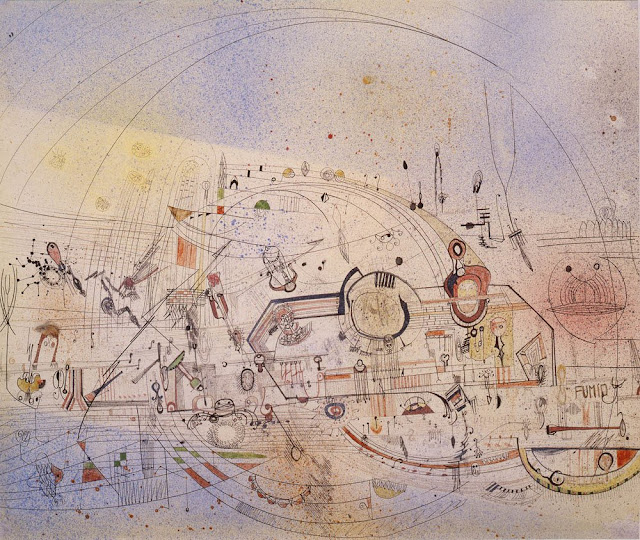
Fumio Nambata


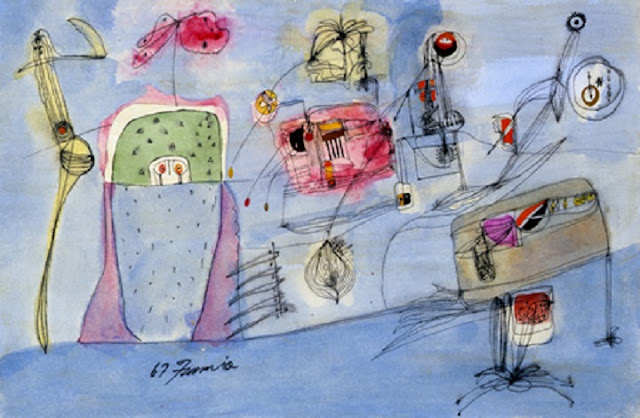
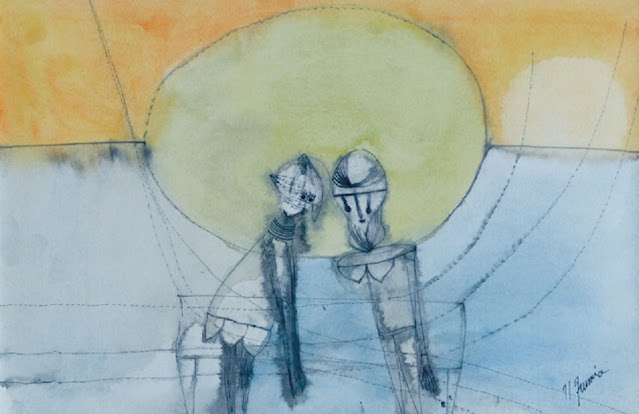
 When Fumio Nambata fell off a ferry in 1974 while crossing the Seto Insland Sea his life was cut short at the age of 32. His artistic career, too, met an untimely end of just about 15 years. Nambata, the son of an artists and a painter himself, lived through tumultuous times: rapid economic development and social turmoil. And for Nambata they were anything but calm. He managed to create more than 2000 paintings, an astounding number for such a young artist. About 300 of his paintings are now part of an exhibition on display at the Setagaya Art Museum in Tokyo.The 1960s “was a unique period of free expression,” explains the Setagaya Art Museum. Most of Nambata’s images are watercolor-and-ink depictions of an imaginary world. “Nambata conjured a profusion of images that he painted in his own free style, unimpeded by the considerations of realism and composition that are ordinarily fundamental to painting.” 


Minoru Onoda - Contemporary Japanese Art


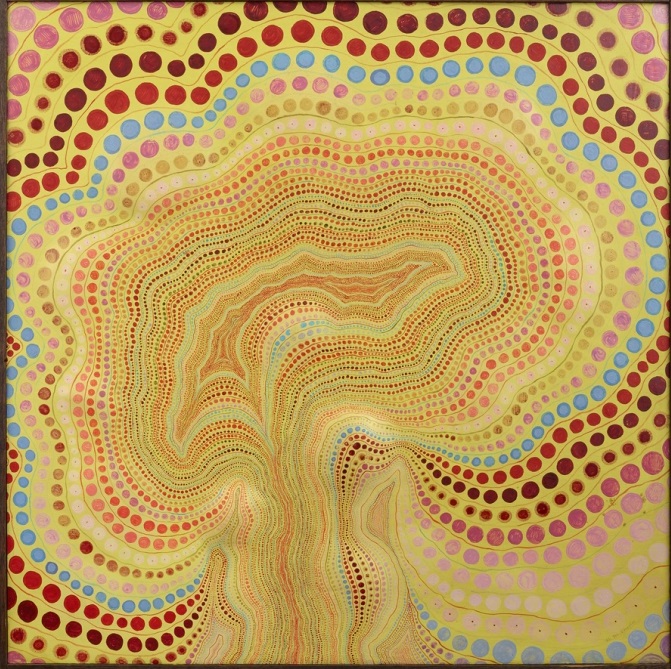
  Minoru Onoda  was an important member of the Gutai Group's younger generation having joined the group in 1965. His 'Paintings of Propagation' theory was a crucial step in his early career. He was included in the important retrospectives on the Gutai Group at the Solomon R. Guggenheim Museum in New York in 2013 and the National Art Center in Tokyo in 2012.Minoru Onoda was born 1937 in Manshu, North-East District, China (Japanese-occupied Machuria Jilin Province, China). He studied at the Institute of Fine Arts, Osaka, Japan from 1956 to 1958 and from 1958–1960 at the Osaka School of Art (currently Osaka College of Art). He lived most of his life in Himeji, Japan where he died in 2008.After publishing his "Paintings of Propagation' theory in 1961 and participating in the 3rd International Exhibition for Young Artists in Paris in 1964, Onoda Minoru joined Gutai and stayed faithful to their leader Yoshihara Jiro's motto to "do what has never been done before" for the rest of his career. The Gutai Group was the first radical artistic movement after World War II in Japan. This influential group was involved in large-scale multimedia environments, performances, and theatrical events and emphasizes the relationship between body and matter in pursuit of originality.
Through newly-available materials and artistic freedom post WWII, Onoda questioned new forms, styles and hierarchy through lines and circles.Awed by manufacturing concepts of repetition and quantity, he chose amalgamations of gradually-sized dots on panel with relief, creating organically-growing shapes, progressing to infinite circles and finally monochrome painting where the edge matters.Wikipedia.


Masuo Ikeda - Graphics

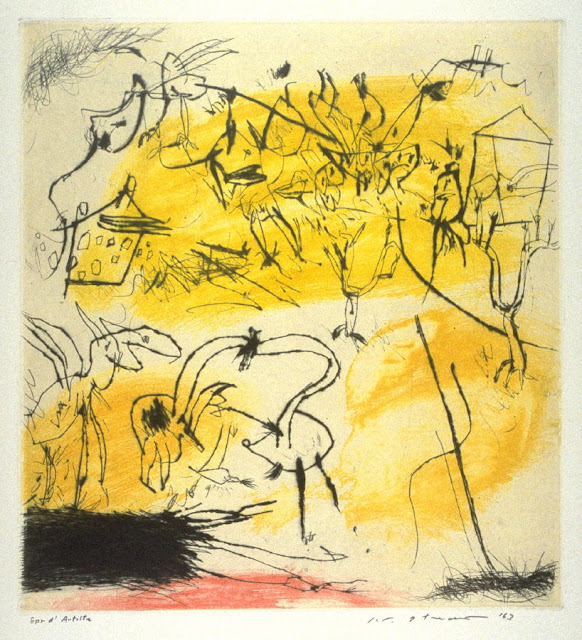
"Masuo Ikeda, printmaker, painter, author, ceramist, and painter, was born Mukden, China on February 23, 1934. He started off life on the wrong foot, by being born abroad, in Mukden, China (now known as Shenyang). After the Second World War he was repatriated with his parents to Nagano prefecture. Attending school in Japan is always a traumatic experience for children who have lived abroad and known more liberal standards of education. Masuo refused to fit in. Disdaining standardized syllabuses he plunged into the delights of foreign literature - Stendhal, Salinger, Sartre, Kafka, Camus, the Surrealists. It was no wonder he twice failed the stiff entrance examinations for Tokyo Geidai (the Tokyo University of the Arts). So he set to teaching himself how to draw and paint, then began attending the Nagano School of Art, from which he managed to graduate in 1952.
 Ikeda had been painting in oils, so he followed Graumann's advice, realizing that it was a better business proposition to make prints, because he could sell many copies, whereas there was only one buyer for a painting. He also tried traditional woodblock printing (ukiyo-e or "images of this floating world") and serigraphy (silk screen) techniques. Young Japanese artists were beginning to travel abroad again to Paris, London and New York, where Stanley Hayter was a great inspiration, for he had started with dry point, aquatint, and woodblock prints but had gone on to develop new processes. In London, the Swedish printmaker Birgit Skiold's studio in Charlotte Street was always full of young Japanese attracted by her refined photo-etching experiments and their links to poetry, for Japan is a land where literature and printing inhabit the same scrolls.
In 1976, Ikeda again stepped out of his category and published his first work of fiction, Eige-kai ni sasaguru (Homage to the Aegean). It won the New Man literary award and in 1977 the prestigious Akutagawa Prize. Ikeda made his own film of the book set in the Aegean and in Italy. It was a soft porn movie, quite harmless by present-day standards, in which the Italian porn star La Cicciolina makes an appearance. Ikeda must have known the film would be regarded in Japan not just as provocative but also as obscene, because the strict censorship laws there forbid any show of pubic hair. He had to scratch out 50 "pubic areas" before the film could be released. Ikeda quite rightly complained in court that such mutilations were the real obscenities. It was during the filming of this novel that Ikeda met his lifetime companion, the well-known violinist Yoko Sato."(Source: Obituary in London.Independent News.)



Koji Enokura - Contemporary arts in Japan

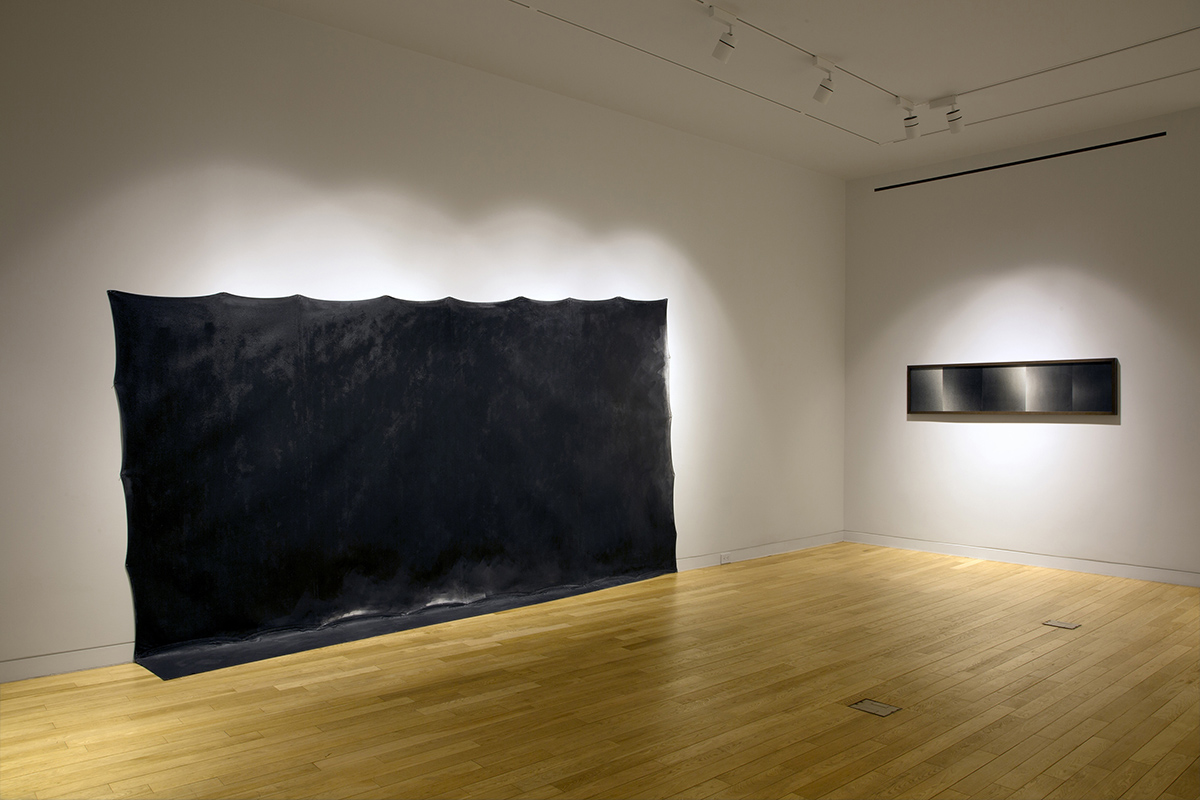
Koji Enokura ( 1942 – 1995) was a Japanese painter and installation artist.
He was one of the key members of Mono-ha, a group of artists who became prominent in the late 1960s and 1970s. The Mono-ha artists explored the encounter between natural and industrial materials, such as stone, steel plates, glass, light bulbs, cotton, sponge, paper, wood, wire, rope, leather, oil, and water, arranging them in mostly unaltered, ephemeral states. The works focus as much on the interdependency of these various elements and the surrounding space as on the materials themselves. From the beginning of the 1970s, Enokura stained paper, cloth, felt, and leather with oil and grease. He also discolored the floors and walls of galleries and outdoor spaces. These installations are no longer extant but are documented in photographs.