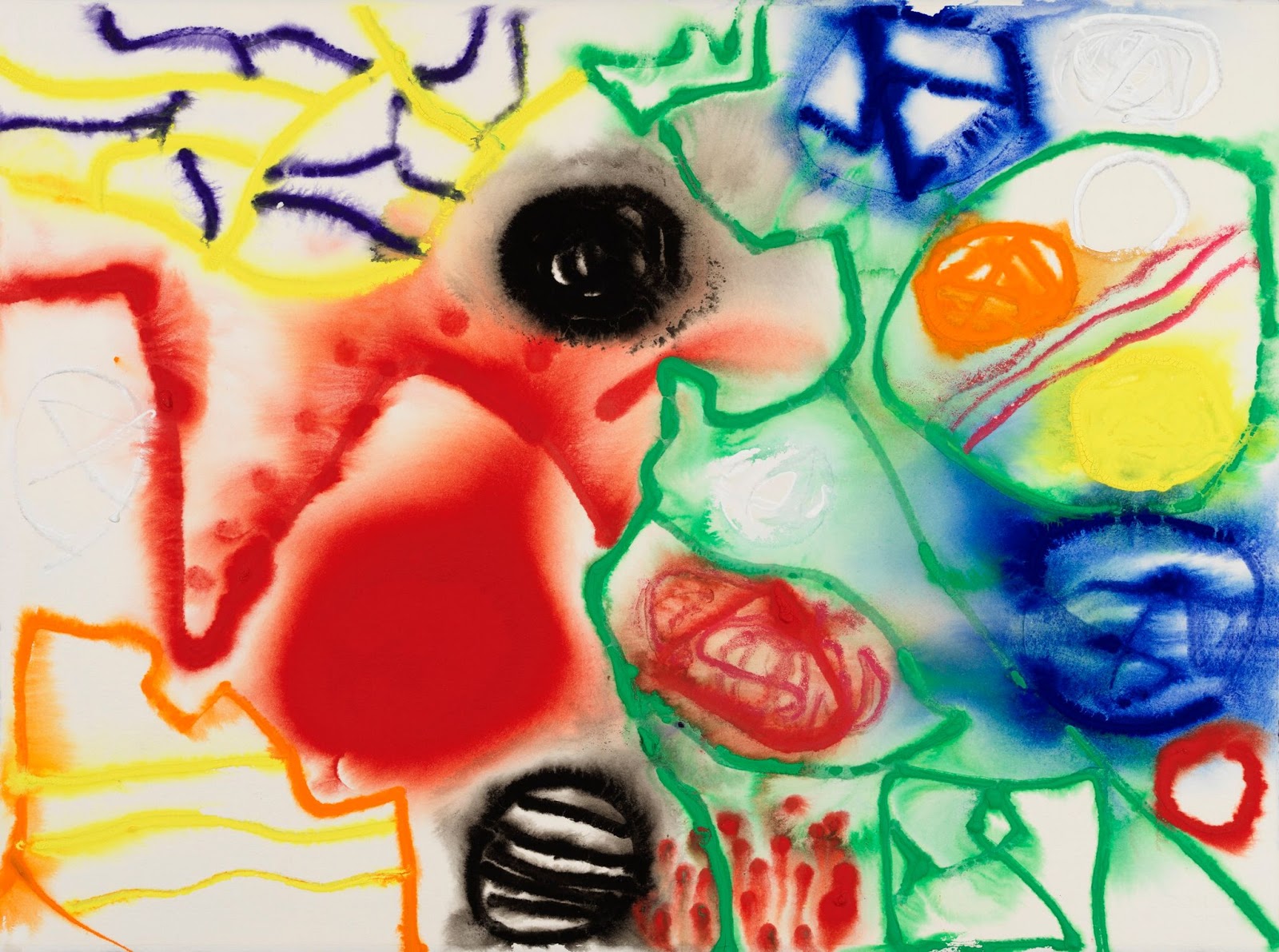
Patrick Heron (30 January 1920 – 20 March 1999) was a British abstract and figurative artist, critic, writer, and polemicist,who lived in Zennor, Cornwall.Heron was recognised as one of the leading painters of his generation. Influenced by Cézanne, Matisse, Braque and Bonnard, Heron made a significant contribution to the dissemination of modernist ideas of painting through his critical writing and primarily his art.Heron's artworks are most noted for his exploration and use of colour and light. He is known for both his early figurative work and non-figurative works, which over the years looked to explore further the idea of making all areas of the painting of equal importance....Heron used that most rare and uncanny of gifts: the ability to invent an imagery that was unmistakably his own, and yet which connects immediately with the natural world as we perceive it, and transforms our vision of it. Like those of his acknowledged masters, Braque, Matisse and Bonnard, his paintings are at once evocations and celebrations of the visible, discoveries of what he called "the reality of the eye"Wikipedia
Painting is like silent poem, said Simonides, poet from ancient Greece.Paintings are icons, doors to the Platonian world above the heavens. Paintings on my blog are just those icons, which lead a viewer into the magic world of harmony and beauty. Artists who present their achievements on my blog have a very different cultural and national background, they represent variety of artistic traditions and schools
Showing posts with label critic. Show all posts
Abstract art Jacek Sempoliński
Jacek Sempoliński (March 27, 1927 – August 30, 2012) was a Polish painter, draftsman, art professor, critic, and essayist.
Sempoliński was born in Warsaw. He studied painting at the Academy of Fine Arts in Warsaw. He taught at his alma mater from 1956.
In the 1970s Sempoliński focused on the relatively abstract issues of color, light, the canvass as painterly space, and textures, for which nature nevertheless remained a legible point of reference (see the series Swiatlo i mrok / Light and Dark, Łąka - zachód słońca / Meadow - Sunset, Studium przestrzeni / Study of Space). In the late 1970s Sempoliński's paintings began to reflect dramatic existential themes, expressed through a change in color scheme (towards dark blues, shades of violet, and cold grays) and even the physical dismantling of the surfaces of his canvasses. His new series Twarz / Face (1971), Ukrzyżowanie / Crucifixion (1975), Moc przeznaczenia Verdiego / The Power of Verdi's Destiny (1977) and Czaszka / Skull (1980s) touched upon issues of religion, culture, and philosophy of life. These works, themselves a sign of important experiences and deep reflection, were a sign of the shift in values that occurred in the 1980s. Jacek Sempolinski's stance in this period gained him the position of both an artistic and intellectual authority, a status he achieved by making numerous public statements, publishing essays, and in other ways. During Martial Law Sempolinski developed links with the independent cultural movement supported by the Catholic Church. He participated in many exhibitions organized by its members, including the memorable projects of Janusz Bogucki and Nina Smolarz (Znak krzyza / Sign of the Cross, Parish on Żytnia Street, Warsaw, 1983; Labirynt - przestrzeń podziemna / Labyrinth - An Underground Space, Church of the Lord's Ascension, Warsaw, 1989), Marek Rostworowski (Niebo nowe i ziemia nowa? / New Sky and New Earth?, Parish on Żytnia Street, Warsaw, 1985), and others.(Author: Maryla Sitkowska, Museum of the Academy of Fine Arts in Warsaw, December 2001 culture.pl )
Subscribe to:
Posts (Atom)