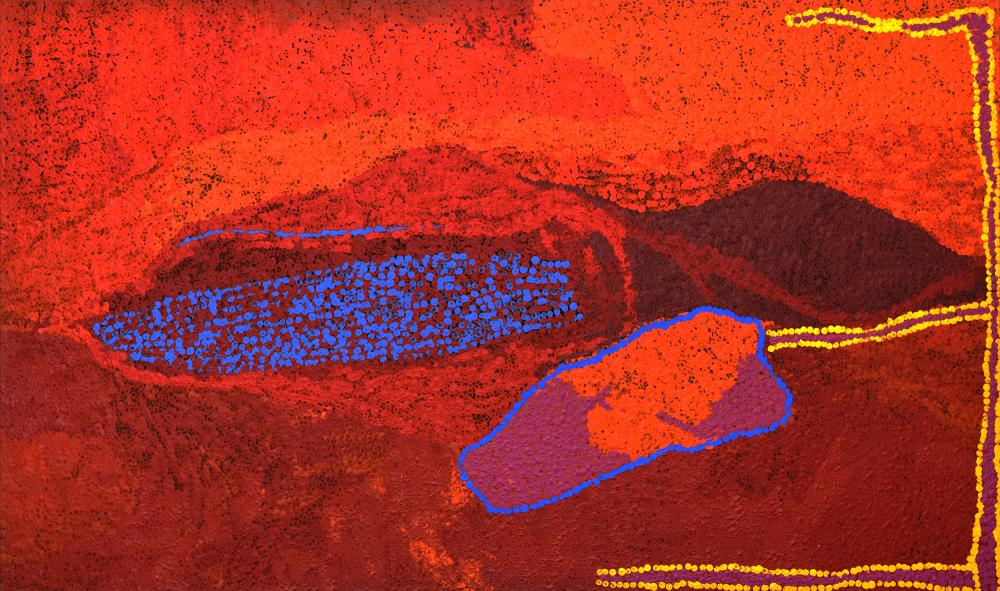
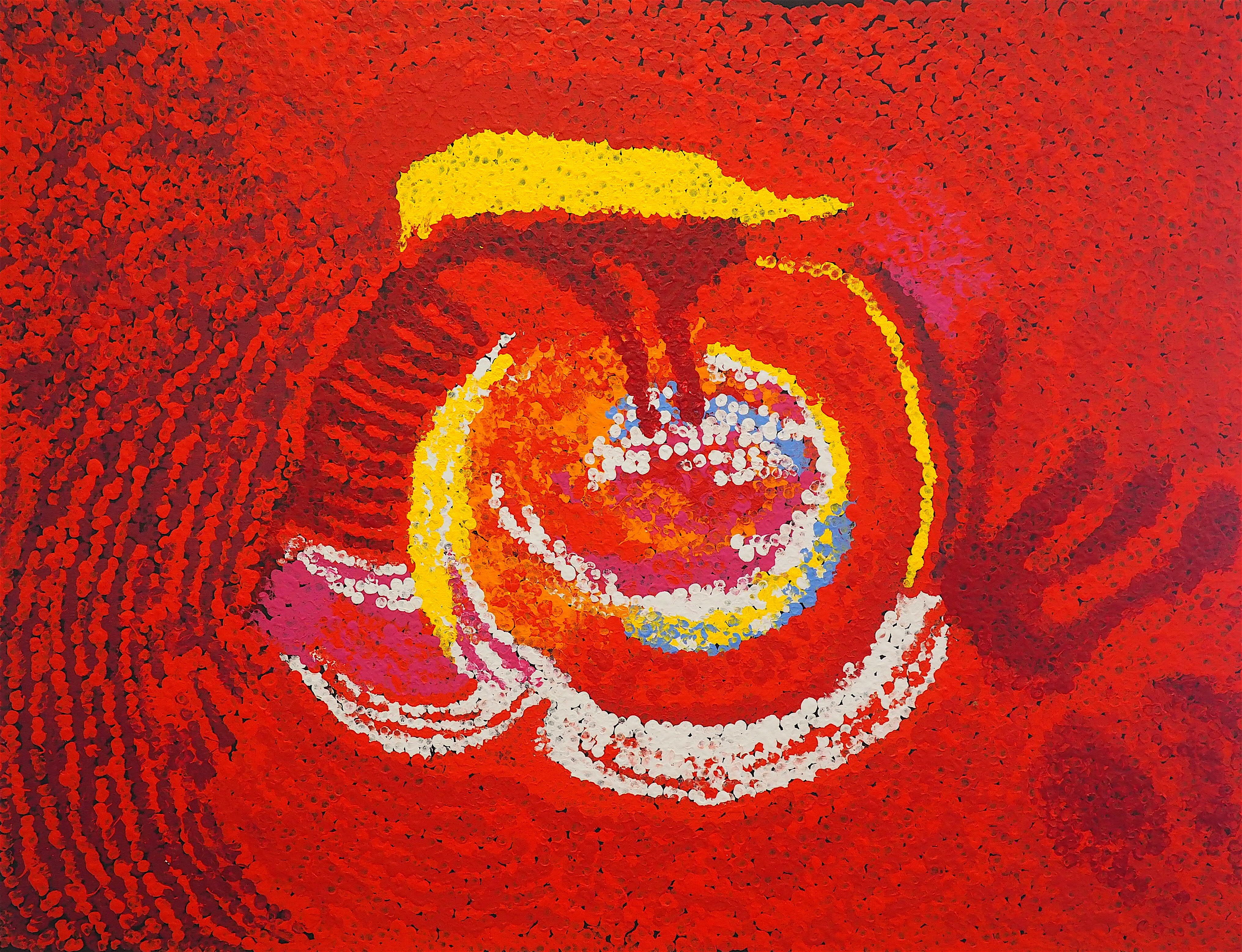
Yannima Tommy Watson (1935 - 2017 )was a senior APY Lands painter who was born around 1935 at Anamarapiti, about 40kms from Irrunytju Community (Wingellina) in Western Australia. Watson was a Pitjantjatjara man, his skin group was Karimara."My grandfather's country, grandmother's country. When they were alive, they would take me around the country, when I was a kid. That's why we look after country, go out whenever we can. See if the rock holes are good"
"Tommy Watson was known for his use of strong vibrant colours, that symbolically represented the ancestral stories of his country. Judith Ryan, Senior Curator of Indigenous Art at the National Gallery of Victoria, has described Watson's colour as "incandescent". Watson's understanding of Australia's physical environment and its relationship with the ancestral stories came to form the central element of his paintings. Watson created his works on premium Belgian linen and favoured Ara Acrylic paint, created by the Gerrit Rietveld Academie. Tommy has been associated with the 'Colour Power' movement that developed within the Indigenous art scene between 1984 and 2004.
Watson himself stated that his art is an exploration of traditional Aboriginal culture, in which the land and spirituality are intertwined and communicated through stories passed on from generation to generation. He said, "I want to paint these stories so that others can learn and understand about our culture and country."