Exposition Art Blog: postminimalism
Showing posts with label postminimalism. Show all posts

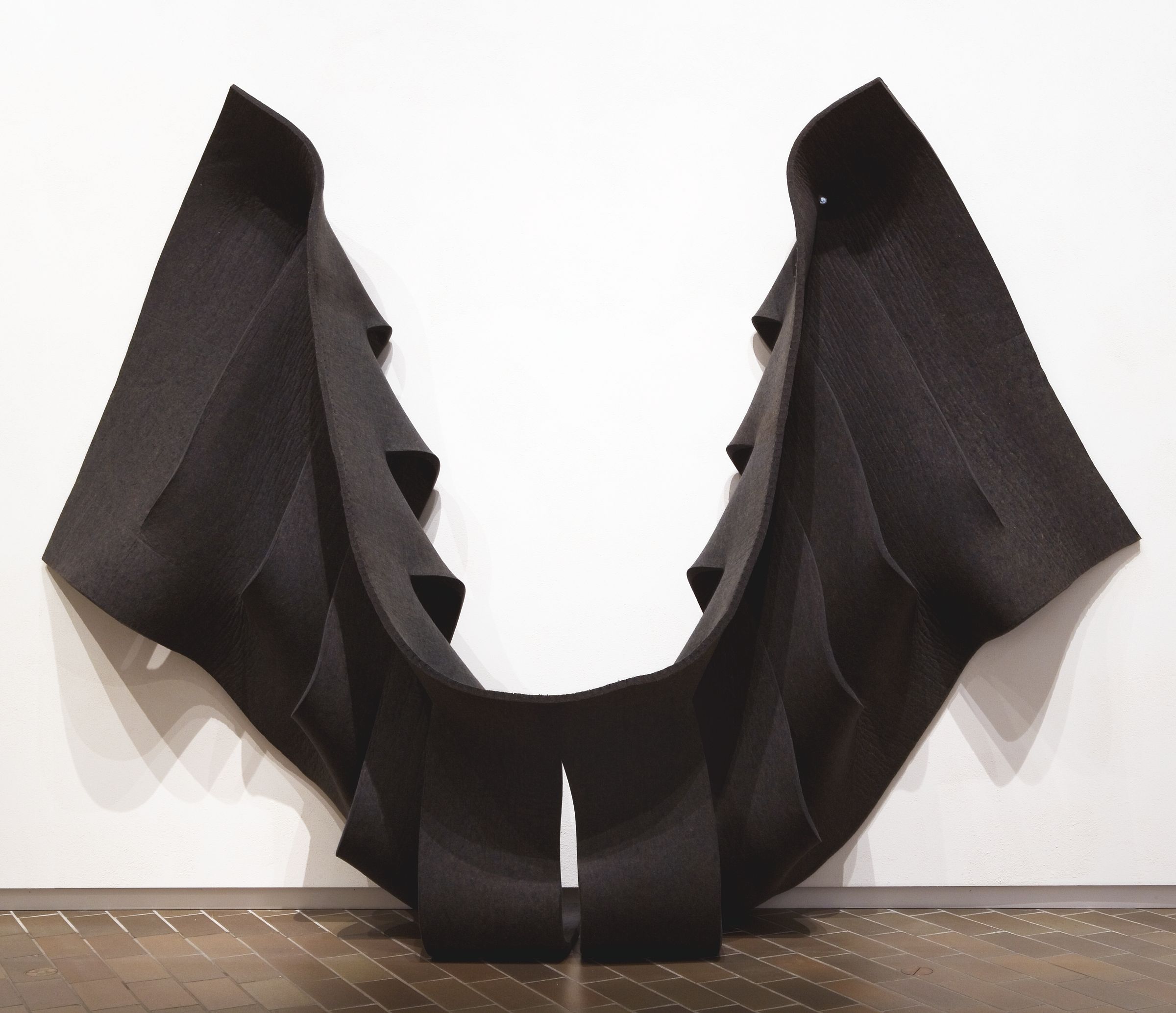
Robert Morris - Conceptual Art


 Robert Morris (1931 - 2018 )was an American sculptor, conceptual artist and writer. He was regarded as having been one of the most prominent theorists of Minimalism along with Donald Judd but he also made important contributions to the development of performance art, land art, the Process Art movement, and installation art. Morris lived and worked in New York. In 2013 as part of the October Files, MIT Press published a volume on Morris, examining his work and influence, edited by Julia Bryan-Wilson
"Robert Morris has comported himself for decades as the least minimal of the original minimalists. While sharing most of the core group’s characteristics — including the complementary artist/writer mode — he has in both word and deed proved more committed than the others to contingency and experimentation. Alternating, often abruptly, between cool objects and evocations of calamity, his artistic outlook remains — as the spot-on title of his collected writings suggests — a Continuous Project Altered Daily. Though no slouch when it comes to minimal severity, his thinking often drifts closer in sensibility to Robert Smithson’s macro riffing than to Donald Judd’s ideological finalities.Minimalist theory made much of the viewer’s movement through space as part of what defined the sculptural. Morris, having come to this notion following a wider path of study than the others — a path that included engineering, art history, philosophy, and dance — found ways to follow intuitive offshoots that generated outward from minimalism’s basic premise. He took labyrinths and passageways, which were favored minimalist tropes, and superseded their phenomenological values with emotionally charged contexts that included prison architecture and Midwestern stockyards. Thus the jarring incongruence — to cite an extreme example — between his ascetic, process-oriented felt hangings of the 1970s and the apocalyptic Firestorm reliefs that soon followed. Keeping to a highly subjective route, he seems able to shuttle convincingly between the austere space of the artistically reductive and the emotionally charged arena of darker human experience, discovering along the way many disturbing links between the two."(hyperallergic.com)


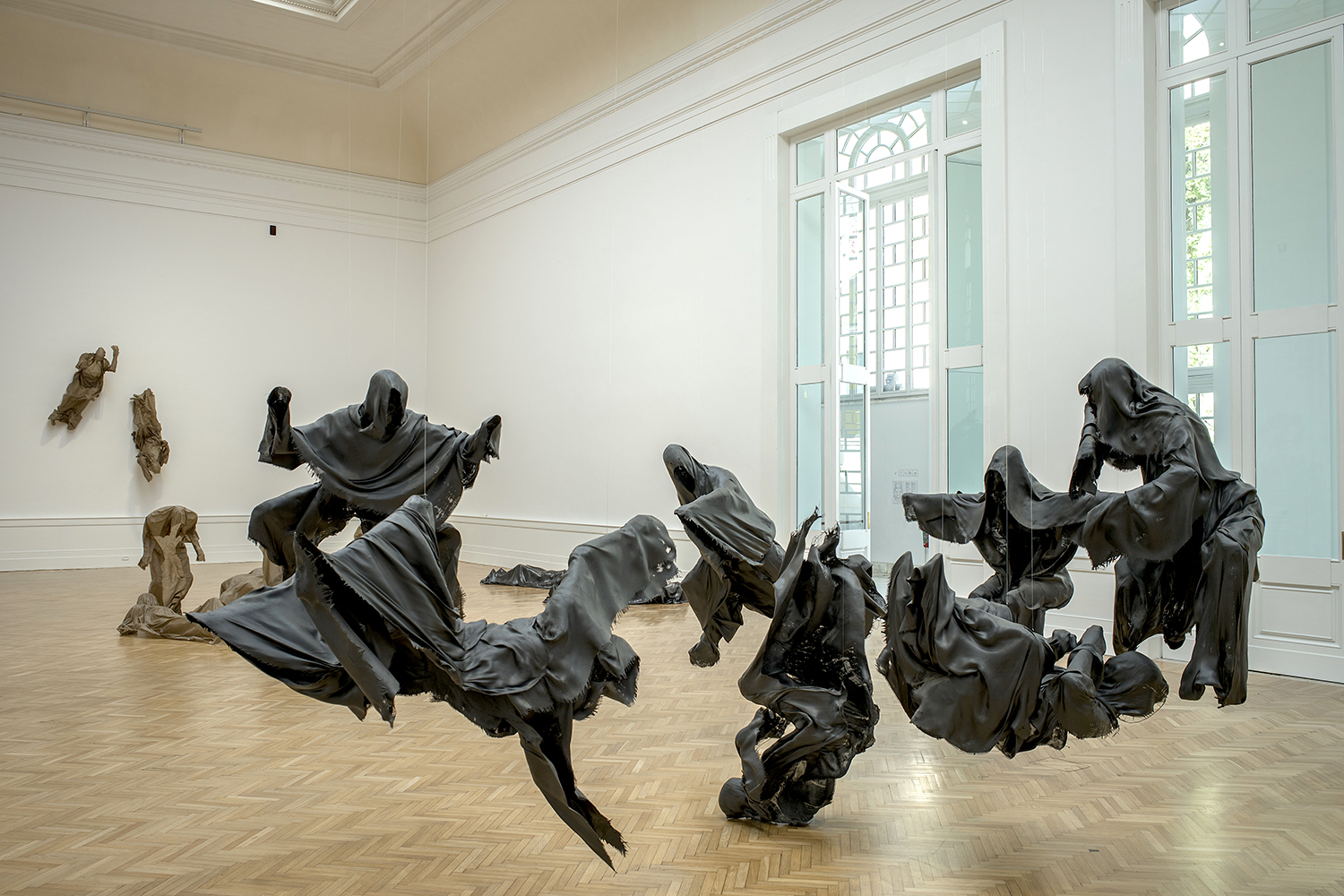
Robert Morris - Spectral Shrouds - Conceptual Art

Robert Morris (1931 - 2018 )was an American sculptor, conceptual artist and writer. He was regarded as having been one of the most prominent theorists of Minimalism along with Donald Judd but he also made important contributions to the development of performance art, land art, the Process Art movement, and installation art. Morris lived and worked in New York. In 2013 as part of the October Files, MIT Press published a volume on Morris, examining his work and influence, edited by Julia Bryan-Wilson
"Robert Morris has comported himself for decades as the least minimal of the original minimalists. While sharing most of the core group’s characteristics — including the complementary artist/writer mode — he has in both word and deed proved more committed than the others to contingency and experimentation. Alternating, often abruptly, between cool objects and evocations of calamity, his artistic outlook remains — as the spot-on title of his collected writings suggests — a Continuous Project Altered Daily. Though no slouch when it comes to minimal severity, his thinking often drifts closer in sensibility to Robert Smithson’s macro riffing than to Donald Judd’s ideological finalities.Minimalist theory made much of the viewer’s movement through space as part of what defined the sculptural. Morris, having come to this notion following a wider path of study than the others — a path that included engineering, art history, philosophy, and dance — found ways to follow intuitive offshoots that generated outward from minimalism’s basic premise. He took labyrinths and passageways, which were favored minimalist tropes, and superseded their phenomenological values with emotionally charged contexts that included prison architecture and Midwestern stockyards. Thus the jarring incongruence — to cite an extreme example — between his ascetic, process-oriented felt hangings of the 1970s and the apocalyptic Firestorm reliefs that soon followed. Keeping to a highly subjective route, he seems able to shuttle convincingly between the austere space of the artistically reductive and the emotionally charged arena of darker human experience, discovering along the way many disturbing links between the two."(hyperallergic.com)






Alberto Burri

 Alberto Burri (12 March 1915 – 13 February 1995) was an Italian painter and sculptor considered a key figure in Post-War art and such artistic movements as Neo-Dada, Nouveau réalisme, postminimalism and Arte PoveraIn one of his very rare statements, Burri claimed that the critics’ words, as well as his own, were of no use in offering a description of his artworks, affirming that its only real key strength was the formal balance that poor and industrial materials were surprisingly able to give
"Alberto Burri was an Italian artist and one of the most prominent abstract painters of the 20th century. Associated with the Arte Povera movement, he is perhaps best known for his sacchi (“sacks”) series, wherein he stitched, patched, and painted on rough burlap bags. “The words don’t mean anything to me; they talk around the picture. What I have to express appears in the picture,” he once remarked. “With the other elements it is involved in a whole chain of pulls and tensions. But this is only the architectonic structure. For the rest I have nothing to add.” Born on March 12, 1915 in Citta di Castello, Italy, he studied medicine before serving in Mussolini’s army during World War II as a doctor. Captured in Tunisia, Burri was interned at Camp Howze in Texas as a prisoner of war, where he began painting on readily available discarded burlap. After his release in 1946, he moved to Rome where his art practice turned towards abstraction. His interest in non-traditional materials continued with experiments using wood, tar, plastic, zinc oxide, pumice, PVC adhesives, and fabric. In 1960, his solo show at the Venice Biennale garnered him the Critics Prize, and in 1963, he had his first US retrospective at the Museum of Fine Arts in Houston. He died on February 15, 1995 in Nice, France, and was the subject of a major posthumous museum retrospective in 2015 when the Solomon R. Guggenheim Museum in New York presented “Alberto Burri: The Trauma of Painting.” Today, the artist’s works are held in the collections of the Tate Gallery in London, the Galleria Nazionale d’Arte Moderna e Contemporanea in Rome, and The Museum of Modern Art in New York, among others."(artnet.com)