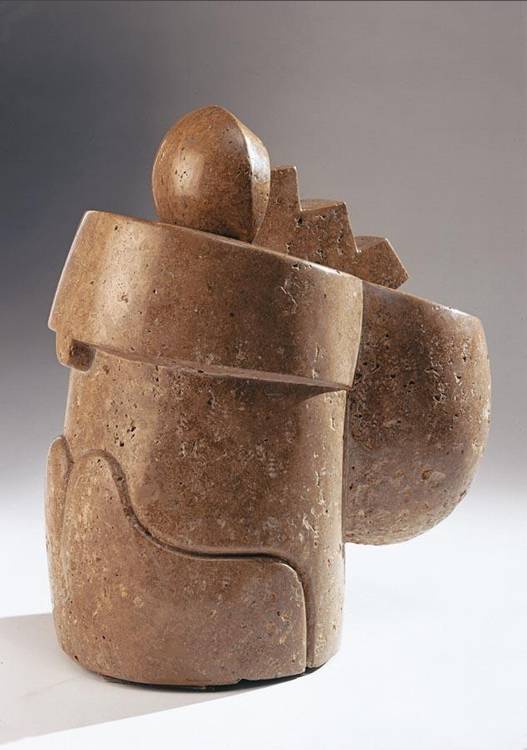
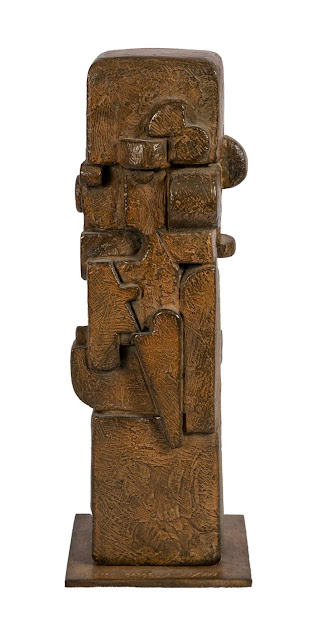
Alexandre Joseph Sosnowsky, (1937 – 3 December 2013), better known by the name Sacha Sosno, was an internationally renowned French sculptor and painter. Working most of the time in Nice, in his last decades Sosno achieved international recognition for his monumental outdoor sculptures in Côte d'Azur, France. Along with: Yves Klein, Arman and Cesar he was part of the New Realist (Nouveau réalisme) movement . Sosno had a singular artistic approach: the concept of obliteration. His sculptures are masked by empty or full space, inviting the viewer to use his own imagination.Sosno's work has been termed l'art d'oblitér or the ‘art of obliteration’as a result of his idiosyncratic voids or solids added to an artwork, which obliterate or distort the full picture or figure. Thus giving the viewer the task of imagining what is absent: "I only do 50% of the work; other people have to finish creating the sculpture". His pieces frequently display either the absence of material or an obstructing addition. For example, in "Tete aux quatre vents femme", Sosno removed sections of the bronze work, leaving holes where the face, ears and back of the head ought to be. This requires the audience to use its imagination in constructing the full image. Sosno's creative work is self-sufficient, soaring and martial, cultural, a protest.
Sosno possessed a passion for architecture. He believed architecture must be imbued with the artistic. In 2000 Sosno started to work on "Tête carrée" (The Square Head),a 26-meter high monumental sculpture - the Central Library in Nice with architects Yves Bayard and Francis Chapuis, financed by the Ministry of Culture, the Regional Council, the County Council and the City of Nice. One year later the installation of the aluminium structure began. When the work was completed In 2002 it became the first inhabited monumental sculpture in the world, the first construction entirely in aluminum and the first building shaped and raised thanks to naval techniques.Wikipedia