Purvis Young (February 4, 1943 – April 20,
2010) was an American artist from the Overtown neighborhood of Miami,
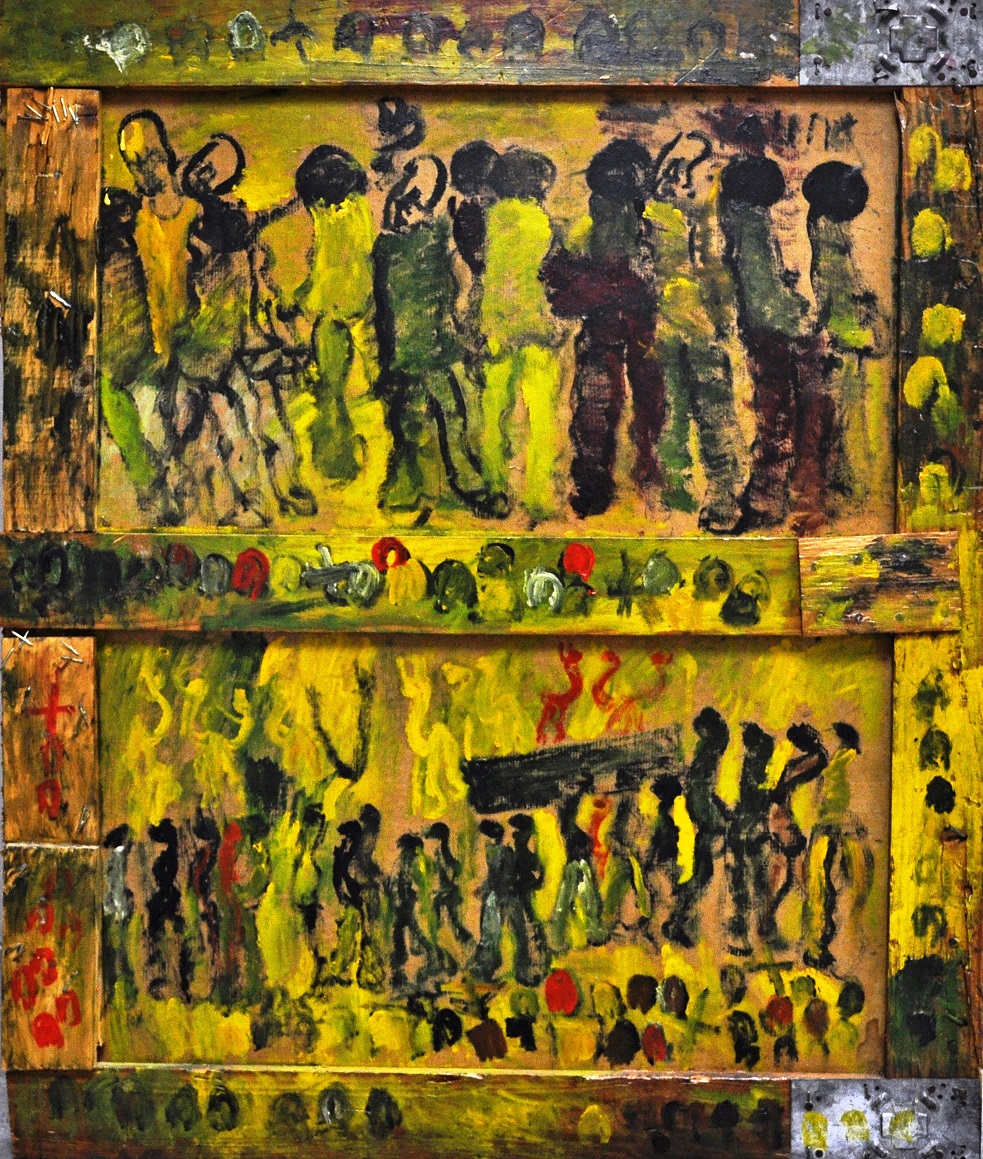
Florida. Self-taught, Young's work was often a blend painting/drawing
with collaged elements utilizing everyday discarded found objects.
Inspired
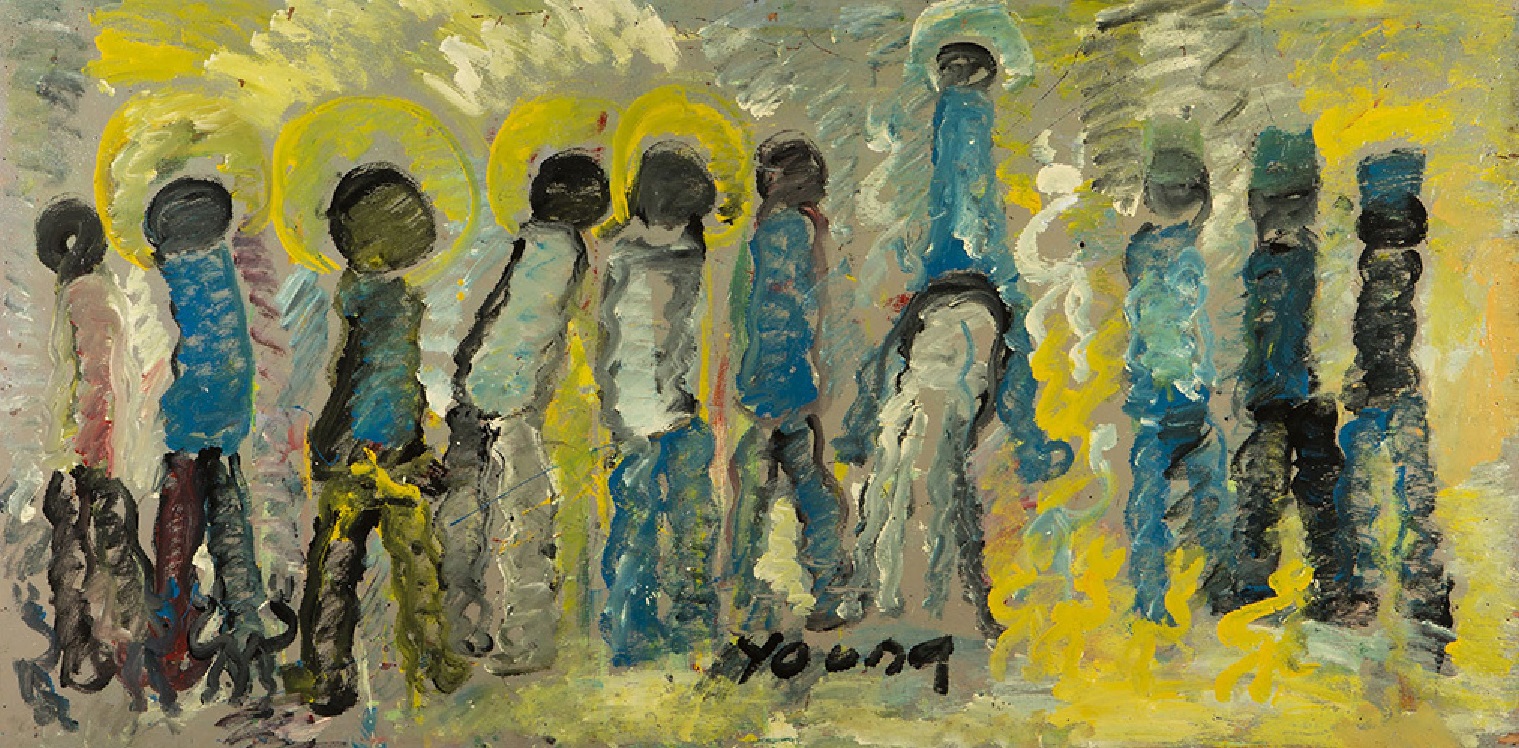
by documentaries, (art)books, American history and spiritual folklore
his visual vocabuluary was vast; wild horses, urban landscapes, (self)
portraits, figures, holymen, angels, warriors, boats, sports, musicians,
erotica, processions and incarceration to name but a
few....(purvisyoung.com).Purvis Young was born in Liberty City, a
neighborhood of Miami, Florida, on February 2, 1943. As a young boy his
uncle introduced him to drawing, but Young lost interest quickly.He
never attended high school.
As a teenager Young served three years
(1961–64) in prison at North Florida's Raiford State Penitentiary for
breaking and entering. While in prison he would regain his interest in
art and began drawing and studying art books.When released, he began to
produce thousands of small drawings, which he kept in shopping carts and
later glued into discarded books and magazines that he found on the
streets. He proceeded to move into the Overtown neighborhood of
Miami.Young found himself attracted to a vacant alley called Goodbread
Alley, which was named after the Jamaican bakeries that once occupied
the street; he would start living there in 1971.In the early 1970s Young
found inspiration in the mural movements of Chicago and Detroit, and
decided to create a mural of inspiration Overtown.He had never painted
before, but inspiration struck and he began to create paintings and
nailing them to the boarded up storefronts that formed the alley. He
would paint on wood he found on the streets and occasionally paintings
would "disappear" from the wall, but Young didn't mind. About two years
after starting the mural, tourists started visiting the alley, mainly
white tourists. Occasionally Young would sell paintings to visitors -
tourists and collectors alike - right off the wall. The mural garnered
media attention, including the attention of millionaire Bernard Davis,
owner of the Miami Art Museum. Davis became a patron of Young's,
providing him with painting supplies as well. Davis died in 1973,
leaving Young a local celebrity in Miami.In the late 1990s and early 2000s he began
exploring other inspirations by watching historical documentaries about
war, the Great Depression, commerce, and Native American conflicts and
struggles in the United States. In 1999 the Rubell family, notable art
collectors from New York, purchased the entire content of Young's
studio, a collection of almost 3,000 pieces.In 2008 the Rubells donated
108 works to Morehouse College In January 2007, Purvis was selected as
the Art Miami Fair's Director's Choice at the Miami Beach Convention
Center and helped to establish a number of outdoor art fairs in South
Florida that continue today.
With artistic success came monetary
gain, and Young failed to maintain his estate. Before his death he
became involved in a legal battle with former manager, Martin Siskind.
Young sued Siskind for mismanagement of funds. In response, Siskind
successfully petitioned for Young to be declared mentally incompetent
and Young's affairs were placed in control of legal guardians. According
to friends, Young was not incompetent and was left destitute by the
procedures. Siskind stated that he and Young had settled the suit
amicably, and that Young retained ownership of 1,000 paintings and was
financially stable.Wikipedia