Exposition Art Blog: Norwegian painter
Showing posts with label Norwegian painter. Show all posts

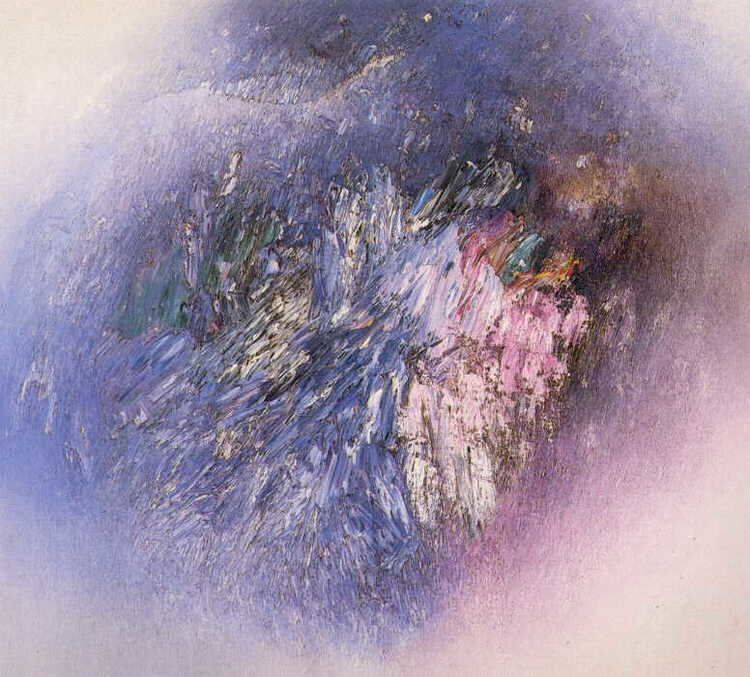
Jakob Weidemann - Abstract Expressionism


 Jakob Weidemann (1923 –2001) was a Norwegian artist. Jakob Weidemann is regarded as one of Norway's more important artists of post-war Modernism. Weidemann's work Storfuglen letter (1959) was selected as one of the twelve most important Norwegian artworks by Morgenbladet.
His first solo exhibition was at Paus Knudsens Kunsthandel in 1942. Weidemann joined the Norwegian resistance movement during the Occupation of Norway by Nazi Germany, was arrested but escaped to Sweden in 1944. While there he was the victim of an accident in which an explosive charge blew up in such a way that he was blinded. He regained his sight, but then only in the left eye. The experience of being blind may have been decisive for the direction his art was later to take – towards an explosion of color and light
 Weidemann is considered to have been become one of the more influential artists within Norwegian modernism in the 1950s. After some experimentation with different styles in the 1940s and 1950, Weidemann finally settled in what can be called expressive, lyrically abstract art. Abstract expressionism with nature as inspiration and basis became characteristic of work by Weidemann.Wikipedia


Jakob Weidemann - Norwegian Painting - Abstract Expressionism


Jakob Weidemann (1923 –2001) was a Norwegian artist. Jakob Weidemann is regarded as one of Norway's more important artists of post-war Modernism. Weidemann's work Storfuglen letter (1959) was selected as one of the twelve most important Norwegian artworks by Morgenbladet.
His first solo exhibition was at Paus Knudsens Kunsthandel in 1942. Weidemann joined the Norwegian resistance movement during the Occupation of Norway by Nazi Germany, was arrested but escaped to Sweden in 1944. While there he was the victim of an accident in which an explosive charge blew up in such a way that he was blinded. He regained his sight, but then only in the left eye. The experience of being blind may have been decisive for the direction his art was later to take – towards an explosion of color and light
 Weidemann is considered to have been become one of the more influential artists within Norwegian modernism in the 1950s. After some experimentation with different styles in the 1940s and 1950, Weidemann finally settled in what can be called expressive, lyrically abstract art. Abstract expressionism with nature as inspiration and basis became characteristic of work by Weidemann.Wikipedia


Frans Widerberg

Frans Widerberg (8 April 1934 – 7 April 2017) was a Norwegian painter and graphic artist.Widerberg was born in Oslo to Nicolai Magnus Widerberg and Ingrid Christine Blom. He made his exhibition debut in Oslo in 1963. Among his works is the woodcut Hieronymus from 1962 and De usynlige from 1979, both at the National Gallery of Norway. He was an exhibitor at the Bergen International Festival, and represented Norway at the Venice Biennale.Widerberg died at his home on 7 April 2017 after a short illness, one day before his 83rd birthday.Wikipedia


Rolf Nesch

Rolf (Emil Rudolf) Nesch (January 7, 1893 - October 27, 1975) was an expressionist artist, especially noted for his printmaking. Born in Germany, he moved to Norway following the Nazi takeover in 1933.
Nesch was born in Esslingen am Neckar, and studied at the academy in Dresden from 1912 to 1914. He then participated in World War I, but was taken prisoner by the British. In 1929 he settled in Hamburg to continue his painting career, influenced by expressionism in general, especially Ernst Ludwig Kirchner and Edvard Munch.


Upon the Nazi takeover in Germany in 1933, Nesch repatriated to Norway. Inspired by Norwegian scenery and working life,[1] he discarded canvas and paintbrushes for good, and produced the following year his first so-called material picture, and also took up sculpture. Apart from drawing, which was his natural tool and means of expression throughout, it was printmaking he devoted himself to most continuously and over the greatest number of years. And it is as printmaker that Rolf Nesch made his most significant contribution, not merely as a technical innovator who discovered the potential in new materials and methods, but also from the artistic point of view.


 Nesch was granted Norwegian citizenship in 1946. The National Gallery of Norway owns eleven material pictures, three sculptures as well as other graphic by Rolf Nesch.He was appointed a Commander of the Royal Norwegian Order of St. Olav[citation needed] and awarded the Swedish Prince Eugen Medal.
Nesch died in 1975 in Oslo. The Nesch Museum opened in 1993 in Ål, where he had lived for twenty-five years, to commemorate his hundredth anniversary.Wikipedia