Exposition Art Blog: conceptual artist
Showing posts with label conceptual artist. Show all posts

Robert Morris - Conceptual Art


 Robert Morris (1931 - 2018 )was an American sculptor, conceptual artist and writer. He was regarded as having been one of the most prominent theorists of Minimalism along with Donald Judd but he also made important contributions to the development of performance art, land art, the Process Art movement, and installation art. Morris lived and worked in New York. In 2013 as part of the October Files, MIT Press published a volume on Morris, examining his work and influence, edited by Julia Bryan-Wilson
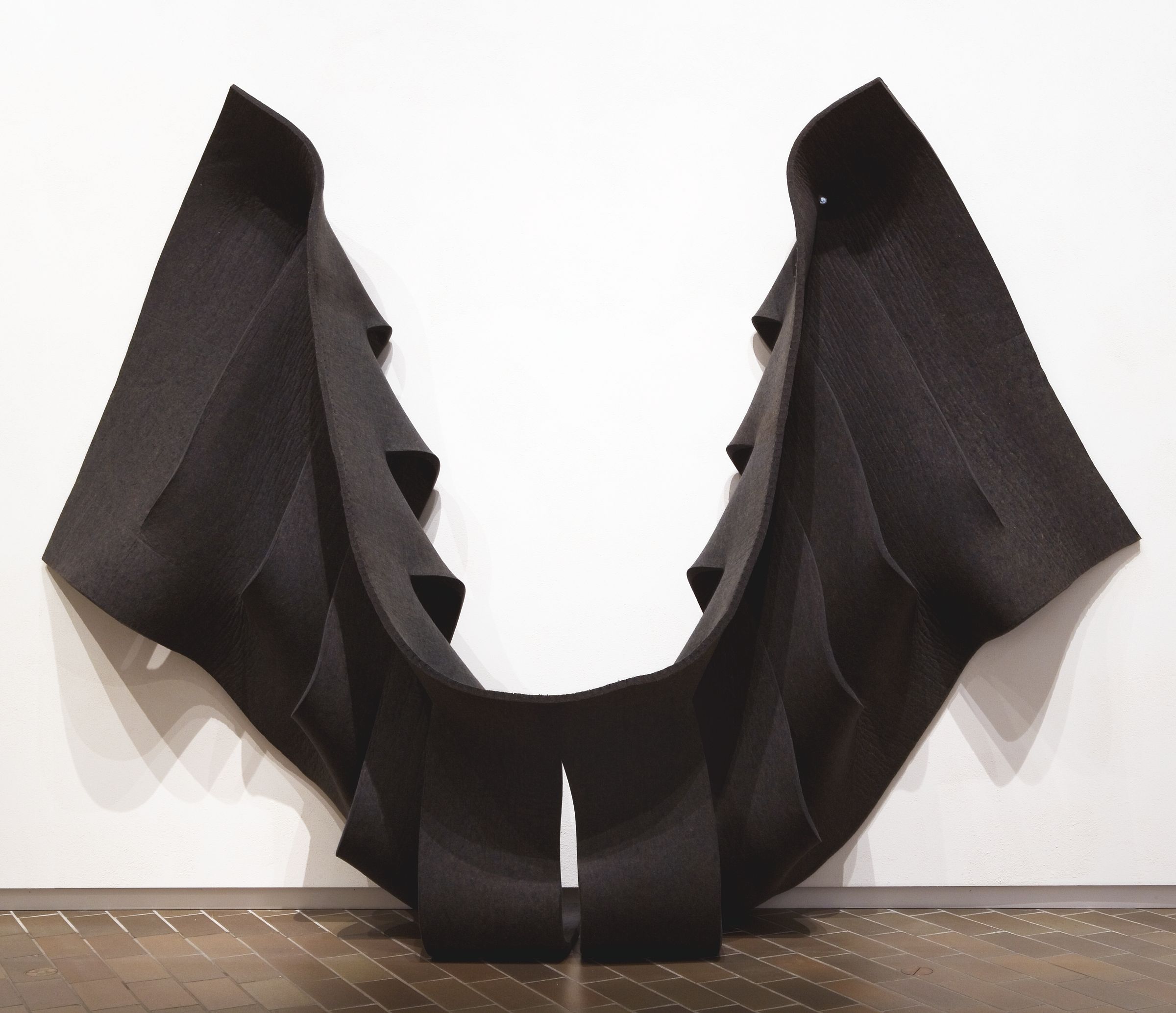
"Robert Morris has comported himself for decades as the least minimal of the original minimalists. While sharing most of the core group’s characteristics — including the complementary artist/writer mode — he has in both word and deed proved more committed than the others to contingency and experimentation. Alternating, often abruptly, between cool objects and evocations of calamity, his artistic outlook remains — as the spot-on title of his collected writings suggests — a Continuous Project Altered Daily. Though no slouch when it comes to minimal severity, his thinking often drifts closer in sensibility to Robert Smithson’s macro riffing than to Donald Judd’s ideological finalities.Minimalist theory made much of the viewer’s movement through space as part of what defined the sculptural. Morris, having come to this notion following a wider path of study than the others — a path that included engineering, art history, philosophy, and dance — found ways to follow intuitive offshoots that generated outward from minimalism’s basic premise. He took labyrinths and passageways, which were favored minimalist tropes, and superseded their phenomenological values with emotionally charged contexts that included prison architecture and Midwestern stockyards. Thus the jarring incongruence — to cite an extreme example — between his ascetic, process-oriented felt hangings of the 1970s and the apocalyptic Firestorm reliefs that soon followed. Keeping to a highly subjective route, he seems able to shuttle convincingly between the austere space of the artistically reductive and the emotionally charged arena of darker human experience, discovering along the way many disturbing links between the two."(hyperallergic.com)


James Lee Byars - Conceptual Art


James Lee Byars ( 1932- 1997)was an American conceptual artist and performance artist specializing in installations and sculptures, as well as a self-considered mystic. He was best known for his use of personal esoteric motifs, and his creative persona that has been described as 'half dandified trickster and half minimalist seer'.
Byars' works are often noted as constantly incorporating specific personal themes and motifs, leaning towards the esoteric while simultaneously being ritualistic and materialistic: Robert Clark, writing for The Guardian on the occasion of a Milton Keynes exhibition of his work, described it as 'impenetrably yet intriguingly hermetic'.Most in particular was gold as a material, which served as an elemental identifier. As well as this, works of his demonstrate a fascination with the symbolism of numbers: Clark quotes in the same exhibition, referring to a specific piece of his, writing that he 'imbued the number 100 with symbolic significance, having made a symmetrical arrangement of 100 white marbles and draping 100 nude volunteers in a collective red garment'.A common theme in his works is perfection (especially upon the word 'Perfect'), which he extended into a personal journey that led to his ambiguously celebratory exploration of shapes, numbers and precious materials. A MoMA text explaining his oeuvre, in the context of his piece The Table of Perfect, noted that while it "looks pristine, it—like any other object—can only ever exist as a sign of perfection and can never embody the total concept."Wikipedia


Michael Gross - Israeli Painter, Sculptor and Conceptual Artist


Michael Gross ( 1920 – 2004) was an Israeli painter, sculptor and conceptual artist.Michael Gross was born in Tiberias in the British-administered Palestine in 1920. He grew up in the farming village of Migdal. In 1939-1940, he left to study at the Teachers’ Training College in Jerusalem. In 1939, while he was away, his father was murdered by Arabs, and the family farm and home were destroyed. This event impacted on his work as an artist.From 1943 to 1945, he studied architecture at Technion – Israel Institute of Technology in Haifa. From 1951 to 1954, he studied art at the École nationale supérieure des Beaux-Arts in Paris. He returned to Israel in 1954 and settled in the artists’ village of Ein Hod.
"After making drawings and paintings of plants, landscapes, and buildings over many years, I decided to try abstraction. This change opened up a new world for me to explore how I could express my feelings—at times, joy, at other moments, sorrow, as well as pain and fear—more directly. This gave me far greater power and the freedom to experiment continually.The painters who have influenced me most are Jackson Pollock, Willem de Kooning, and Richard Diebenkorn, whom I consider the pre-eminent artists of abstract expressionism. I have tried to emulate them in my own small way.My choice of paints has varied. Earlier in my career, I used oil predominantly and, more recently, acrylic. For the last several years, I have moved towards much brighter colors in more open space, and to significantly larger canvases. Most of the works in this exhibition use at least two canvases together to create the final work.Over time, my color palette has evolved. Before the paintings in the American University Museum exhibition, I spent a number of years focusing on making paintings that were predominantly monochromatic (black, yellow, red, etc.) with subtle inclusion of other colors onto the surface, as well as from underneath.I use yellow in many shades as well as orange, green, and blue, with brown as an accent, making connections between the larger yellow sections. There are many extended narrow lines in black as well as other colors that weave the work together. I work rapidly, pacing the studio to look at the painting up close, and then from a distance. I often rotate the canvas so I can see where there is imbalance, flinging paint to create lines and movement. This new focus has produced very large paintings that are filled with color, carefully constructed so that every mark attains its rightful place in equilibrium."Michael Gross ( michaelgrossart.com )