Exposition Art Blog: Poland
Showing posts with label Poland. Show all posts

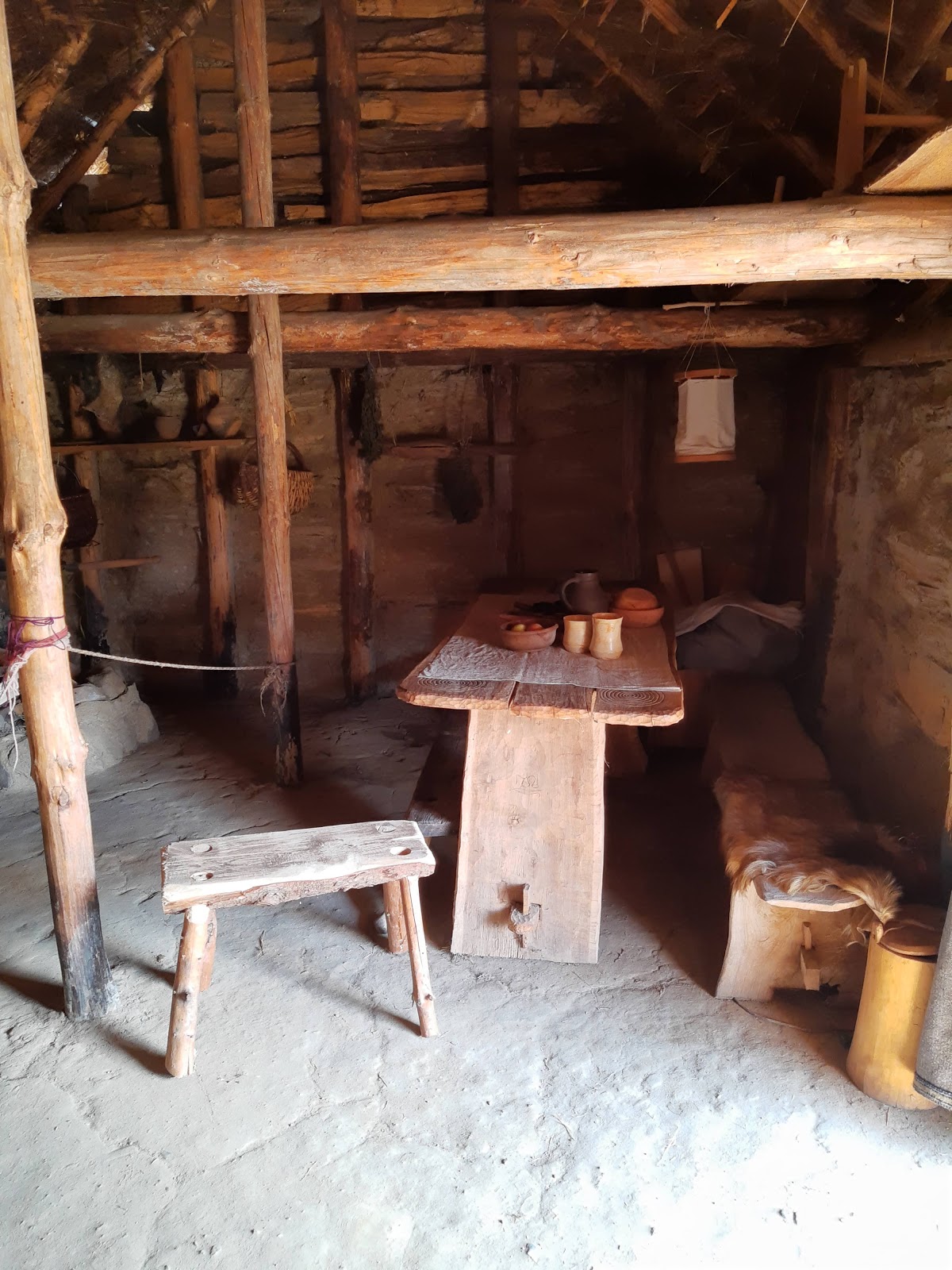
The settlement of Slavs and Vikings Wolin Poland


"Anyone who would like to learn about Wolin’s history and listen to the echoes of bygone days is welcome to enter the gates of the Slavs and Vikings’ Center, one of Poland’s most interesting tourist attractions. This recreated settlement offers a glimpse into the everyday life of Wolin’s inhabitants in the period from the 9th to the 12th century. Its buildings have been painstakingly recreated on the basis of archaeological research from the area of Wolin. It currently features a defensive gate with a palisade, craftsmen's shelters, a wooden wharf for boat replicas and 27 reconstructions of early medieval houses. These cottages are created in five different styles, their structure heavily inspired by the abundance of wood in the local forests and historical events, such as raids and the burning of the city. The center presents the Slavic and Scandinavian cultures, which had the most impact on the development of the city. Make no mistake, this is not a traditional museum. There are no historical items on display here, only reconstructions and stylizations of cottages, along with their furnishings. This lets you freely roam around the area, go everywhere, touch everything, sit on a bench at a table, lie down on a bed, try on costumes or armor, train archery or taste the products of old cuisine. Photos taken in such scenery are truly unique and make for wonderful souvenirs."(exarc.net)




The Castle of the Teutonic Order in Malbork - Gothic architecture

 Gothic architecture is most familiar as the architecture of many of the great cathedrals, abbeys and churches of Europe.
 The Castle of the Teutonic Order in Malbork (Polish: zamek w Malborku; German: Ordensburg Marienburg) is a 13th-century Teutonic castle and fortress located near the town of Malbork, Poland. It is the largest castle in the world measured by land area and a UNESCO World Heritage Site.It was originally constructed by the Teutonic Knights, a German Roman Catholic religious order of crusaders, in a form of an Ordensburg fortress. The Order named it Marienburg in honour of Mary, mother of Jesus. In 1466, during the division of Prussia into eastern and western parts, the castle and town became part of western Royal Prussia, a region of the Polish–Lithuanian Commonwealth. It served as one of the several Polish royal residences, interrupted by several years of Swedish occupation, and fulfilling this function until the First Partition of Poland in 1772. Following Germany's defeat in 1945, the land was reassigned to Poland. Heavily damaged during World War II, the castle was renovated under the auspices of modern-day Poland in the second half of the 20th century and most recently in 2016. Nowadays, the castle hosts exhibitions and serves as a museum.The castle is a classic example of a medieval fortress and, on its completion in 1406, was the world's largest brick castle.[3] UNESCO designated the "Castle of the Teutonic Order in Malbork" and the Malbork Castle Museum a World Heritage Site in December 1997.It is one of two World Heritage Sites in the region, together with the "Medieval Town of Toruń", which was founded in 1231.
Castle is also one of Poland's official national Historic Monuments (Pomnik historii), as designated on 16 September 1994. Its listing is maintained by the National Heritage Board of Poland. Wikipedia