Exposition Art Blog: American Contemporary Art
Showing posts with label American Contemporary Art. Show all posts

Jackie Saccoccio


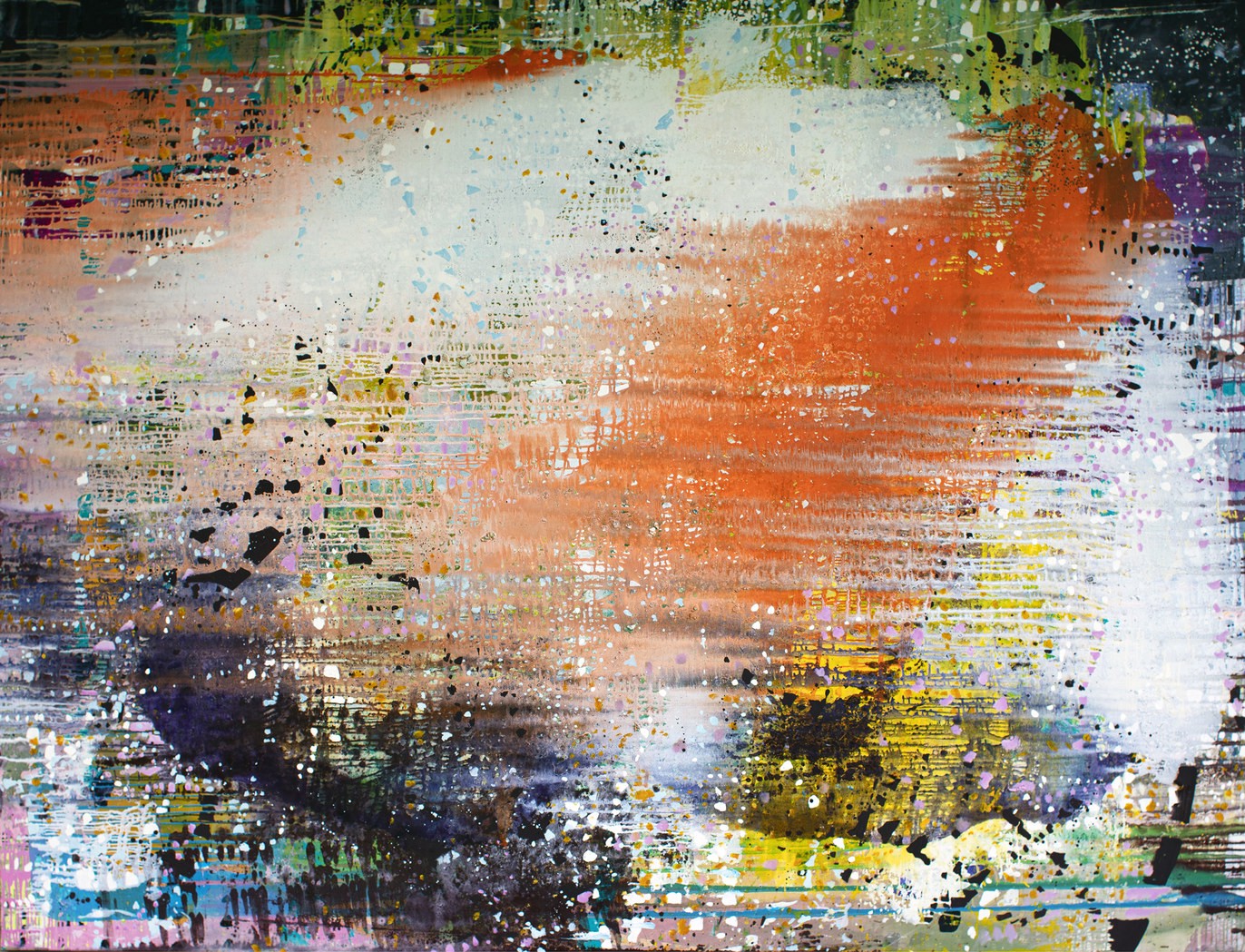
Jackie Saccoccio (1963 –2020) was an American abstract painter. Her works, considered examples of gestural abstraction, featured bright color, large canvases, and deliberately introduced randomness.Saccoccio's works have been displayed at the Metropolitan Museum of Art in New York, Museum of Contemporary Art, Chicago, and the Museum of Fine Art in Boston. She received the New Art Dealers Alliance (NADA) Artadia award in 2015 and was also awarded grants from the Fulbright–Hays Program (1990), John Simon Guggenheim Memorial Foundation (2000), and the American Academy in Rome.Starting in the 1990s, Saccoccio was known for her vivid and evocative works of gestural abstraction, building on the work of artists like Helen Frankenthaler and Joan Mitchell. Her works, inspired by abstract expressionism and Italian Baroque art, were part of a movement which emphasized adding vitality to abstract painting through experimentation with randomness and paint handling. Jerry Saltz, reviewing a 2007 show in The Village Voice, noted Saccoccio's influences: "Saccoccio's paintings come dangerously close to looking like mid-century abstraction, particularly the work of artists like Joan Mitchell and de Kooning. Yet if you spend time in this show, the old-school quotient subsides and sparks begin to fly."Saccoccio worked with large canvases on which she outlaid "expansive waves and splashes of bright, luminous color", creating fragmented visual spaces.She introduced randomness in her works by pouring and splattering paint while tilting the canvas in different directions.She also transferred paint between canvases, pulled them across, and scraped through dry paint pigments to add onto the randomness.In what has been described as an intensely physical process, she would sometimes press together two large and wet canvases, apply mica for an additional layer of sheen, and at times have as many as 50 layers of paint on her canvas.These actions, and the added bright colors, introduced an additional element of spontaneity to her works.The outcome was highly layered, vibrantly colored, drip-networked, and had large shifting fields of color. Wikipedia 


Truman Tennis Lowe


 Truman Lowe, or Wakajahukga in Ho-Chunk, (American, Ho-Chunk, 1944–2019) is considered one of the foremost Native American artists of the twentieth and twenty-first centuries. Lowe was the youngest of six children and was raised in the Winnebago Indian Mission east of Black River Falls in west-central Wisconsin. He grew up alongside the Black River in the geographical and cultural homeland of the Ho-Ho-Chunk is one of twelve First Nations in the state of
Wisconsin and one of eleven tribes whose lands were forcibly ceded to the United States through
treaties in the nineteenth century.2 The origin stories of the Ho-Chunk Nation place these indigenous
people in the geographical area west of Lake Michigan, which became the Wisconsin Territory in 1836
and subsequently joined the Union as the thirtieth state in 1848.
Lowe's early work was inspired heavily by the education he was receiving. Paintings showing exercises in abstraction and geometric patterns in the style of Frank Stella are seen in paintings like Suzy (1968) and color theory works such as Yellow Over Green and Yellow Over Red (1969), the latter two which have since been destroyed. Working in clay, Lowe created egg-shaped sculptures that sat on coiled stands, Collection of Eggs and Unmatched Halves (c. 1968), giving a fantasy yet comic feel to his early experiments in art.
Sculpture classes taught him about the power of the line in artworks and its placement in nature. Lowe studied the works of Brâncuși, where he familiarized himself with geometry in sculpture, and Henry Moore's works regarding scale in sculpture.And with the popularity of plastic in the 1960s Lowe expanded his mediums to complete 3-D works including a life-size toaster of sheet plastic made from a sandwich sealer, complete with pieces of toast in the slot, recalling the soft sculpture works of Claes Oldenburg at the time.
It knowledge of and reverence for natural materials that instilled in Lowe his family’s and his community’s connection to the environment. The ethic of sustainable use of natural resources
was impressed upon him early on and he made judicious use and reuse of all the natural materials that
he collected throughout his career.


Louise Fishman - American Abstract Art


 Louise Fishman ( 1939 –  2021) was an American abstract painter from Philadelphia, Pennsylvania. For many years she lived and worked in New York City, where she died.
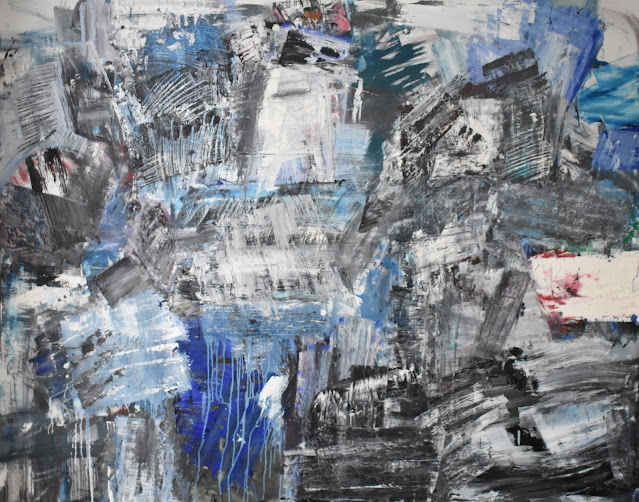
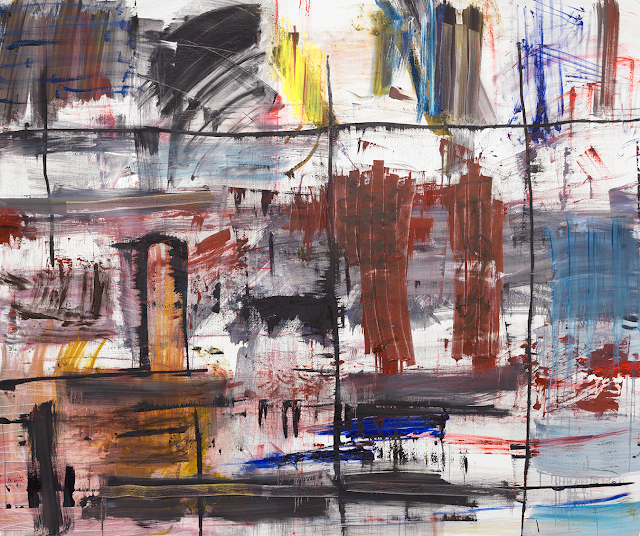
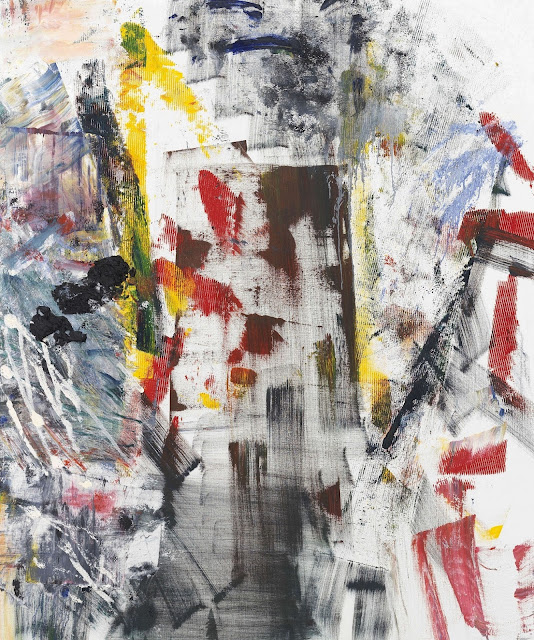
Fishman's painting style at first gave her some trouble in being recognized. She exhibited only occasionally in the 1960s, a period in her life when she produced primarily grid-based work. During the later 1970s her abstract work was linked with Pattern painting. Large scale works like Grand Slam (1985) and Cinnabar and Malachite (1986) reflected her bold visions, and caused many reviewers to label her work as having elements of neo-expressionism.As the feminist movement gained strength in the 1970s, Fishman abandoned her minimalist-inspired, grid-like paintings and began making work that reflected women's traditional tasks. These pieces required the sort of repetitive steps that characterize activities like knitting, piecing, or stitching. Returning later to the masculine realm of abstract painting, Fishman still sought a way to distinguish what she was doing from the work of male artists, both historic and contemporary.The resulting compositions combine gestural brushwork with an orderly structure: it is as if Fishman built or wove—her paintings, starting from a foundation and carefully adding to them, layer upon interlocking layer. Wikipedia 

"As with all good paintings, those of Louise Fishman speak for themselves, powerfully. To realise painting as art sprang not only from her will to do so, but also from her strong background in the study of painting through actually making paintings, in depth, wholly, and streadfastly."  - Suzan Frecon
"I'm allowing myself much more freedom in the studio. I would have never allowed all that white space of the canvas to be there before. I wanted to give everything a lot of richness, but this is a different story. Now it's about giving reign to what paint does on its own. And I do think there's something magical about painting. Something is made out of paint, aside from the purpose it gives my life."  - Louise Fishman