Exposition Art Blog: William Ronald
Showing posts with label William Ronald. Show all posts

William Ronald - Canadian Abstract Painting


William Ronald ( 1926 – 1998) was an important Canadian painter, best known as the founder of the influential Canadian abstract art group Painters Eleven in 1954. 
William Ronald was a graduate of the Ontario College of Art who quickly found that abstract painters could not get their work exhibited in Toronto galleries. Working for the Robert Simpson Co. department store, he persuaded management to pair abstract paintings with furniture displays, thereby discovering a way to get the public to accept non-representational art. 
Despite the success of that show, Abstracts at Home, Ronald resented the city's general attitude toward its artists and moved to the United States, eventually becoming an American citizen. Ronald shared a studio with Frank Stella and joined the stable of artists at Manhattan's Kootz Gallery, where he was put on retainer. He was quickly accepted by critics and collectors and enjoyed a multi-year period of success.Ronald loved to paint in public, frequently hiring strippers and showgirls to dance around him as he painted. He continued to paint until his death in 1998 and in fact suffered a heart attack while painting. Wikipedia
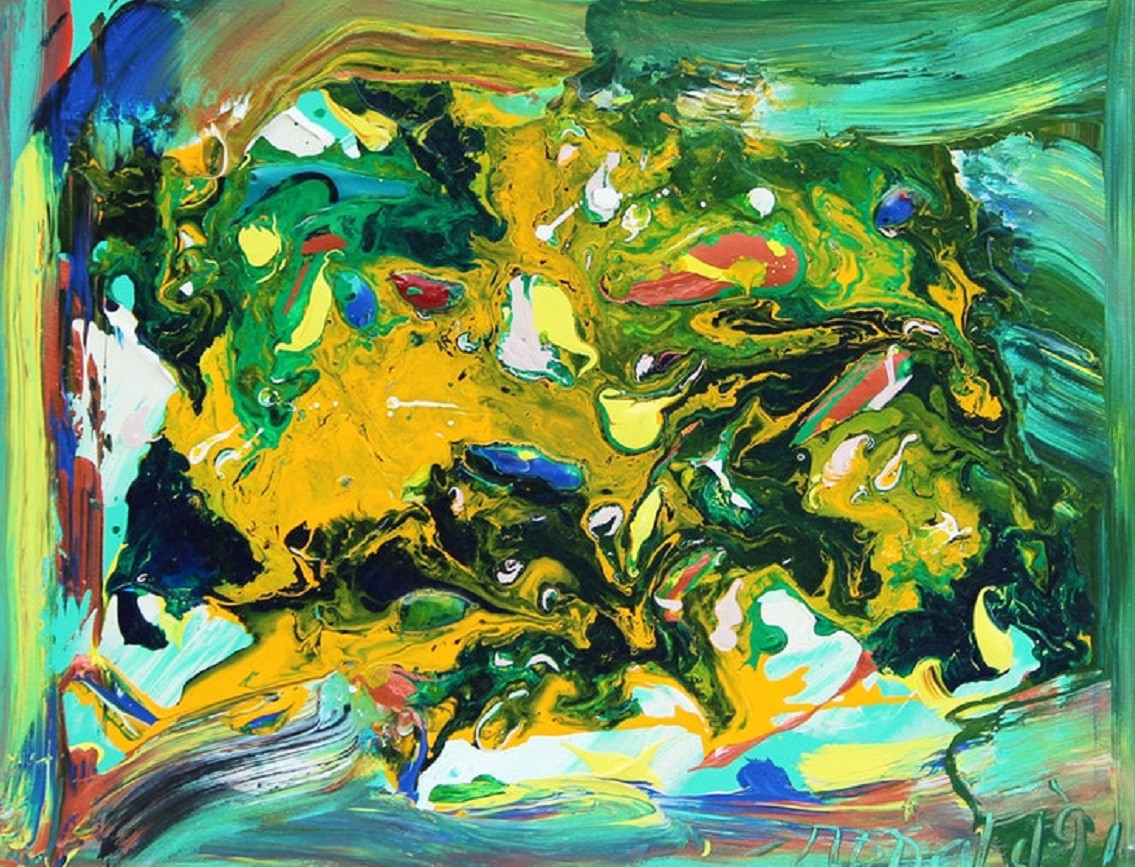


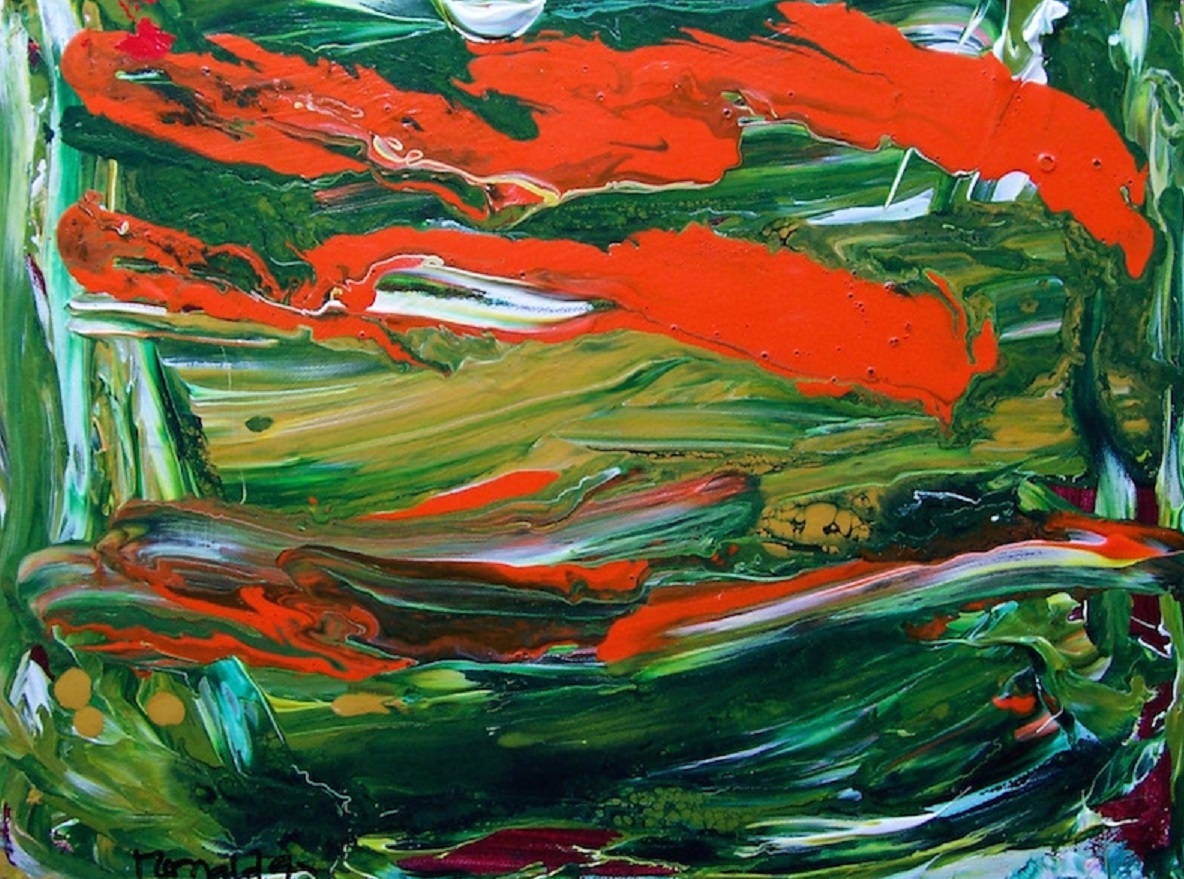

William Ronald - Canadian Abstract Painter


"William Ronald, Canadian painter (born Aug. 13, 1926, Stratford, Ont.—died Feb. 9, 1998, Barrie, Ont.), was the driving force behind the formation in 1953 of Painters Eleven, a group that introduced abstraction to Canadian art. Ronald studied with Jock Macdonald at the Ontario College of Art in 1951 before briefly attending Hans Hofmann’s school in New York City the following year. Ronald embraced the contemporary, international style of Abstract Expressionism, and his monumental canvases were a striking departure from the then-prevailing approach of the Group of Seven, who painted folkloric subjects featuring Canadian themes in an earnest, traditional manner. Originally based in Toronto, Ronald visited New York City frequently before moving there in 1955. Several of his works were shown there in the Kootz Gallery, and others were purchased by the Guggenheim Museum in New York City and the Art Institute of Chicago. After a decade in New York City, he returned to Toronto. During a period of relative artistic inactivity, Ronald developed a flamboyant public persona and worked as an arts broadcaster on television and radio. He resumed painting in the early 1970s on a prolific scale, partly to fund his lavish lifestyle, but his extravagantly self-hyped works of this period, featuring an increasing preoccupation with Action painting, did not enhance his reputation. Ronald’s works from the middle and late 1950s were considered his most significant--large, ambitious panels of great spontaneity and exuberance, showing the influence of Willem de Kooning but featuring bold central images."(britannica.com)


Abstract Expressionism Art William Ronald

"William Ronald, (born Aug. 13, 1926, Stratford, Ont.—died Feb. 9, 1998, Barrie, Ont.), Canadian painter who was the driving force behind the formation in 1953 of Painters Eleven, a group that introduced abstraction to Canadian art. Ronald studied with Jock Macdonald at the Ontario College of Art in 1951 before briefly attending Hans Hofmann’s school in New York City the following year. Ronald embraced the contemporary, international style of Abstract Expressionism, and his monumental canvases were a striking departure from the then-prevailing approach of the Group of Seven, who painted folkloric subjects featuring Canadian themes in an earnest, traditional manner. Originally based in Toronto, Ronald visited New York City frequently before moving there in 1955. Several of his works were shown there in the Kootz Gallery, and others were purchased by the Guggenheim Museum in New York City and the Art Institute of Chicago. After a decade in New York City, he returned to Toronto. During a period of relative artistic inactivity, Ronald developed a flamboyant public persona and worked as an arts broadcaster on television and radio. He resumed painting in the early 1970s on a prolific scale, partly to fund his lavish lifestyle, but his extravagantly self-hyped works of this period, featuring an increasing preoccupation with Action painting, did not enhance his reputation. Ronald’s works from the middle and late 1950s were considered his most significant--large, ambitious panels of great spontaneity and exuberance, showing the influence of Willem de Kooning but featuring bold central images."(britannica.com)


William Ronald

William Ronald, R.C.A. (August 13, 1926 – February 9, 1998) (born William Ronald Smith, was an important Canadian painter, best known as the founder of the influential Canadian abstract art group Painters Eleven in 1954. He was also the older brother of painter John Meredith (1933–2000)


 William Ronald was a graduate of the Ontario College of Art who quickly found that abstract painters could not get their work exhibited in Toronto galleries. Working for the Robert Simpson Co. department store, he persuaded management to pair abstract paintings with furniture displays, thereby discovering a way to get the public to accept non-representational art. Despite the success of that show, Abstracts at Home, Ronald resented the city's general attitude toward its artists and moved to the United States, eventually becoming an American citizen. Ronald shared a studio with Frank Stella and joined the stable of artists at Manhattan's Kootz Gallery, where he was put on retainer. He was quickly accepted by critics and collectors and enjoyed a multi-year period of success. Eventually, Ronald returned to Toronto, as a landed immigrant in the country of his birth, partly for personal reasons and partly because he could not agree with Kootz. He was made a member of the Royal Canadian Academy of Arts Wikipedia