Exposition Art Blog: art installation
Showing posts with label art installation. Show all posts

Christian Boltanski - Conceptual Art


 Christian Boltanski (1944 – 2021) was a French sculptor, photographer, painter, and film maker. He is best known for his photography installations and contemporary French conceptual style
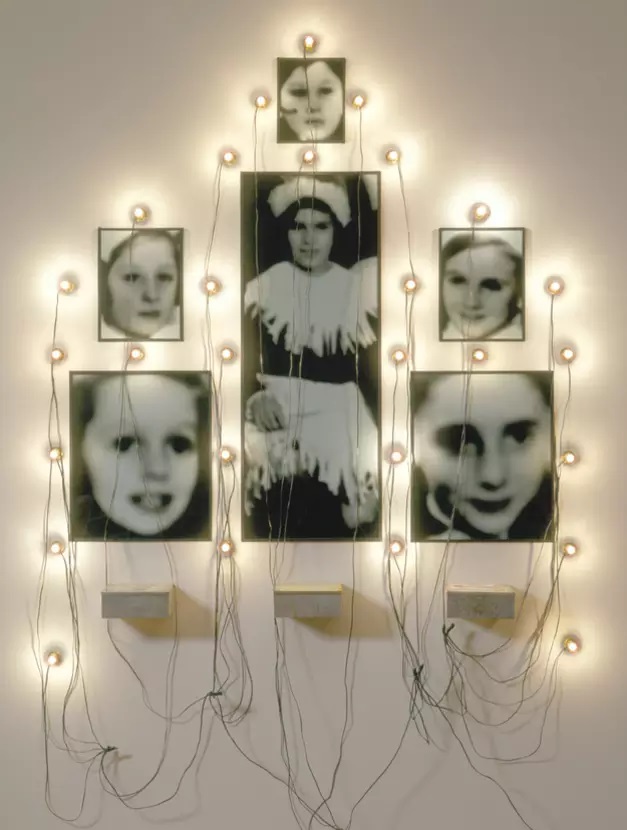
Boltanski began creating mixed media/materials installations in 1986 with light as essential concept. Tin boxes, altar-like construction of framed and manipulated photographs (e.g. Chases School, 1986–1987), photographs of Jewish schoolchildren taken in Vienna in 1931, used as a forceful reminder of mass murder of Jews by the Nazis, all those elements and materials used in his work are used in order to represent deep contemplation regarding reconstruction of past. While creating Reserve (exhibition at Museum für Gegenwartskunst in Basel in 1989), Boltanski filled rooms and corridors with worn clothing items as a way of inciting profound sensation of human tragedy at concentration camps. As in his previous works, objects serve as relentless reminders of human experience and suffering. His piece, Monument (Odessa), uses six photographs of Jewish students in 1939 and lights to resemble Yahrzeit candles to honor and remember the dead. "My work is about the fact of dying, but it's not about the Holocaust itself." In 1971 Boltanski produced his installation, L' Album de la famille D. 1939-1964.
Additionally, his enormous installation titled "No Man's Land" (2010) at the Park Avenue Armory in New York City, is a great example of how his constructions and installations trace the lives of the lost and forgotten.Wikipedia


Truman Tennis Lowe


 Truman Lowe, or Wakajahukga in Ho-Chunk, (American, Ho-Chunk, 1944–2019) is considered one of the foremost Native American artists of the twentieth and twenty-first centuries. Lowe was the youngest of six children and was raised in the Winnebago Indian Mission east of Black River Falls in west-central Wisconsin. He grew up alongside the Black River in the geographical and cultural homeland of the Ho-Ho-Chunk is one of twelve First Nations in the state of
Wisconsin and one of eleven tribes whose lands were forcibly ceded to the United States through
treaties in the nineteenth century.2 The origin stories of the Ho-Chunk Nation place these indigenous
people in the geographical area west of Lake Michigan, which became the Wisconsin Territory in 1836
and subsequently joined the Union as the thirtieth state in 1848.
Lowe's early work was inspired heavily by the education he was receiving. Paintings showing exercises in abstraction and geometric patterns in the style of Frank Stella are seen in paintings like Suzy (1968) and color theory works such as Yellow Over Green and Yellow Over Red (1969), the latter two which have since been destroyed. Working in clay, Lowe created egg-shaped sculptures that sat on coiled stands, Collection of Eggs and Unmatched Halves (c. 1968), giving a fantasy yet comic feel to his early experiments in art.
Sculpture classes taught him about the power of the line in artworks and its placement in nature. Lowe studied the works of Brâncuși, where he familiarized himself with geometry in sculpture, and Henry Moore's works regarding scale in sculpture.And with the popularity of plastic in the 1960s Lowe expanded his mediums to complete 3-D works including a life-size toaster of sheet plastic made from a sandwich sealer, complete with pieces of toast in the slot, recalling the soft sculpture works of Claes Oldenburg at the time.
It knowledge of and reverence for natural materials that instilled in Lowe his family’s and his community’s connection to the environment. The ethic of sustainable use of natural resources
was impressed upon him early on and he made judicious use and reuse of all the natural materials that
he collected throughout his career.


Roberto Chabet - Philippine Conceptual Art


 Roberto Chabet (1937–2013) was a renowned Filipino conceptual artist, teacher, and curator, who played a key role in the development of Philippine contemporary art. Through his expanded art practice, he supported and nurtured the artistic development of several generations of Filipino artists, from his contemporaries in the 1960s and 1970s to his numerous students at the University of the Philippines College of Fine Arts.
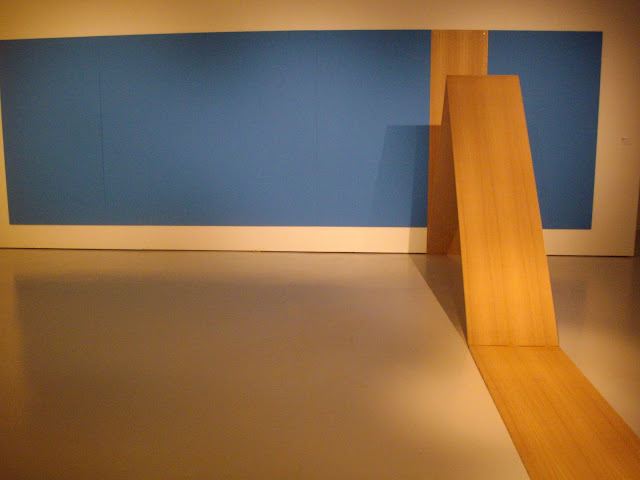
He is highly regarded for his experimental works, ranging from sculptures and installations made from everyday and found materials, to paintings, drawings and collages. He was the founding Museum Director of the Cultural Center of the Philippines (CCP) from 1967–70 and subsequently led the alternative artist group Shop 6. He taught for more than thirty years at the University of the Philippines while continuing to be involved with artist-run spaces in Manila. Chabet’s sculptures often drew on and extended conceptual ideas of relational and serial structures, using materials such as plywood for their association with the rebuilding of Manila after it was bombed at the end of World War Two, and implicating the body of the viewer into an experience of the work in space.