Exposition Art Blog: Abstract Artworks
Showing posts with label Abstract Artworks. Show all posts

Jackie Saccoccio


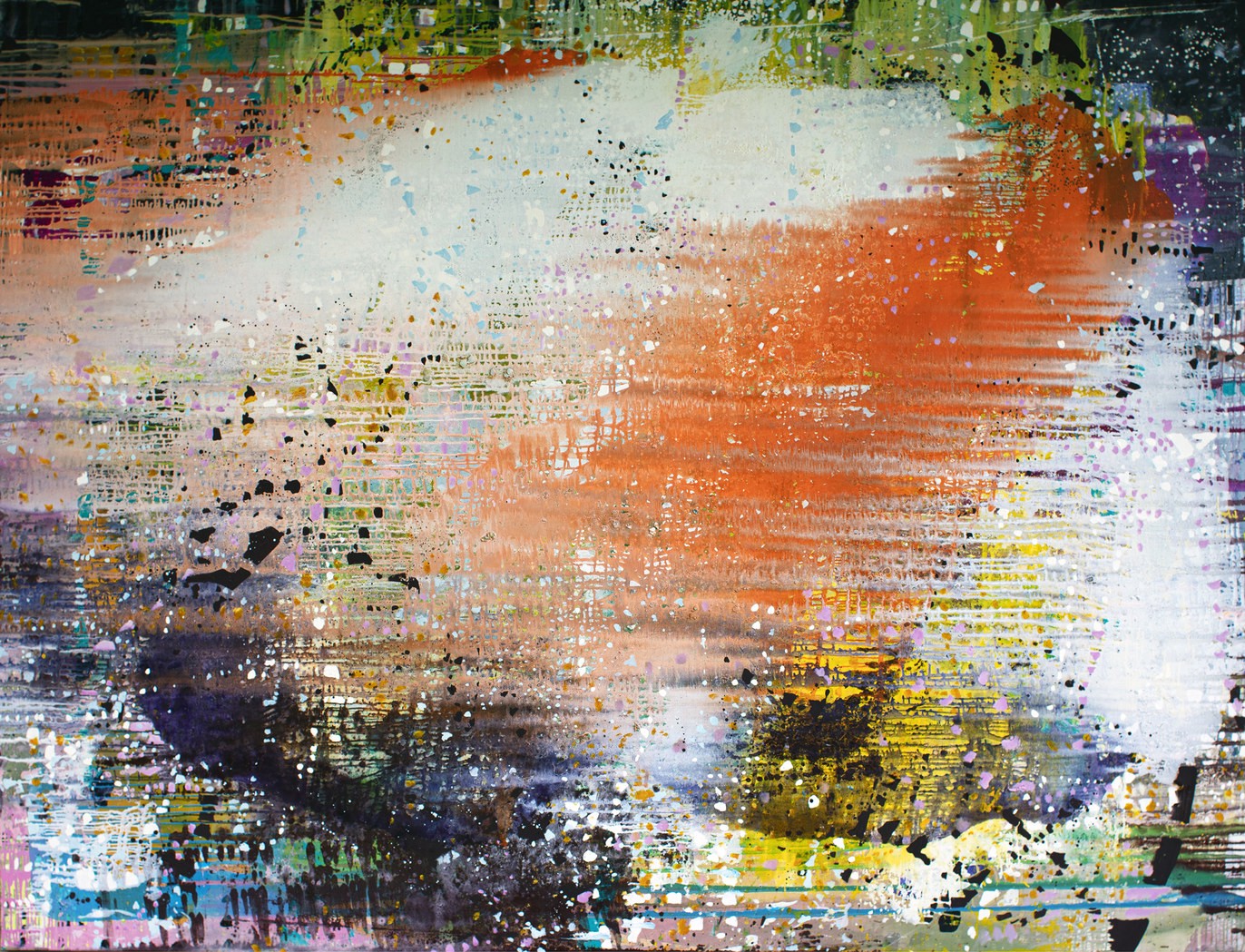
Jackie Saccoccio (1963 –2020) was an American abstract painter. Her works, considered examples of gestural abstraction, featured bright color, large canvases, and deliberately introduced randomness.Saccoccio's works have been displayed at the Metropolitan Museum of Art in New York, Museum of Contemporary Art, Chicago, and the Museum of Fine Art in Boston. She received the New Art Dealers Alliance (NADA) Artadia award in 2015 and was also awarded grants from the Fulbright–Hays Program (1990), John Simon Guggenheim Memorial Foundation (2000), and the American Academy in Rome.Starting in the 1990s, Saccoccio was known for her vivid and evocative works of gestural abstraction, building on the work of artists like Helen Frankenthaler and Joan Mitchell. Her works, inspired by abstract expressionism and Italian Baroque art, were part of a movement which emphasized adding vitality to abstract painting through experimentation with randomness and paint handling. Jerry Saltz, reviewing a 2007 show in The Village Voice, noted Saccoccio's influences: "Saccoccio's paintings come dangerously close to looking like mid-century abstraction, particularly the work of artists like Joan Mitchell and de Kooning. Yet if you spend time in this show, the old-school quotient subsides and sparks begin to fly."Saccoccio worked with large canvases on which she outlaid "expansive waves and splashes of bright, luminous color", creating fragmented visual spaces.She introduced randomness in her works by pouring and splattering paint while tilting the canvas in different directions.She also transferred paint between canvases, pulled them across, and scraped through dry paint pigments to add onto the randomness.In what has been described as an intensely physical process, she would sometimes press together two large and wet canvases, apply mica for an additional layer of sheen, and at times have as many as 50 layers of paint on her canvas.These actions, and the added bright colors, introduced an additional element of spontaneity to her works.The outcome was highly layered, vibrantly colored, drip-networked, and had large shifting fields of color. Wikipedia 


Heinz Trökes


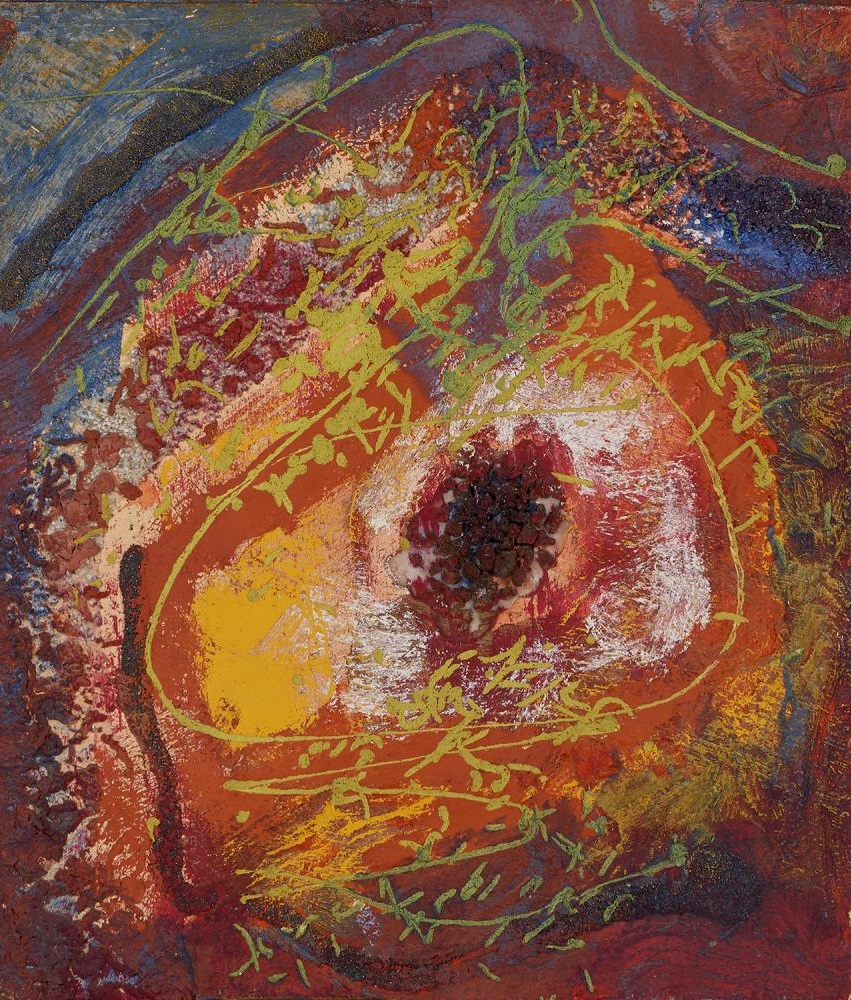
Heinz Trökes (1913 –1997) was a German painter, printmaker and art teacher "I believe in the creative in the world and in people, that art will endure and that it is worth living in our century, despite everything. Don’t become timid, don’t let yourself be upset by big talk, doubt, smile, let yourself be surprised, even by yourself, experience our world with keen senses.The terrestrial zoo is large and has room for many species; the higher of them are our good fortune and our comfort. I would like to call them poets, who see our world in a new way, in colours, words, shades and equations, as we have not yet known it, who reveal unparalleled wealth."(troekes.com)


Gerome Kamrowski - Abstract Surrealism


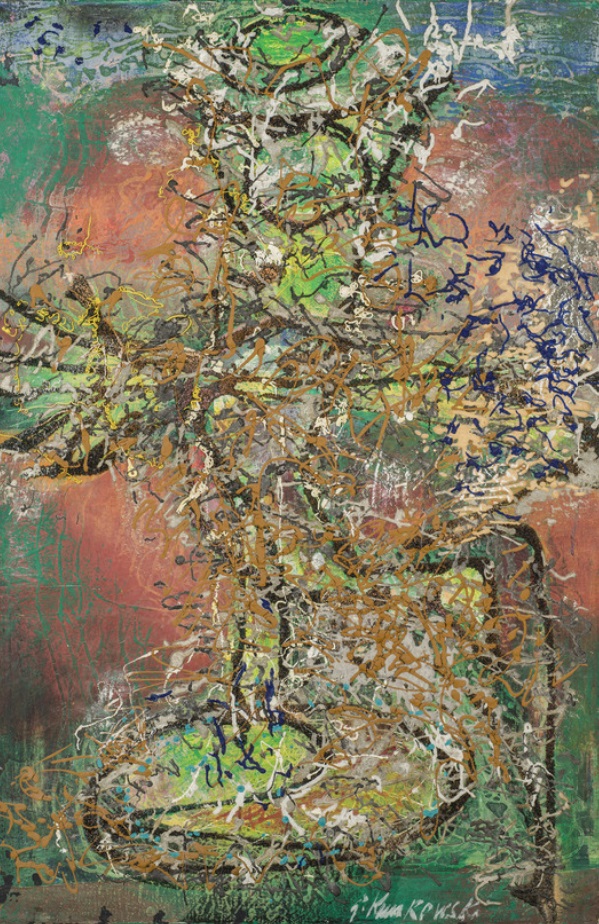
 Gerome Kamrowski (1914 –2004) was an American artist and participant in the Surrealist Movement in the United States.He was born in Warren, Minnesota and begun to study art in the early 1930s at the St. Paul School of Art , and later to the New Bauhaus in Chicago (now Illinois Institute of Technology's Institute of Design). He then moved to New York to study with Hans Hofmann, where he was awarded a Guggenheim fellowship.In the late 1930s and early 1940s he lived in New York and had been working with surrealist automatism for several years. Kamrowski became an integral part of the emerging surrealists and collaborated with William Baziotes, Robert Motherwell, Jackson Pollock and Roberto Matta. This group was the kernel of the open-ended movement that was referred to as abstract surrealism and would over time prove to be the beginnings of abstract expressionism.Gerome Kamrowski was one of the few American artists to be included in Peggy Guggenheim's The Art of This Century Gallery in 1943. He also had shows at Museum of Modern Art in New York 1951, Hirshhorn Museum and Sculpture Garden, and at the Whitney Museum of Modern Art at several occasions. His work can also be seen in the Joe Louis Arena station of the Detroit People Mover . He showed his work in the 1947 International Surrealist Exhibition in Paris. He was invited to the Paris exhibition by surrealist leader André Breton. Breton would say of him, "Gerome Kamrowski is the one who has impressed me the most by reason of the quality and sustained character of his research."In 1948 he moved to Ann Arbor, Michigan to teach at the University of Michigan School of Art. He stayed at the University of Michigan until his retirement 1982. Very few of his students over the next fifty years realized that their teacher was one of the most important artists in America. Gerome Kamrowski worked every single day at his art. He created massive domes of oil on canvas and brought strange, beaded animals to life. His work balances fluid automatism with powerful abstract imagery. The many layers of paint created a visual maze that clearly communicates an intuitive language with the viewer.Wikipedia
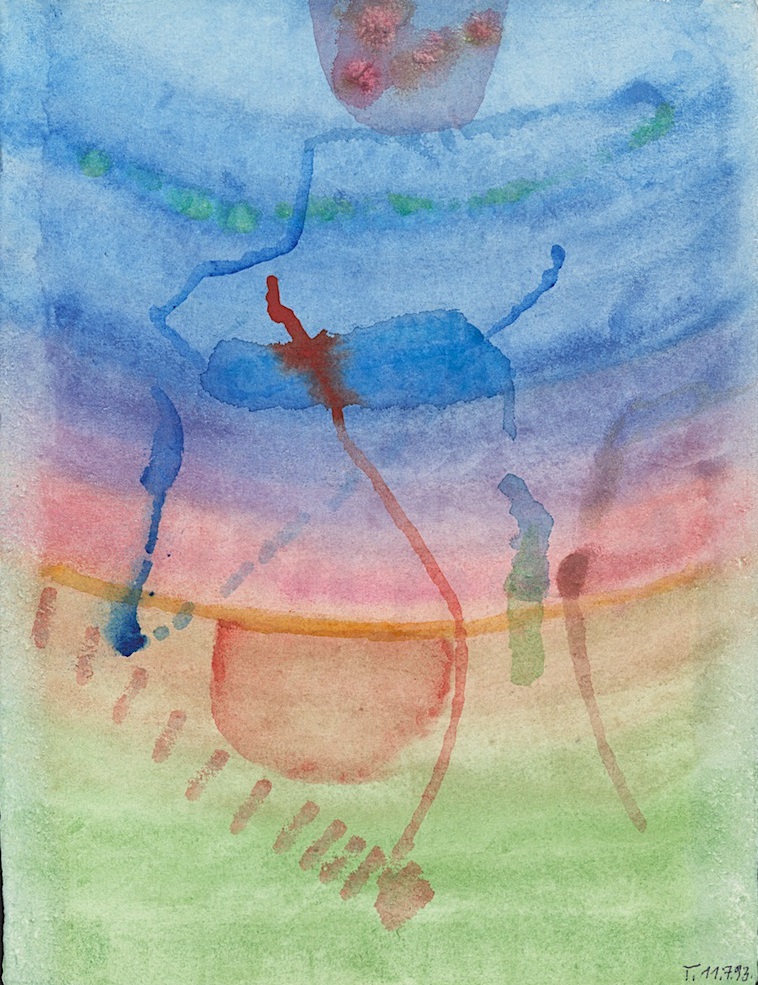


Zdzisław Salaburski - Tashism - Polish Abstract Painting


 Zdzisław Salaburski (1922-2006)
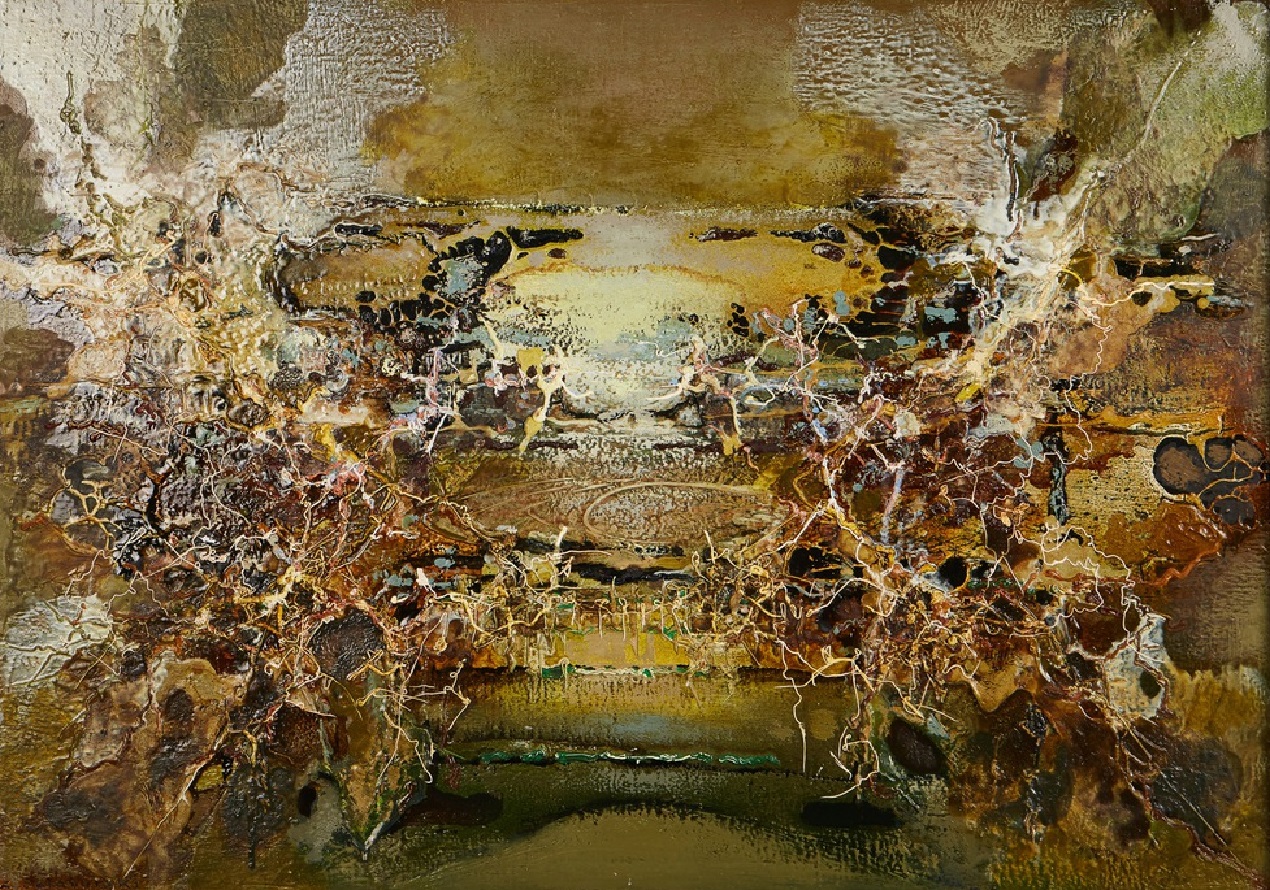
Actor and painter. Initially, he played in the Pomorska Land Theater in Toruń. In 1947 he performed at the Polish Army Theater in Łódź. He spent the years 1948-55 in Poznań, where he played in the Polish and New Theaters. In 1956 he was an actor at the Stary Theater in Krakow. From 1957, he performed in Warsaw theaters: the People's and the National. Apart from acting, he painted. He created paintings under the sign of informel art - called in Poland Tashism or painting of matter. He exhibited them many times, they were highly appreciated.