Born in 1939 and raised on the North side of Chicago, Ed Paschke’s father’s sketches and Disney animation drew him to art at an early age.
After earning his BFA at The School of the Art Institute of Chicago (SAIC) in 1961, he was awarded a travel scholarship to Mexico. The colors, patterns and vernacular art he saw there made a profound impact on him.
Upon returning to Chicago, he sold spot illustrations to Playboy and worked for a brief time in a mental institution before being drafted into the army, where he served a two-year assignment stationed in the South from 1962-1964. One of his primary responsibilities was to draw guns and bullets for weapons manuals.
After his service, he took a short trip to Europe, returning this time to New York where he began a series of collages using newspaper imagery that he would then enlarge and reproduce in oil on canvas. They depicted pop archetypes, such as pin-ups, boxers, and musicians decorated with tattoos and masks, and would become the basis for all subsequent work Paschke was to make throughout his entire career.
Thanks to the GI Bill, he re-enrolled at SAIC, earning his MFA in 1970. Andy Warhol’s first museum exhibition, held at the Museum of Contemporary Art Chicago (MCA) in 1970, made a big impression on him. Paschke felt it gave him permission to depict figurative and representational imagery in his own work, along with reinforcing his inclination towards pop culture subject matter.
After earning his BFA at The School of the Art Institute of Chicago (SAIC) in 1961, he was awarded a travel scholarship to Mexico. The colors, patterns and vernacular art he saw there made a profound impact on him.
Upon returning to Chicago, he sold spot illustrations to Playboy and worked for a brief time in a mental institution before being drafted into the army, where he served a two-year assignment stationed in the South from 1962-1964. One of his primary responsibilities was to draw guns and bullets for weapons manuals.
After his service, he took a short trip to Europe, returning this time to New York where he began a series of collages using newspaper imagery that he would then enlarge and reproduce in oil on canvas. They depicted pop archetypes, such as pin-ups, boxers, and musicians decorated with tattoos and masks, and would become the basis for all subsequent work Paschke was to make throughout his entire career.
Thanks to the GI Bill, he re-enrolled at SAIC, earning his MFA in 1970. Andy Warhol’s first museum exhibition, held at the Museum of Contemporary Art Chicago (MCA) in 1970, made a big impression on him. Paschke felt it gave him permission to depict figurative and representational imagery in his own work, along with reinforcing his inclination towards pop culture subject matter.


Concurrently, he had begun showing at the Hyde Park Art Center with a rotating cast of artists in exhibitions such as the Non Plussed Some (1968), Non Plussed Some Some More (1969), Marriage Chicago Style (1970) and Chicago Antigua (1971). Soon dubbed the Chicago Imagists, their work’s highly finished surfaces and busy compositions connected them. A loner, Paschke felt on the fringes of the group. Ultimately, he would go on to distinguish himself by using the aforementioned tabloids and photographs as source material, as well as by adding a social or political dimension to much of his work.
His career was building steam and soon he was showing at the MCA himself (1972), as well as the Whitney Biennale (1973), and in commercial galleries in Chicago and New York. In addition to maintaining a dedicated studio practice, Paschke began teaching at local colleges and universities, including SAIC, Columbia and Northwestern, among others. Paschke was an educator, but also an informal mentor to countless artists, and anecdotes reveal his kindness, patience and attentiveness—he was fifteen minutes early to every appointment, tried to attend every opening he was invited to, and discussed his painting techniques in detail with anyone who asked.
His career was building steam and soon he was showing at the MCA himself (1972), as well as the Whitney Biennale (1973), and in commercial galleries in Chicago and New York. In addition to maintaining a dedicated studio practice, Paschke began teaching at local colleges and universities, including SAIC, Columbia and Northwestern, among others. Paschke was an educator, but also an informal mentor to countless artists, and anecdotes reveal his kindness, patience and attentiveness—he was fifteen minutes early to every appointment, tried to attend every opening he was invited to, and discussed his painting techniques in detail with anyone who asked.


The North side location of Paschke’s Howard Street studio was key. It was close in proximity to his family home; Northwestern University, where Paschke ended up teaching for 26 years; and the nursing home where his wife, who suffered from early on-set Parkinson’s disease, lived.
Paschke relished inviting wealthy collectors to his studio’s dodgy Roger’s Park neighborhood to pay him a visit. He also enjoyed hosting colleagues, students and strangers there, sometimes encouraging them to grab a brush and set to work on one of his canvases.


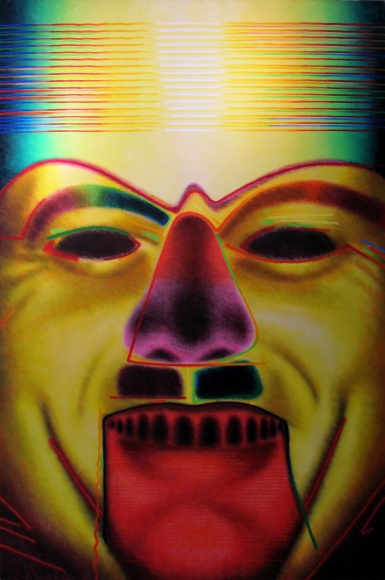
Over time, Paschke’s compositions emptied out. Stripped down to a single figure, they featured urban, nocturnal, off-brand celebrities, such as burlesque dancers and club-goers. As Paschke’s reference material shifted from print to electronic media, such as television and video, the recognizable faces and crisp edges of his forms dissolved.
By 1982, Paschke was the subject of a traveling solo exhibition that originated at the Renaissance Society. In one of the highlights of his career, a traveling career retrospective was mounted by the Art Institute of Chicago in 1989.
Paschke’s last series of work featured highly patterned, decoratively embellished likenesses from history, religion and politics. These icons were symbols of American identity, values, dreams and nightmares.
By 1982, Paschke was the subject of a traveling solo exhibition that originated at the Renaissance Society. In one of the highlights of his career, a traveling career retrospective was mounted by the Art Institute of Chicago in 1989.
Paschke’s last series of work featured highly patterned, decoratively embellished likenesses from history, religion and politics. These icons were symbols of American identity, values, dreams and nightmares.

Ed Paschke died suddenly in his sleep from heart failure on November 24, 2004 at the age of 65. One year after his death, the city honored him by naming a street after him. The Ed Paschke Memorial Way sign stands at the North East corner of Michigan Avenue and Monroe Street in Chicago’s downtown loop. This small street functions as the border between the Art Institute of Chicago and Millennium Park. According to officials, it’s the only memorial way sign that’s ever been stolen.
Paschke’s work is in countless private collections throughout the world, 4as well as major museums both here and abroad, including The Art Institute and Museum of Contemporary Art, Chicago; the Metropolitan Museum of Art and Whitney Museum of American Art, New York; The Hirshhorn Museum, Washington, D.C.; and the Centre Georges Pompidou, Paris, among others. His work continues to crop up at art fairs across the globe, and he has more recently enjoyed major solo exhibitions at Gagosian Gallery New York (2012)— a show curated by Jeff Koons, one of his former studio assistants, and Mary Boone Gallery New York (2014).
Paschke’s work is in countless private collections throughout the world, 4as well as major museums both here and abroad, including The Art Institute and Museum of Contemporary Art, Chicago; the Metropolitan Museum of Art and Whitney Museum of American Art, New York; The Hirshhorn Museum, Washington, D.C.; and the Centre Georges Pompidou, Paris, among others. His work continues to crop up at art fairs across the globe, and he has more recently enjoyed major solo exhibitions at Gagosian Gallery New York (2012)— a show curated by Jeff Koons, one of his former studio assistants, and Mary Boone Gallery New York (2014).
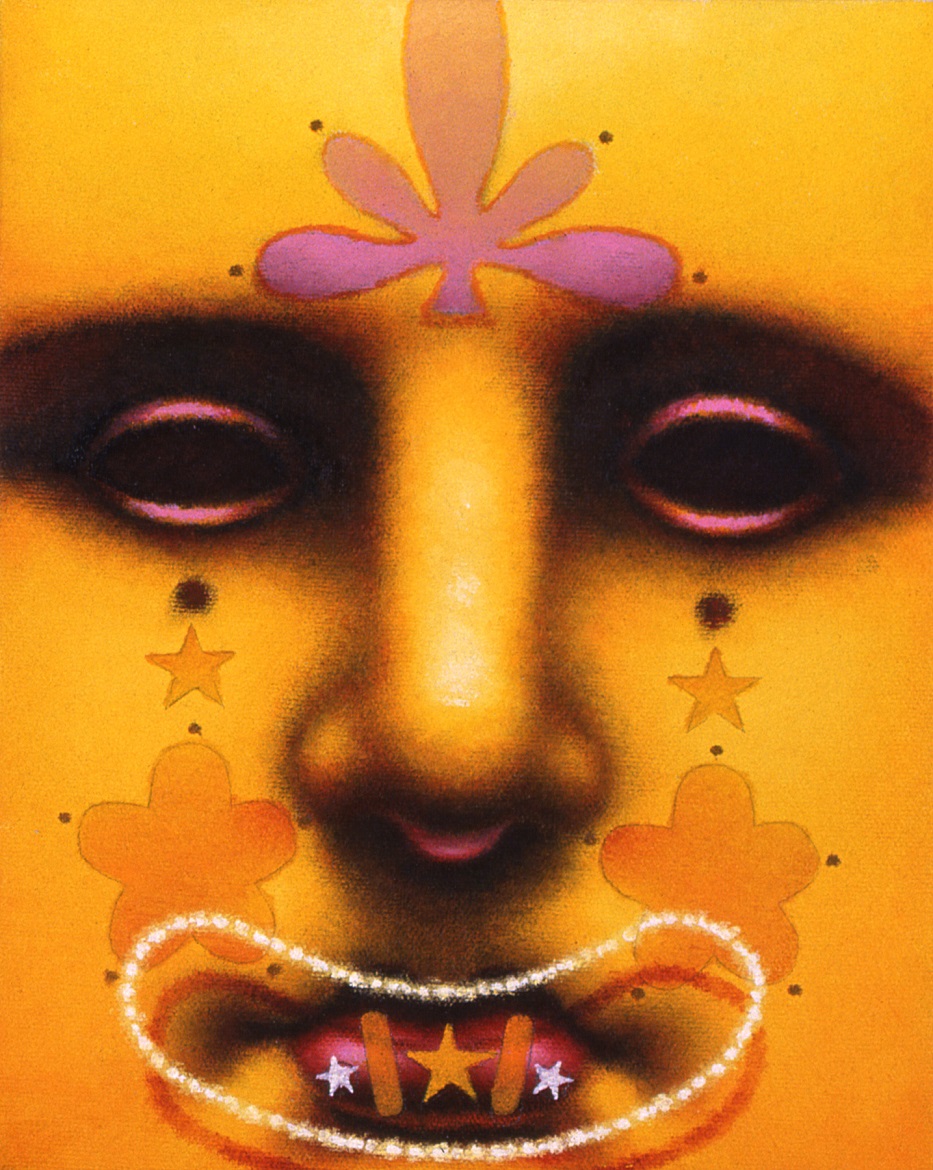
The Ed Paschke Art Center commemorates the life and work of Ed Paschke, one of Chicago’s most famous artists. It also recognizes his contributions to the artistic life of the city as a cultural ambassador, teacher, family man, and friend.
Ed Paschke made art about the famous and the infamous. Bold, sometimes shocking, he permitted his subjects to express their complex personalities. Paschke was a strong believer in the viewer’s capacity to interpret his works of art on their own terms. He reveled in the tension between opposing ideas and imagery, hoping to provoke an emotional response in his viewer’s. Paschke put it best himself when he remarked, “They either love it or hate it but rarely are they indifferent to it.” (edpaschkeartcenter.org)
Ed Paschke made art about the famous and the infamous. Bold, sometimes shocking, he permitted his subjects to express their complex personalities. Paschke was a strong believer in the viewer’s capacity to interpret his works of art on their own terms. He reveled in the tension between opposing ideas and imagery, hoping to provoke an emotional response in his viewer’s. Paschke put it best himself when he remarked, “They either love it or hate it but rarely are they indifferent to it.” (edpaschkeartcenter.org)