Exposition Art Blog: indigenous Australian artist
Showing posts with label indigenous Australian artist. Show all posts

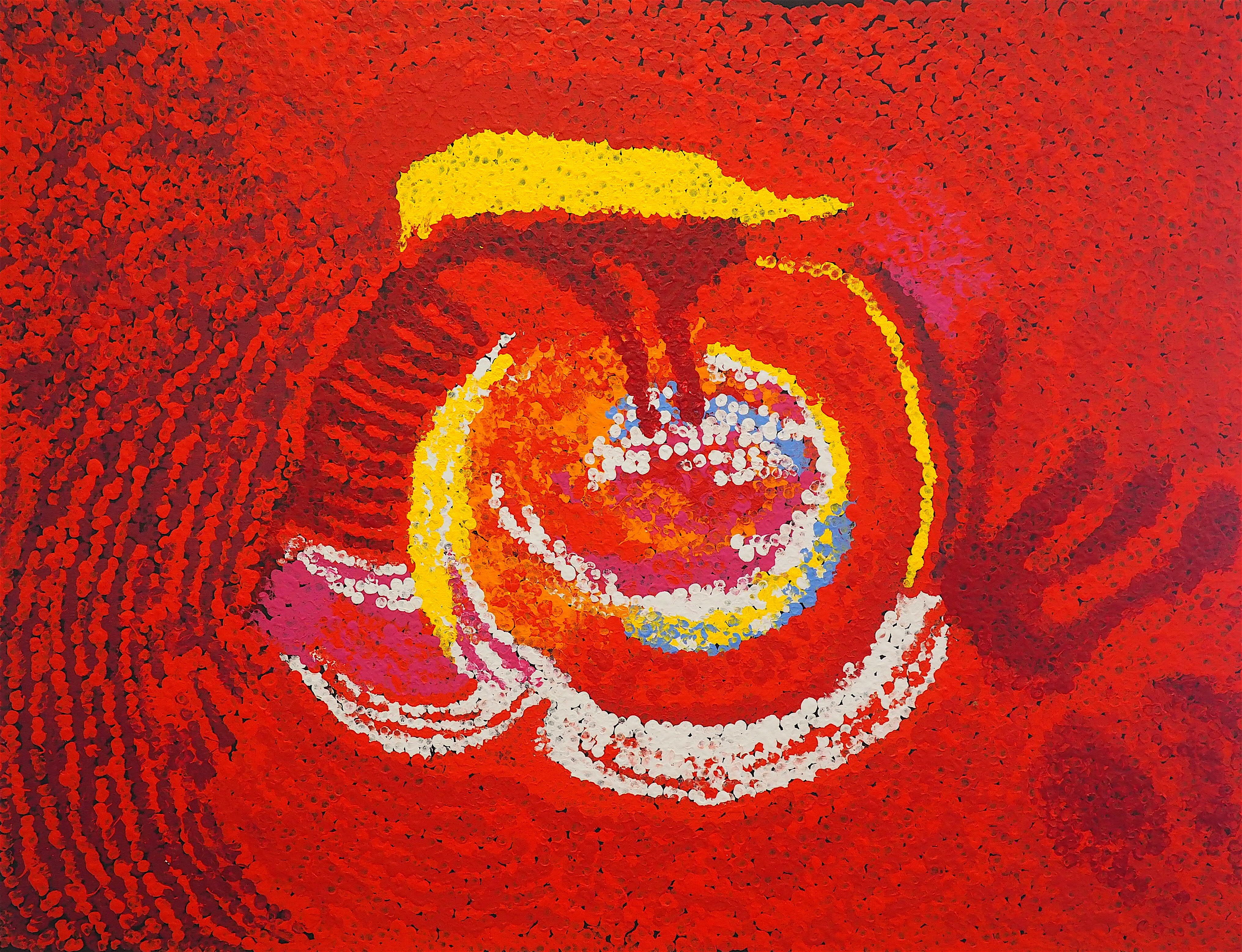
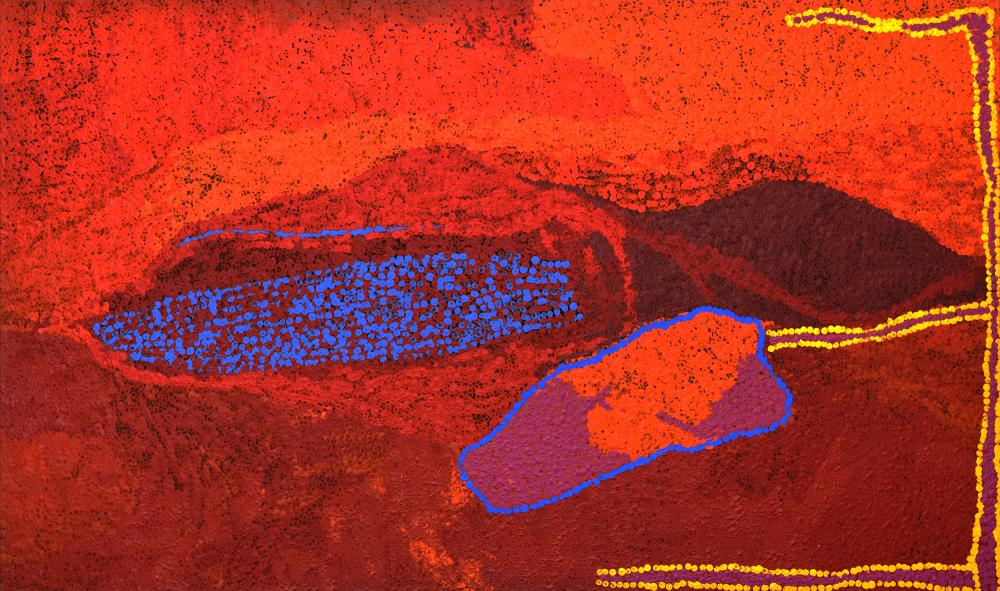
Yannima Tommy Watson - Indigenous Australian Artist


 Yannima Tommy Watson (1935 - 2017 )was a senior APY Lands painter who was born around 1935 at Anamarapiti, about 40kms from Irrunytju Community (Wingellina) in Western Australia. Watson was a Pitjantjatjara man, his skin group was Karimara."My grandfather's country, grandmother's country. When they were alive, they would take me around the country, when I was a kid. That's why we look after country, go out whenever we can. See if the rock holes are good"
"Tommy Watson was known for his use of strong vibrant colours, that symbolically represented the ancestral stories of his country. Judith Ryan, Senior Curator of Indigenous Art at the National Gallery of Victoria, has described Watson's colour as "incandescent". Watson's understanding of Australia's physical environment and its relationship with the ancestral stories came to form the central element of his paintings. Watson created his works on premium Belgian linen and favoured Ara Acrylic paint, created by the Gerrit Rietveld Academie. Tommy has been associated with the 'Colour Power' movement that developed within the Indigenous art scene between 1984 and 2004.
Watson himself stated that his art is an exploration of traditional Aboriginal culture, in which the land and spirituality are intertwined and communicated through stories passed on from generation to generation. He said, "I want to paint these stories so that others can learn and understand about our culture and country."



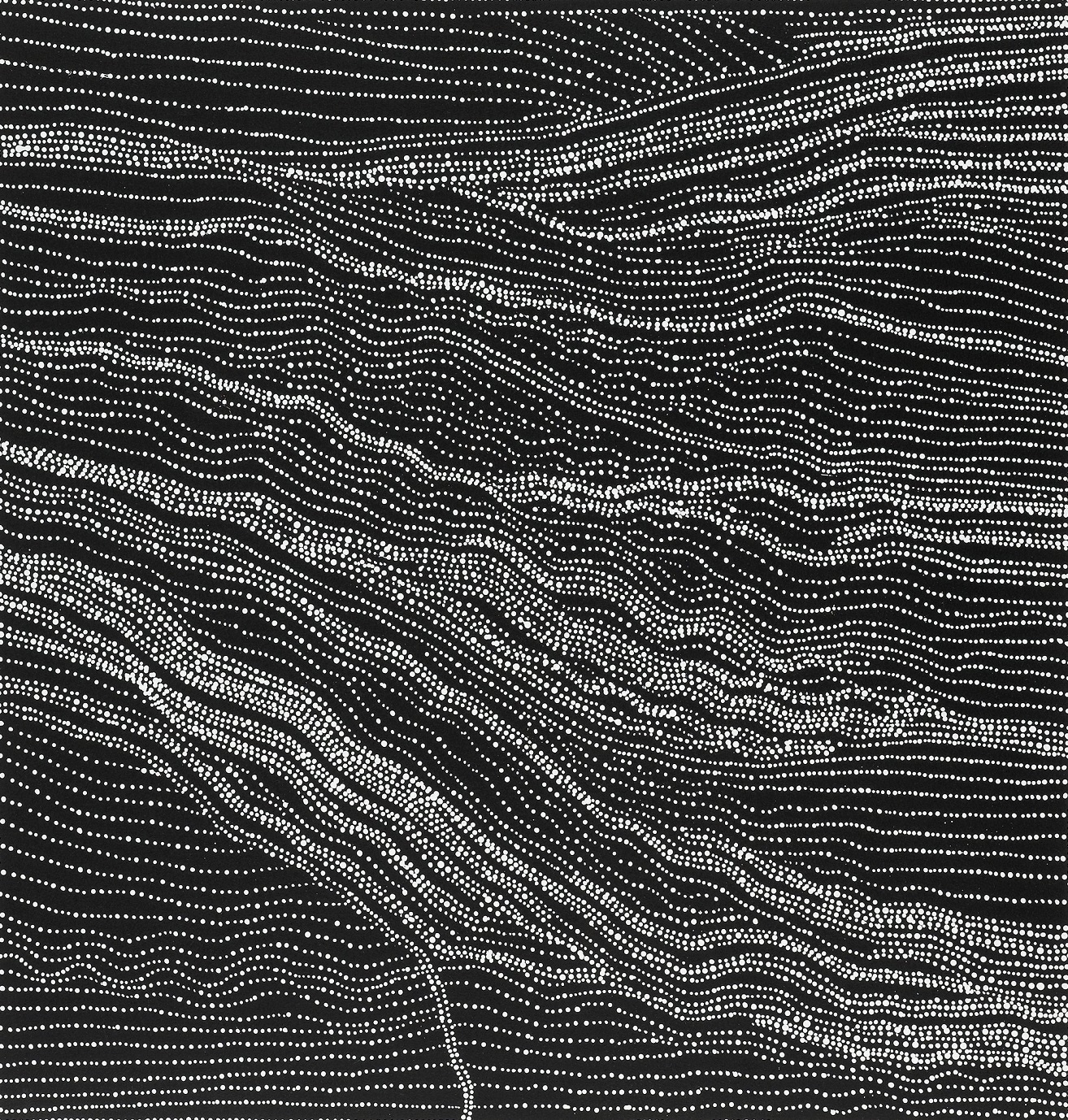
Dorothy Napangardi - Indigenous Australian artist


Dorothy Napangardi (1950 – 2013) was a Warlpiri speaking contemporary Indigenous Australian artist born in the Tanami Desert and who worked in Alice Springs.
One of the leading artists of the contemporary Aboriginal art movement, Napangardi’s work is highly sought after by both collectors and curators worldwide. Her paintings and prints have been widely exhibited and are in all national collections within Australia and in major collections worldwide including most recently the MET, New York. Napangardi had the honour of being the 2nd indigenous artist to be given a solo survey exhibition at the MCA (Museum of Contemporary Art), Sydney
Discussing the artist's work, expert Christine Nicholls wrote that
"Dorothy Napangardi’s success as an artist lies in her ability to evoke a strong sense of movement on her canvases, an effect she achieves because of her remarkable spatial sense and compositional ability... Her work can be appreciated on multiple levels", though indigenous commentators tend to see painting as "a stage for human activity, rather than seeing the geometric aspects of the work."


https://milenaolesinska.blogspot.com/p/blog-page_50.html

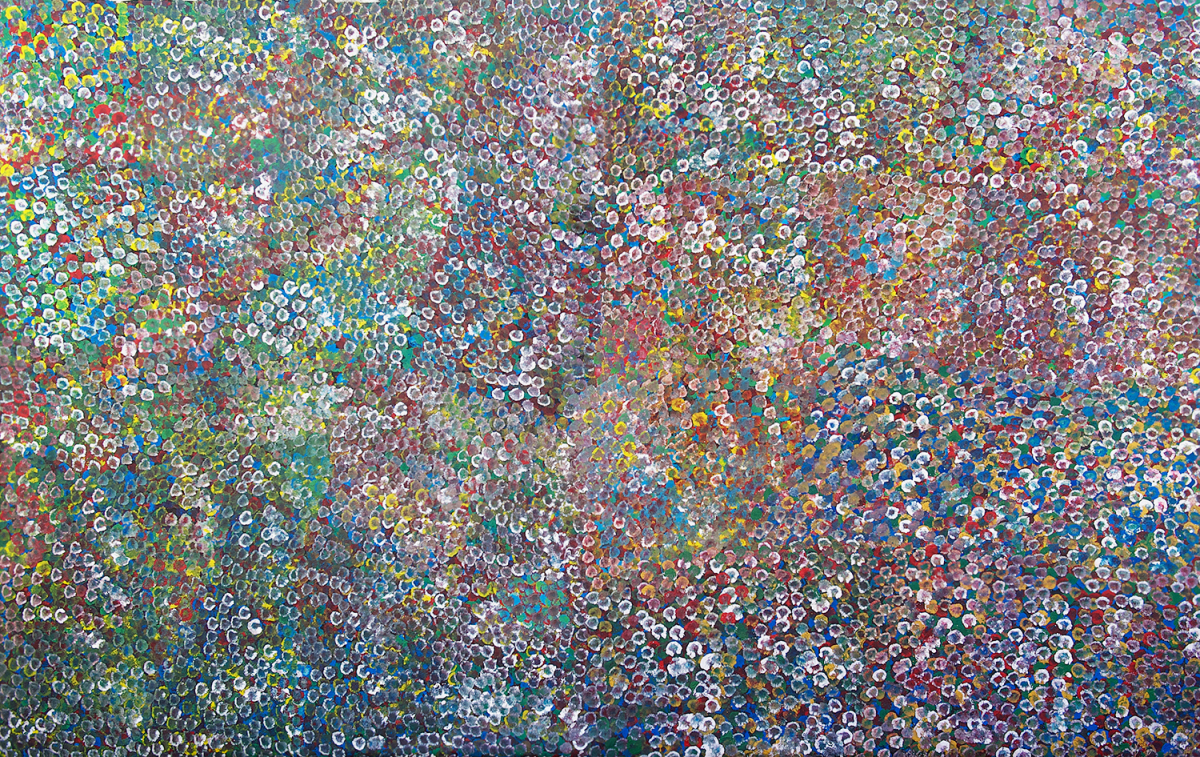
Emily Kame Kngwarreye - Contemporary Indigenous Australian art

"During a whirlwind painting career that lasted just eight years, octogenarian Emily Kame Kngwarreye became Aboriginal Australia’s most successful living artist and carved an enduring presence in the history of Australian art. By the time she passed away on September the 2nd 1996 her fame had achieved mythic status. The Sydney Morning Herald obituary reported the ‘Passing of a Home Grown Monet’. By this time comparisons with a number of great international artists including Pollock, Kandinsky, Monet and Matise, had become commonplace. Emily was an artistic superstar, the highest paid woman in the country, who created one of the most significant artistic legacies of our time.As a painter Emily was a bold, unselfconscious force unleashing colour and movement on to canvases that at their best could be sublime. Her finest paintings are entirely intuitive works, painted during furious sessions in which she never stepped back to look. Her forceful independent personality coupled with the strength she developed while working with camels and labouring during her earlier life was clearly evident as she painted. She worked as if possessed, drawing long meandering lines and bashing out fields of dots with her exceptionally strong hands and arms, displaying her ability to use the most unlikely overlays of colours to create deeply luminous works. Like Pollock she painted on the ground but, unlike him, she crouched over the canvas until done. She was renowned for walking away from a canvas without even surveying the finished product, such was her assuredness about its content and meaning.Those who knew her well describe her as having a strong personality, ready to have a good time and certainly not a frail old woman being manipulated, as some would have it, by dealers and art advisers. Deep down, her principle self-identity was as a contemporary artist with a deep commitment to looking after her country. She was uninterested in other artist’s work, except those depicting her own country, and when asked about other paintings would change the subject. Like her Anmatyerre clanswomen, Emily participated in ceremony (Awelye) to make herself happy. In doing so, she was 'promoting the health and well being of her community and demonstrating her ties with the land' (Green 1981). She loved getting her hands in to the paint as much as the brush when attacking the canvas. Paintings produced in summer were usually more colourful and highly charged with energy than those done in the dry season due to the keyed up expectation of rain, the excitement of its arrival and the explosive flowering of the desert. According to Margo Neale, curator of her 1998 retrospective exhibition, 'few artists have painted the country like she has, with an ability to penetrate its very soul'.(cooeeart.com.au)