Antonio Corpora was born in Tunis on 15 August 1909. There he attended an art academy and studied under Armand Vergeaud until he went to Florence in 1930 to copy Old Master paintings. In 1931 Corpora settled in Paris, where he met Alberto Giacometti and Sergio Signori. Antonio Corpora often returned to Italy and Tunisia, where he co-founded the "Les quatres" group in 1934.
Good contacts to well-known Italian artists, including the group associated with the Galleria del Milione in Milan, enabled him to publish some of his writings. In the 1930s Corpora painted in an abstract style notable for geometric forms and strips of colour.
Late in the 1930s he briefly held a chair in stage design in Bologna but left Italy during the second world war to live in Tunis. On returning to Italy in 1945, Antonio Corpora joined forces with Guttuso, Fazzini et al to found the "Neo-cubista" group. The pictures he produced at that time were under the sway of Braque and Matisse.
In 1947 Corpora became a member of the "Fronte Nuovo delle Arti", which was notable for its social commitment. Late in the 1940s he began to reject Cubist formulae, adopting instead a freer formal idiom that by the 1950s had become Abstract Expressionism.
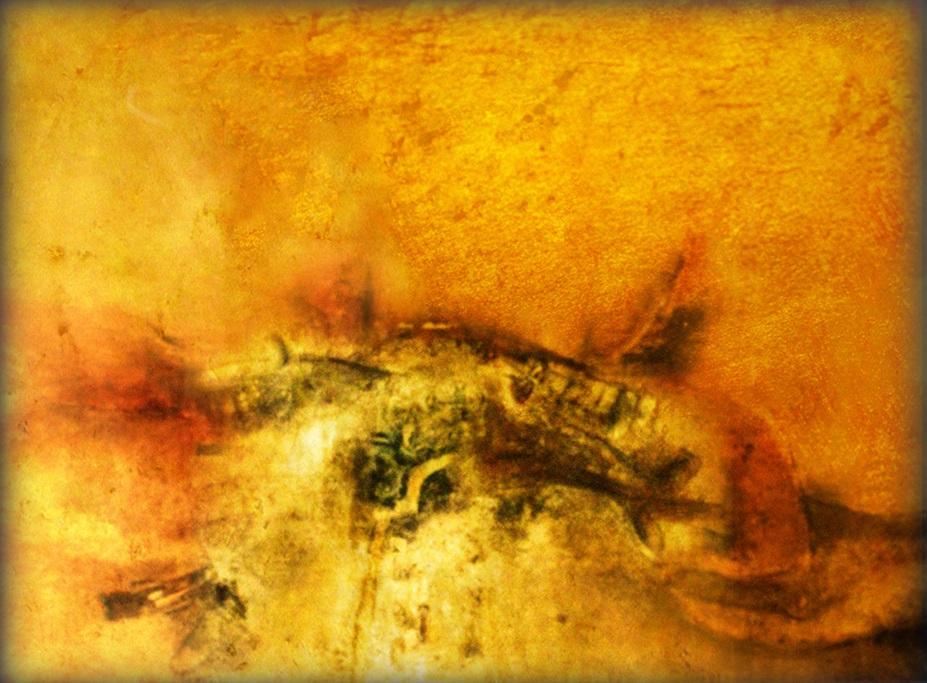
The work Corpora did in the 1960s can be classified as Informel yet he did not abandon geometric forms entirely until the early 1970s. From 1975 Antonio Corpora worked with a dripping technique on canvases roughened with plaster of Paris and sand, which he coated with vibrant colour. In the 1990s he continued to experiment but ultimately returned to compositions with strips of colour.
Antonio Corpora showed work four times at the Venice Biennale between 1948 and 1956 at the Venice Biennale, and, in 1968, at the Rome Biennale, winning prizes at both. The president of Italy presented him with an award in 2003 and he was made a member of the San Luca Academy.
Antonio Corpora died in Rome on 6 September 2004.(antonio-corpora.com)
Good contacts to well-known Italian artists, including the group associated with the Galleria del Milione in Milan, enabled him to publish some of his writings. In the 1930s Corpora painted in an abstract style notable for geometric forms and strips of colour.
Late in the 1930s he briefly held a chair in stage design in Bologna but left Italy during the second world war to live in Tunis. On returning to Italy in 1945, Antonio Corpora joined forces with Guttuso, Fazzini et al to found the "Neo-cubista" group. The pictures he produced at that time were under the sway of Braque and Matisse.
In 1947 Corpora became a member of the "Fronte Nuovo delle Arti", which was notable for its social commitment. Late in the 1940s he began to reject Cubist formulae, adopting instead a freer formal idiom that by the 1950s had become Abstract Expressionism.
The work Corpora did in the 1960s can be classified as Informel yet he did not abandon geometric forms entirely until the early 1970s. From 1975 Antonio Corpora worked with a dripping technique on canvases roughened with plaster of Paris and sand, which he coated with vibrant colour. In the 1990s he continued to experiment but ultimately returned to compositions with strips of colour.
Antonio Corpora showed work four times at the Venice Biennale between 1948 and 1956 at the Venice Biennale, and, in 1968, at the Rome Biennale, winning prizes at both. The president of Italy presented him with an award in 2003 and he was made a member of the San Luca Academy.
Antonio Corpora died in Rome on 6 September 2004.(antonio-corpora.com)