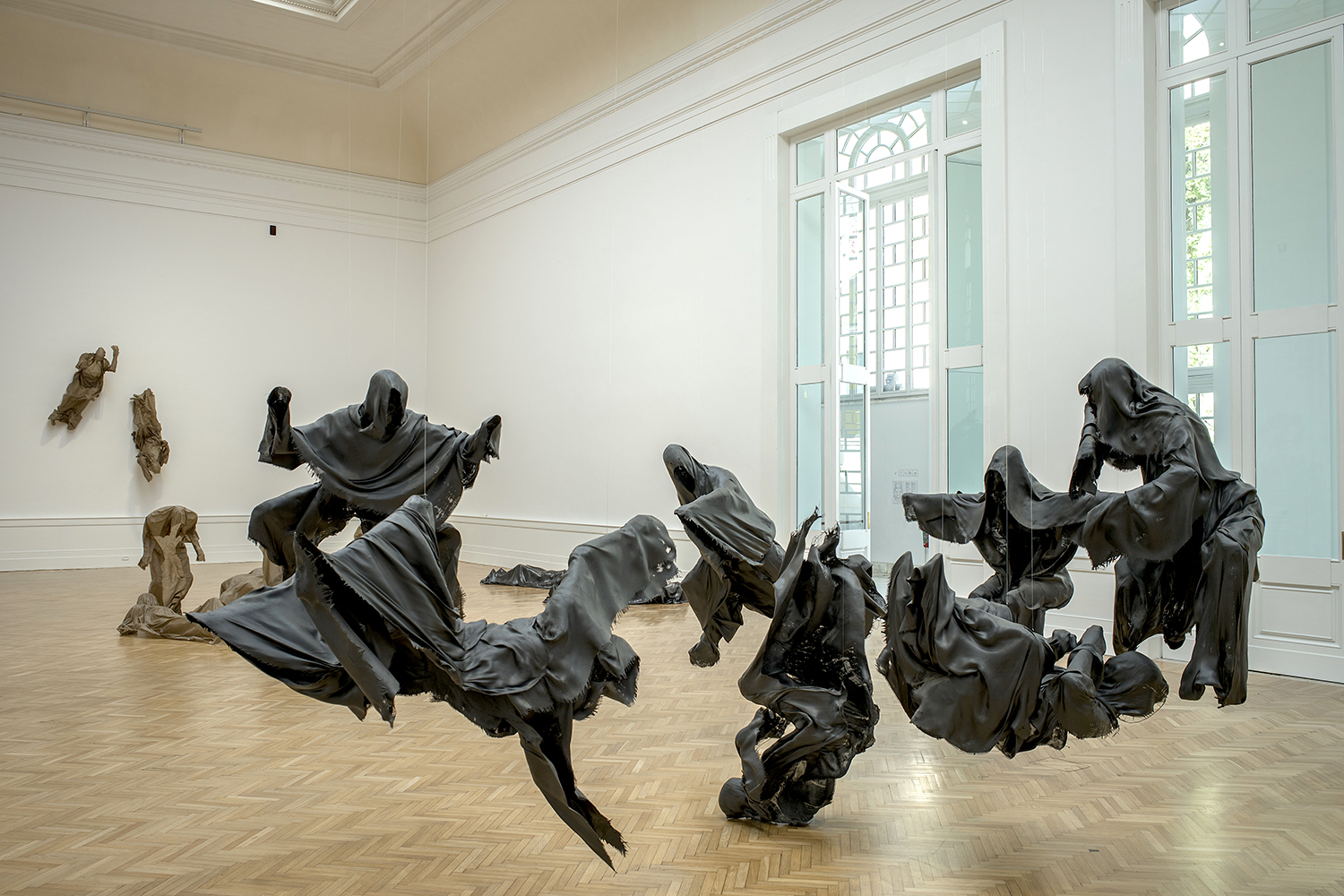
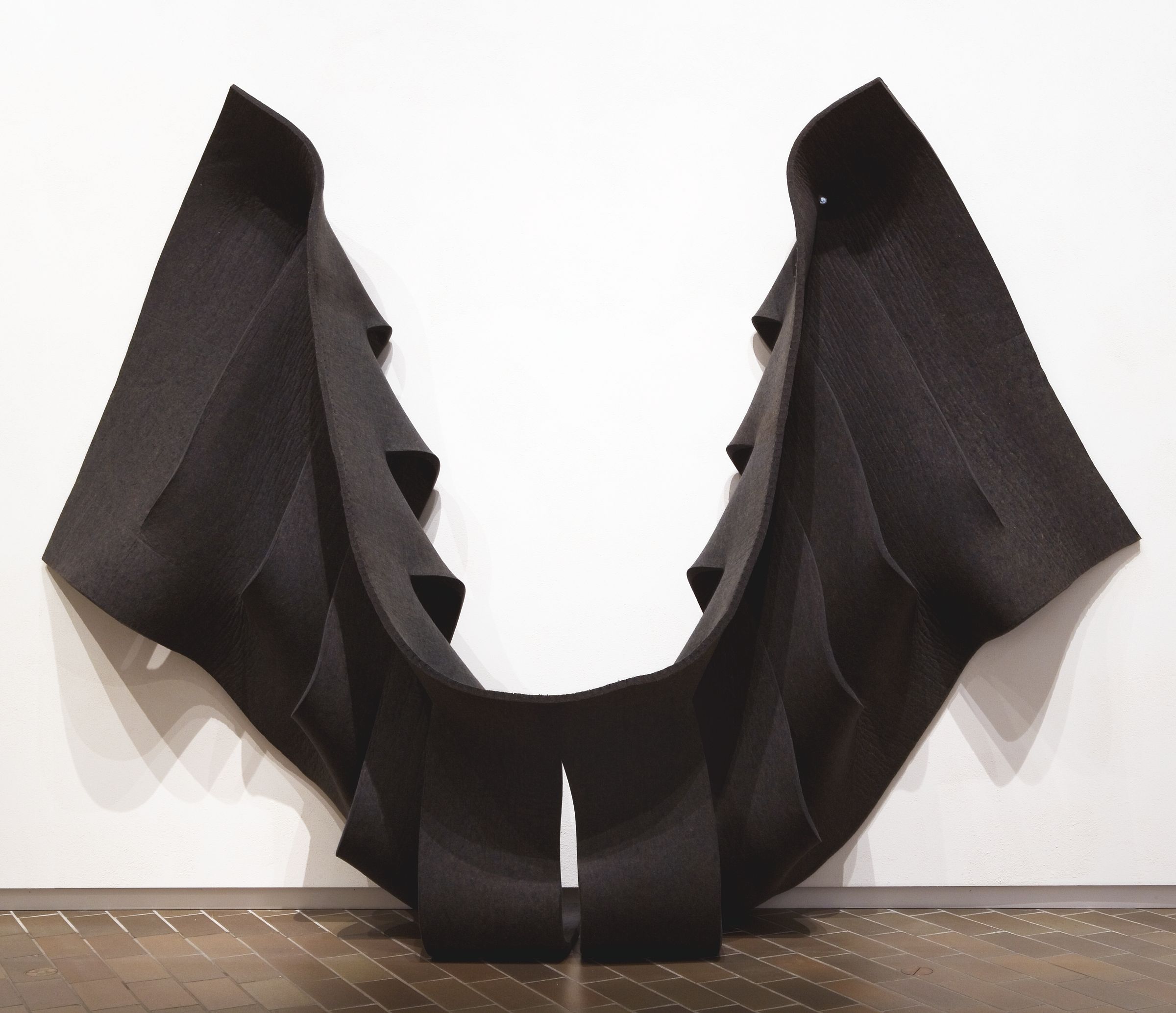
Robert Morris (1931 - 2018 )was an American sculptor, conceptual artist and writer. He was regarded as having been one of the most prominent theorists of Minimalism along with Donald Judd but he also made important contributions to the development of performance art, land art, the Process Art movement, and installation art. Morris lived and worked in New York. In 2013 as part of the October Files, MIT Press published a volume on Morris, examining his work and influence, edited by Julia Bryan-Wilson
"Robert Morris has comported himself for decades as the least minimal of the original minimalists. While sharing most of the core group’s characteristics — including the complementary artist/writer mode — he has in both word and deed proved more committed than the others to contingency and experimentation. Alternating, often abruptly, between cool objects and evocations of calamity, his artistic outlook remains — as the spot-on title of his collected writings suggests — a Continuous Project Altered Daily. Though no slouch when it comes to minimal severity, his thinking often drifts closer in sensibility to Robert Smithson’s macro riffing than to Donald Judd’s ideological finalities.Minimalist theory made much of the viewer’s movement through space as part of what defined the sculptural. Morris, having come to this notion following a wider path of study than the others — a path that included engineering, art history, philosophy, and dance — found ways to follow intuitive offshoots that generated outward from minimalism’s basic premise. He took labyrinths and passageways, which were favored minimalist tropes, and superseded their phenomenological values with emotionally charged contexts that included prison architecture and Midwestern stockyards. Thus the jarring incongruence — to cite an extreme example — between his ascetic, process-oriented felt hangings of the 1970s and the apocalyptic Firestorm reliefs that soon followed. Keeping to a highly subjective route, he seems able to shuttle convincingly between the austere space of the artistically reductive and the emotionally charged arena of darker human experience, discovering along the way many disturbing links between the two."(hyperallergic.com)