Exposition Art Blog

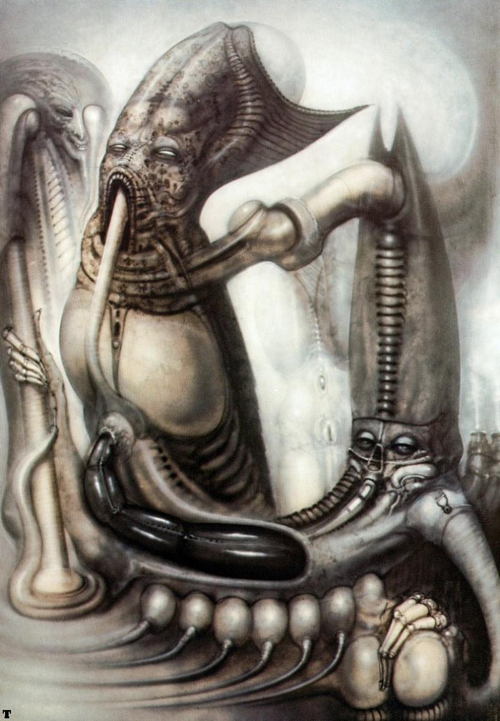
Hans Rudolf Giger


 Hans Rudolf "Ruedi" Giger ( 1940 – 2014) was a Swiss surrealist painter, whose style was adapted for many forms of media, including record-albums, furniture and tattoo-art.
"H.R. Giger was a Swiss artist and designer known for his nightmarish science-fiction motifs. Giger is best known for his book Necronomicon (1977), as well as his design work for Ridley Scott’s 1979 feature film Alien. “Some people say my work is often depressing and pessimistic, with the emphasis on death, blood, overcrowding, strange beings and so on, but I don't really think it is,” he once said. Born Hans Ruedi Giger on February 5, 1940 in Chur, Switzerland, he went on to study architecture and industrial design at the School of Applied Arts in Zürich. His first successful attempt at reaching audiences with visual art came in 1969, when a painting of his was published as a poster. Giger cited Ernst Fuchs and Salvador Dalí as major influences on his stylizations of bodies and machinery. Before becoming involved in the production of Alien, Giger was recruited by the avant-garde director Alejandro Jodorowsky to be a designer for his unproduced film version of Frank Herbert’s novel Dune (1965). Though the film was never completed, it gave Giger a chance to produce a number of intricate objects and artworks based on the novel’s themes and characters. Over the decades that followed, he continued producing work for films, music videos, album covers, and videogames. Giger died on May 12, 2014 in Zürich, Switzerland. Today, much of his work is housed in the H.R. Giger Museum in Gruyères, Switzerland."(artnet)


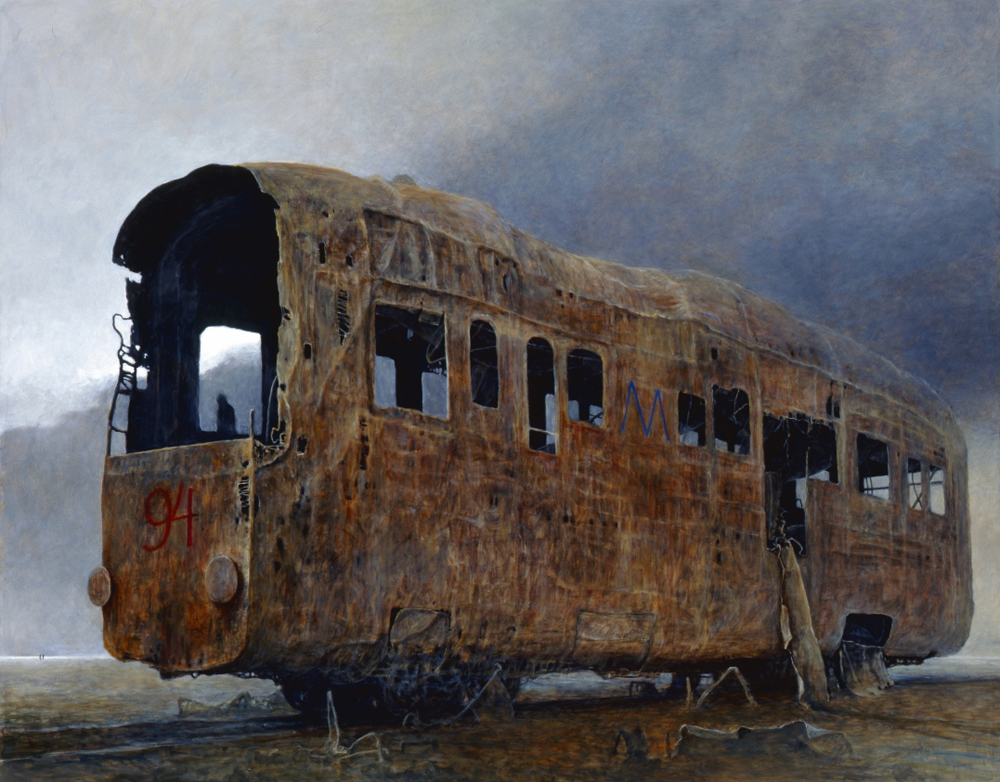
Zdzisław Beksiński


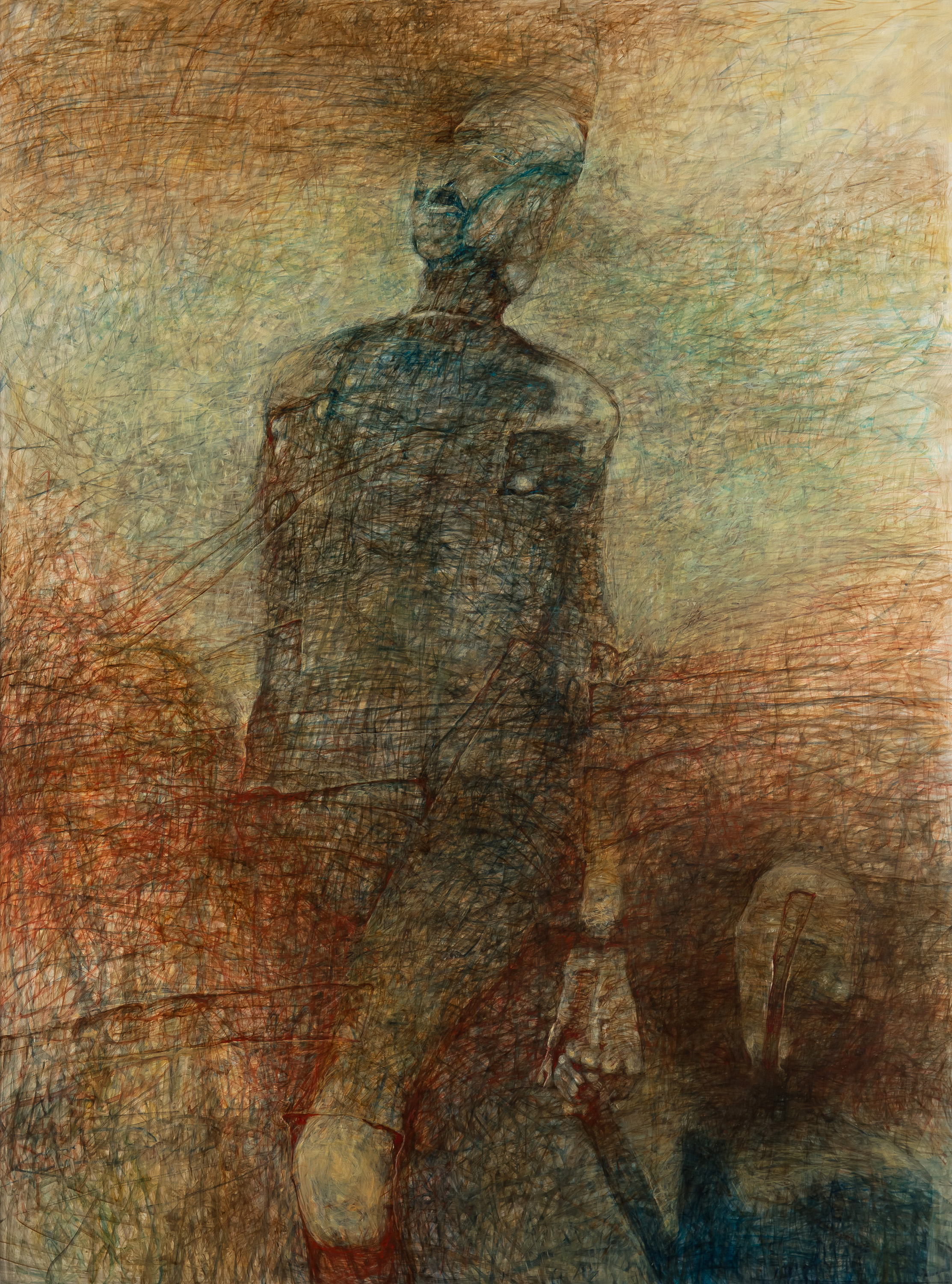
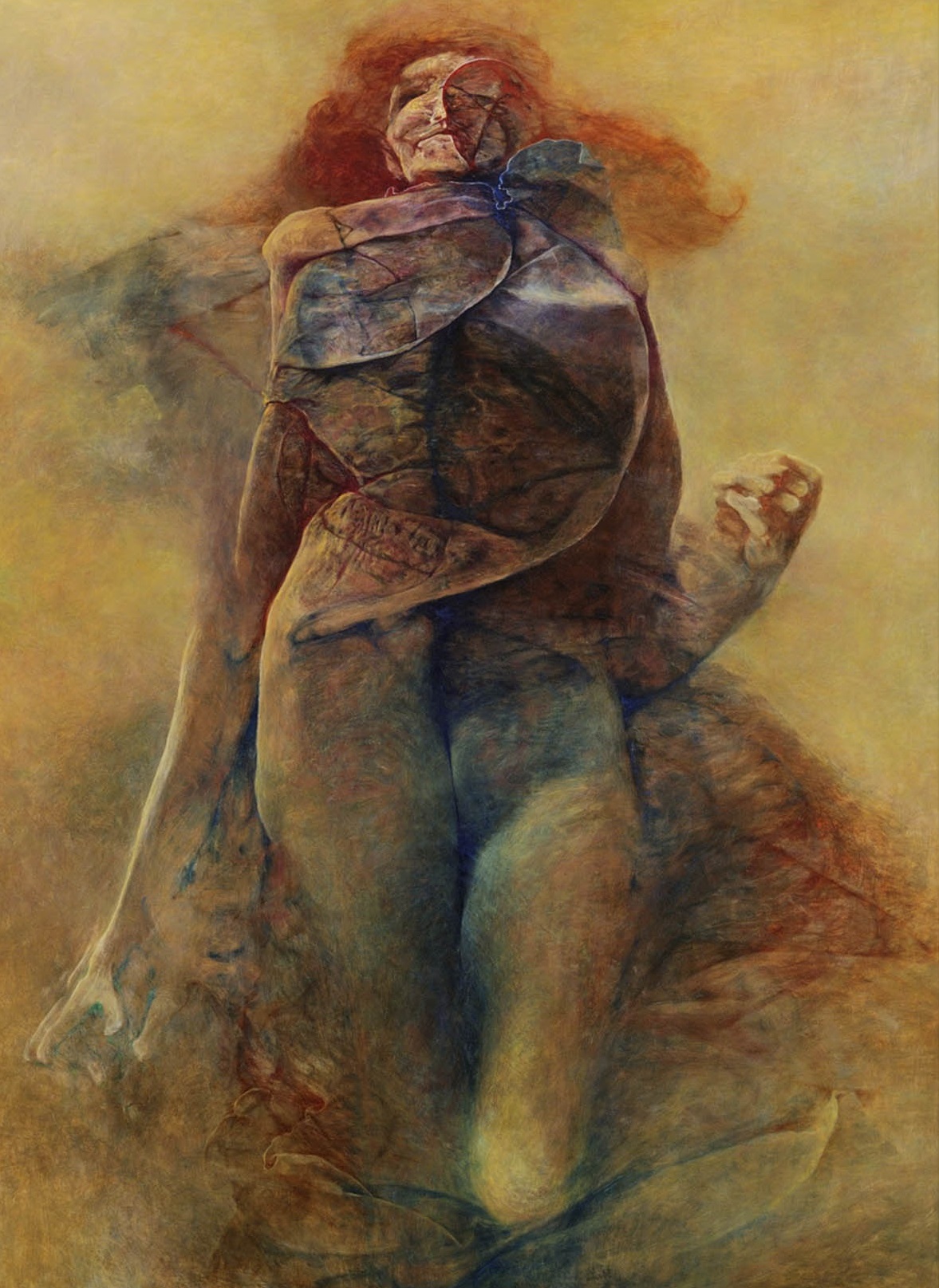
 Zdzisław Beksiński (1929 – 2005) was a Polish painter, photographer and sculptor, specializing in the field of dystopian surrealism. Beksiński did his paintings and drawings in what he called either a 'Baroque' or a 'Gothic' manner. His creations were made mainly in two periods. The first period of work is generally considered to contain expressionistic color, with a strong style of "utopian realism" and surreal architecture, like a doomsday scenario
"It misses the point to ask me what scenes in my paintings 'mean'. Simply, I do not know, myself. Moreover, I am not at all interested in knowing."--Zdzislaw Beksinski
After a childhood was spent during the Second World War, Beksinski went on to university where he studied architecture in Cracow. Subsequent to this education he spent several years as a construction site supervisor, a job he hated, frought with pressures and countless boring details. He would soon throw himself into the arts. In 1958, Beksinski began to gain critical praise for his photography, and later went on to drawing. His highly detailed drawings are often quite large, and may remind some of the works of Ernst Fuchs in their intricate, and nearly obsessive rendering.
Beksinski eventually threw himself into painting with a passion, and worked constantly, always to the strains of classical music. He soon became the leading figure in contemporary Polish art.
Beksinski began painting in oils on masonite around the year 1970. His ability to manipulate the effects of light quickly became a hallmark of his work, and can only be compared with the renown abilities of William Turner. Beksinski's paintings aremasterfully rendered, monumental enigmans. One thing they share is an aesthetic of beauty so potent that it overpowers any desperate nature of the given subject matter, as is similarly the case with Swiss artist, H.R. Giger. The paintings as a whole are wonderfully dark, and allow the viewer to interperet them as they will, as they will certainly get no help from this particular artist. As Magritte said: "The purpose of art is mystery."...."The blend of vivid colors in relation to other more subdued colors in my paintings is like a musical theme. As in a symphony, a motif occurs, is blurred, comes back in crescendo, is finally accentuated and becomes pure and complete."/Z.Beksiński/


Dmytro Kozacky "Oresta" - "Place of death and my life". Defenders of Azovstal in photos


Dmytro Kozatsky, Azov Regiment fighter and photographer, documented the siege of the Azovstal metalworks. Before his capture he posted his pictures on social media, asking that they be shared as widely as possible. This is some of his work showing the realities of life during the battle

Now a prisoner of war, a Ukrainian Photographer-soldier Dmytro Kozatsky has captured the horrific ramifications of the Russian invasion of Ukraine. His photos are his legacy. Kozatsky posted several images from his collection on his Twitter handle before he joined the troops from the Ukraine side. (Dmytro Kozatski/Azov Special Forces Regiment of the Ukrainian National Guard Press Office via AP)
 
 Now a prisoner of war, a Ukrainian Photographer-soldier Dmytro Kozatsky has captured the horrific ramifications of the Russian invasion of Ukraine. His photos are his legacy. Kozatsky posted several images from his collection on his Twitter handle before he joined the troops from the Ukraine side. He was one of hundred soldiers who marched out of the Azovstal mill in Mariupol carrying the wounded and picking up pieces amid the Russian attack. Amid a fiercely Russian offensive, nearly 2,000 Ukrainian soldiers surrendered in the week before the city’s fall, Russian Defense Minister Sergei Shoigu saidAn unknown number of soldiers continued to remain inside the mill, putting up a strong resistance and not willing to give up their piece to the enemy.For nearly three months, Azovstal’s garrison clung on, refusing to be winkled out from the tunnels and bunkers under the ruins of the labyrinthine mill.It was during this time that the Ukrainian soldiers got a window into the powerful and hopeful resistance put forth by the Ukrainains through Kazotsky's pictures.In this photo provided by Azov Special Forces Regiment of the Ukrainian National Guard Press Office, a Ukrainian soldier injured during fighting against Russian forces, poses for a photographer inside the Azovstal steel plant in Mariupol, Ukraine. A Ukrainian soldier plays crossword as he takes rest in his shelter in Mariupol, Ukraine, May 7, 2022. Ukrainian soldiers inside the ruined Azovstal steel plant in their shelter in Mariupol, Ukraine, May 7, 2022. (Dmytro Kozatski/Azov Special Forces Regiment of the Ukrainian National Guard Press Office via AP) 


Dmytro Kozatsky, a fighter of the Azov Regiment, published his last photo from “Azovstal” before leaving. “Well, that’s all. Thank you for the shelter, Azovstal. The place of my death and my life.”  Keep strong! See you! Twitter: @Kozatsky_D