Exposition Art Blog

Christian Boltanski - Conceptual Art


 Christian Boltanski (1944 – 2021) was a French sculptor, photographer, painter, and film maker. He is best known for his photography installations and contemporary French conceptual style
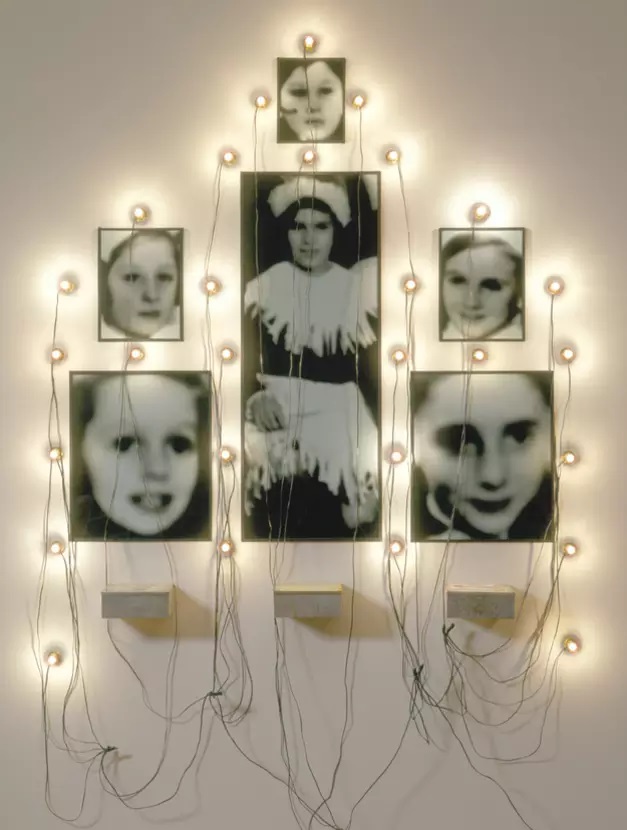
Boltanski began creating mixed media/materials installations in 1986 with light as essential concept. Tin boxes, altar-like construction of framed and manipulated photographs (e.g. Chases School, 1986–1987), photographs of Jewish schoolchildren taken in Vienna in 1931, used as a forceful reminder of mass murder of Jews by the Nazis, all those elements and materials used in his work are used in order to represent deep contemplation regarding reconstruction of past. While creating Reserve (exhibition at Museum für Gegenwartskunst in Basel in 1989), Boltanski filled rooms and corridors with worn clothing items as a way of inciting profound sensation of human tragedy at concentration camps. As in his previous works, objects serve as relentless reminders of human experience and suffering. His piece, Monument (Odessa), uses six photographs of Jewish students in 1939 and lights to resemble Yahrzeit candles to honor and remember the dead. "My work is about the fact of dying, but it's not about the Holocaust itself." In 1971 Boltanski produced his installation, L' Album de la famille D. 1939-1964.
Additionally, his enormous installation titled "No Man's Land" (2010) at the Park Avenue Armory in New York City, is a great example of how his constructions and installations trace the lives of the lost and forgotten.Wikipedia


Michael Goldberg - American abstract artist


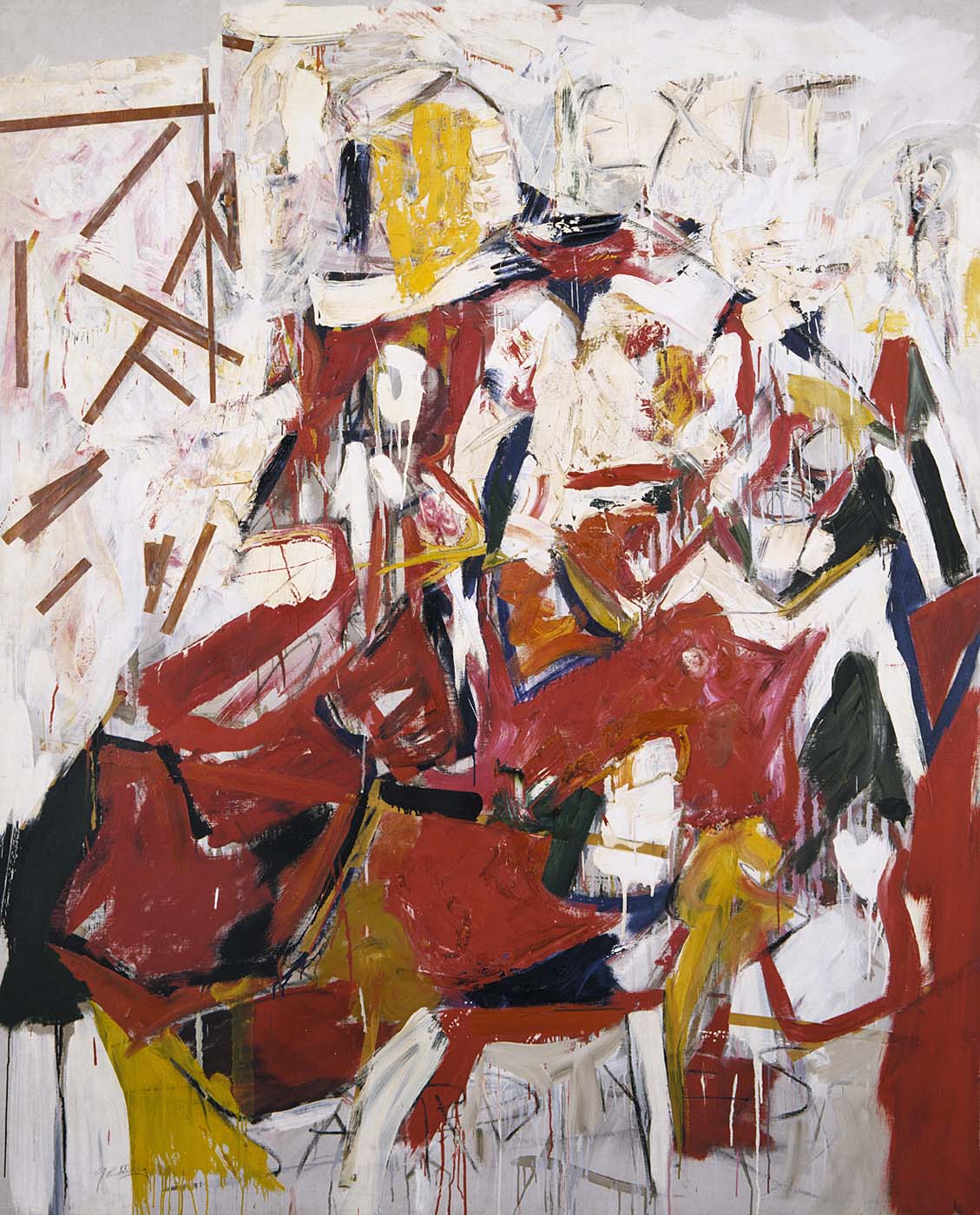
 Michael Goldberg (1924 – 2007) was an American abstract expressionist painter and teacher known for his gestural action paintings, abstractions and still-life paintings. A retrospective show, "Abstaction Over Time: The Paintings of Michael Goldberg", is showing at MOCA Jacksonville in Florida from 9/21/13 to 1/5/14. His work was seen in September 2007 in a solo exhibition at Knoedler & Company in New York City, as well as several exhibitions at Manny Silverman Gallery in Los Angeles. Additionally, a survey of Goldberg's work is exhibited at the University Art Museum at California State University, Long Beach since September 2010.Goldberg established himself as the youngest member of the Eighth Street Club among other popular New York artists who would generate discourse and share materials, creating a physical artistic experience for Goldberg. His artistic peers at The Club inspired him to take further steps in his art, leading critics to describe him as a "lyrical and nostalgic image of the painter and poet.


Sam Gilliam - American Contemporary Art


Sam Gilliam (1933 – 2022) was an American color field painter and lyrical abstractionist artist. Gilliam was associated with the Washington Color School, a group of Washington, D.C.-area artists that developed a form of abstract art from color field painting in the 1950s and 1960s. His works have also been described as belonging to abstract expressionism and lyrical abstraction. He worked on stretched, draped and wrapped canvas, and added sculptural 3D elements. He was recognized as the first artist to introduce the idea of a draped, painted canvas hanging without stretcher bars around 1965. This was a major contribution to the Color Field School and has had a lasting impact on the contemporary art canon

"Sam Gilliam is one of the great innovators in postwar American painting. He emerged from the Washington, D.C. scene in the mid 1960s with works that elaborated upon and disrupted the ethos of Color School painting.A series of formal breakthroughs would soon result in his canonical Drape paintings, which expanded upon the tenets of Abstract Expressionism in entirely new ways. Suspending stretcherless lengths of painted canvas from the walls or ceilings of exhibition spaces, Gilliam transformed his medium and the contexts in which it was viewed. As an African-American artist in the nation’s capital at the height of the Civil Rights Movement, this was not merely an aesthetic proposition; it was a way of defining art’s role in a society undergoing dramatic change. Gilliam has subsequently pursued a pioneering course in which experimentation has been the only constant. Inspired by the improvisatory ethos of jazz, his lyrical abstractions continue to take on an increasing variety of forms, moods, and materials."(pacegallery.com)