Exposition Art Blog

Geoffrey Hendricks


 Geoffrey Hendricks (1931 - 2018) was an American artist associated with Fluxus since the mid 1960s. He was professor emeritus of art at Rutgers University, where he taught from 1956 to 2003 and was associated with Allan Kaprow, Roy Lichtenstein, and Lucas Samaras during the 1960s.
He had participated in Fluxus festivals worldwide and exhibited internationally. He was renowned by students he mentored over his 48 years of teaching, and for his skill in preparing macrobiotic meals. He maintained studios and residences in New York City and a farm in Colindale, Cape Breton Island, Nova Scotia, along with his partner and sometimes collaborator Sur Rodney (Sur). Hendricks styled himself a "cloudsmith" for his extensive work depicting skies in paintings, on objects, in installations, and in performances.Wikipedia


Fernand Toupin - Abstract Art


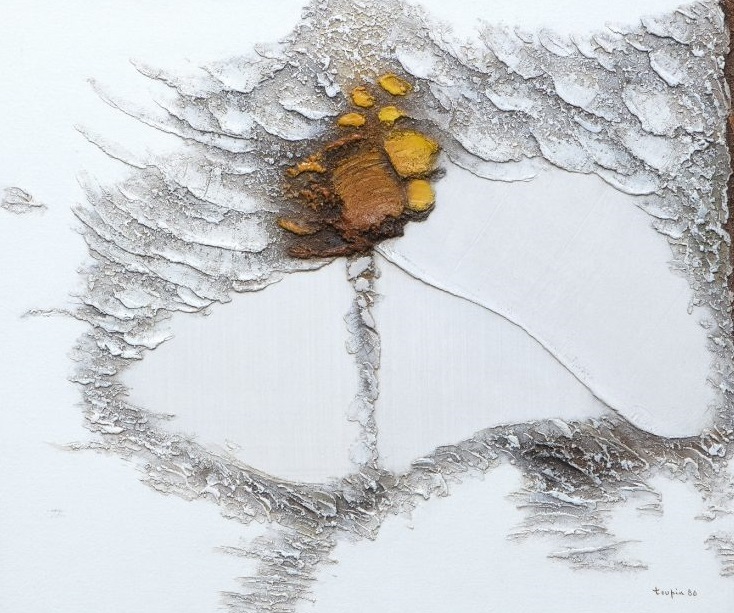
 Fernand Toupin (1930-2009)
"Known for his participation in the group Les Plasticiens, Fernand Toupin starts his artistic formation by taking drawing classes at Collège Mont-Saint-Louis in Montréal. He then studied at l’École des Beaux-Arts de Montréal. From 1949 to 1953, he works in Stanley Cosgrove’s workshop.
Toupin’s artistic career really begins in 1954. In 1955, he signs with Louis Belzile, Jean-Paul Jérôme and Jauran (Rodolphe de Repentigny) the Plasticiens’ Manifesto, written by Rodolphe de Repentigny. Opposed to the spontaneous and expressive art of the Automatists, Les Plasticiens endorse an art particularly inspired by Mondrian and will participate at a new painting movement’s emergence in Québec : the geometrical abstraction. Within this new movement, the image is considered like a bidimensional object that refuses any depth effect on the canvas. Fernand Toupin’s “shaped canvas” or “object-canvas” as the art critics named them, remain an important contribution from the artist to the movement.
In 1959, Toupin’s art engages in a new direction. Always interested by abstraction, the artist explores texture with a more abundant material on the canvas, where the pigments are mixed with marble dust. Toupin expresses his surrounding environment: Québec’s landscapes. “I like to feel the simmering of things as they are made. The uprising of the waves. The freshness of the snow. The ubiquity of the minerals.” In 1992, Fernand Toupin creates  a series of small canvas, which will materialize this idea. The Écorces sous la neige (bark under the snow), are miniature artworks made of marble dust in which the artist has inserted small pieces of bark and other natural materials onto the canvas. These elements thus become small treasures carefully buried under the snow. Then, in 1993, he goes back to geometrical abstraction."(galeriebernard.ca)


Hayden Minor


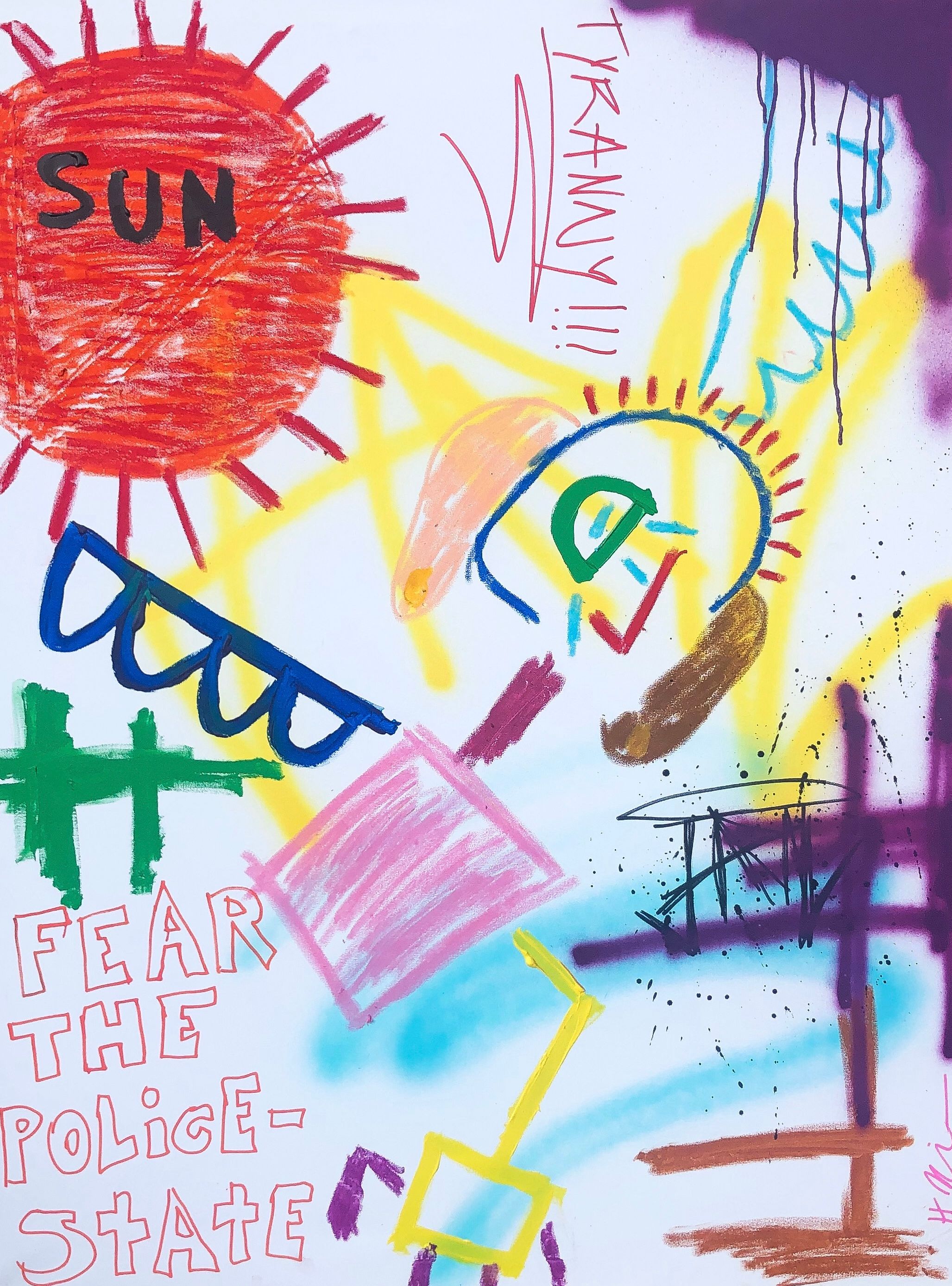
"Hayden Minor -  is a young abstract artist and photographer from the Chicago suburbs. Beginning his art career taking photos as a young teenager, he was taking as many pictures as he could on any camera he could find. Soon, however, Hayden found his second passion: painting.
With the love and support from his mother, he began creating paintings, sometimes amounting to two or three a day. Channelling his inner child, Hayden displays grim topics such as drug addiction, violence, and political turmoil in his paintings through an abstract, jeuvenile art style. The purpose of this is to help break down these complex societal issues and display them in a basic, simple view. This, he hopes, will help in perspective and understanding among people.
Hayden is now in the process of creating an online artist coalition through his newly created HARM Gallery, an online gallery which promotes accepted artists. There, they are able to sell and display their work for free. In addition to this project, he hopes to place his own art in a gallery somewhere in the Midwest and make a living selling his paintings. "

More works by the artist


Dusti Bonge - Abstract Painting


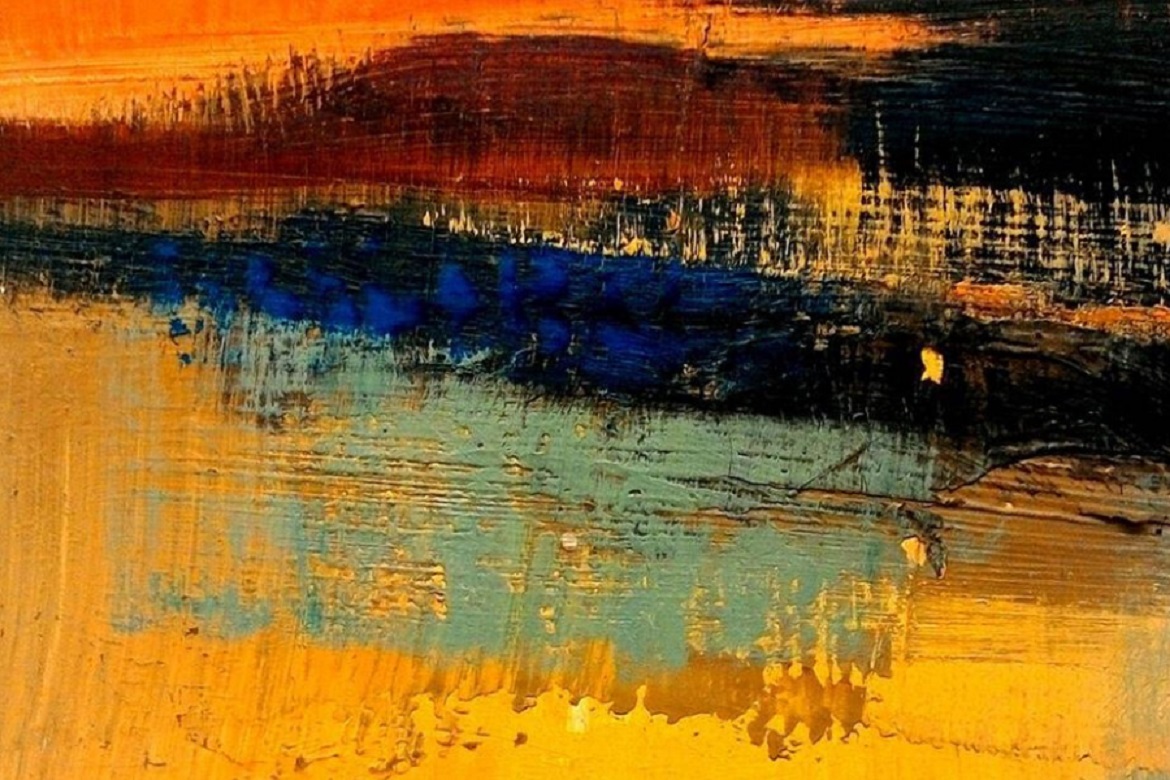
 Dusti Bonge (1903–1993) was an American painter who worked from the 1930s through the early 1990s. She is considered Mississippi's first Abstract Expressionist painter and its first Modernist artist.
The years 1953-1956 mark a transitional period in her work as she moves fully into Abstract Expressionism, the style in which she seemed to find her greatest satisfaction. Some of the work from this period features angular forms and paint surfaces that are etched and textured. Betty Parsons gave her her first solo exhibition in April 1956.
Bongé continued to work in a similar abstract style in the 1960s, but with a darker palette. As a New York Herald Tribune critic noted in 1960: “Dusti Bongé, artist of the deep south, appears at the Betty Parsons Gallery with forceful and determinedly non-objective paintings. Having her third show here, Miss Bongé is perhaps more dramatic at this moment than she has ever been. Her canvases are extremely vigorous, dark-keyed and spacious.” Her final show at the Parsons gallery was in 1975, but she continued to create a very strong body of work, including some monumental oil paintings, through the next decade.Wikipedia