Exposition Art Blog: Canadian artist
Showing posts with label Canadian artist. Show all posts

Berge Missakian


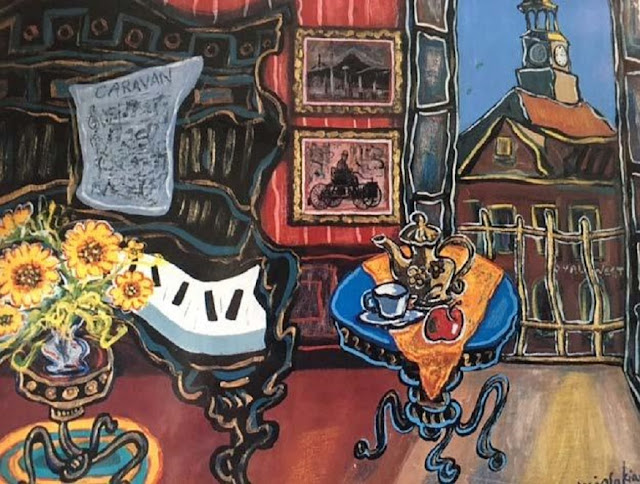
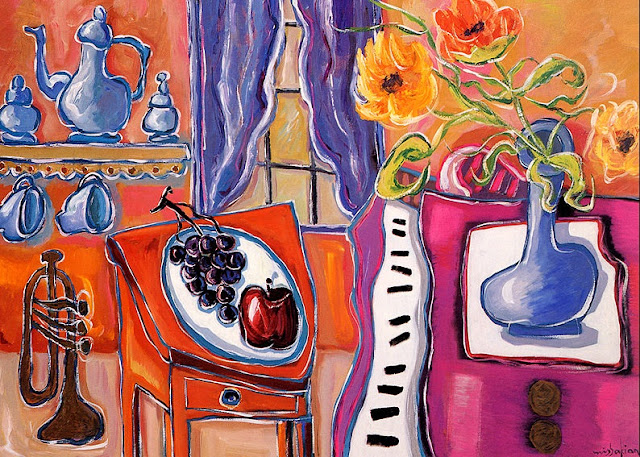
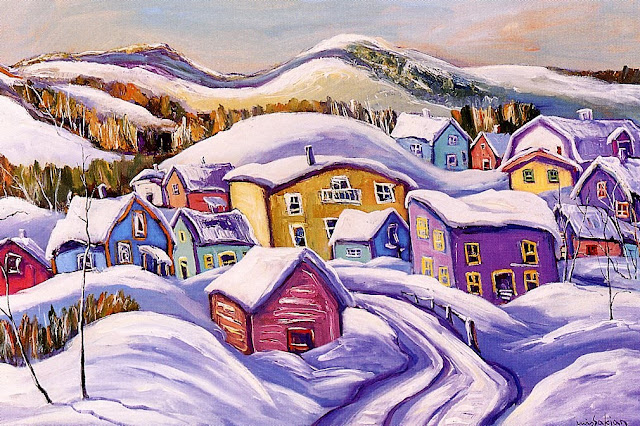
 Berge Missakian ( 1933-2017) A Canadian artist known for his “Fluid Cubist” Jazz paintings. Born in Alexandria, Egypt of Armenian heritage, he moved to Montreal, Quebec. Missakian studied at Cornell University and Concordia University. Inspired by Vincent Van Gogh, Henri Matisse, and Pablo Picasso, Missakian’s paintings reaffirm both Cubism and Fauvism. His paintings of landscapes, still lifes and street scenes are whimsical, capturing the unique beauty and colors of landscapes and the throbbing tempo of Jazz. His signature style uses vibrant colors, strong cubist shapes with multiple viewpoints.
Missakian’s paintings are in private and corporate collections across North America, Europe, the Middle East, China, Australia, India, Japan, Mexico, Russia and Armenia.(seasideart)


Brion Gysin - Artworks


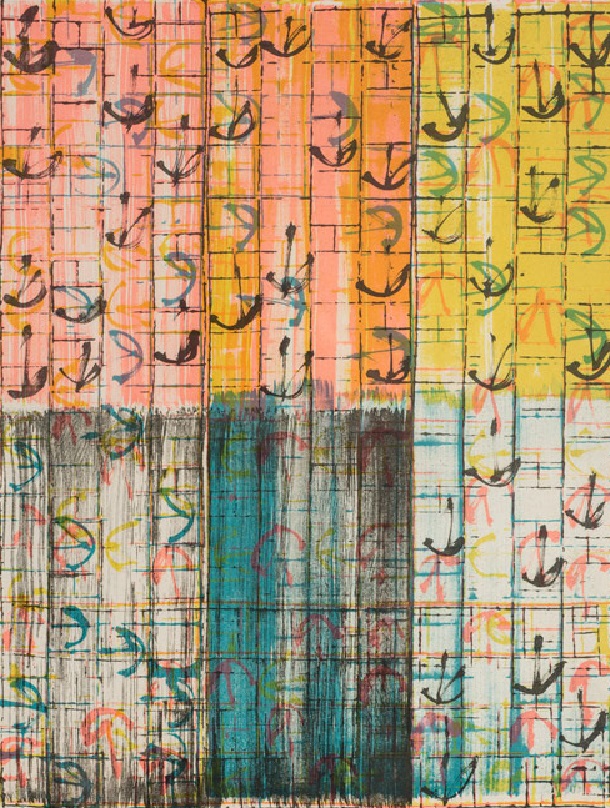
 Brion Gysin (1916 –1986) was a painter, writer, sound poet, and performance artist born in Taplow, Buckinghamshire.
He is best known for his discovery of the cut-up technique, used by his friend, the novelist William S. Burroughs. With the engineer Ian Sommerville he invented the Dreamachine, a flicker device designed as an art object to be viewed with the eyes closed. It was in painting and drawing, however, that Gysin devoted his greatest efforts, creating calligraphic works inspired by the cursive Japanese "grass" script and Arabic script. Burroughs later stated that "Brion Gysin was the only man I ever respected." 


Pierre Gauvreau - Canadian Avant-Garde Art


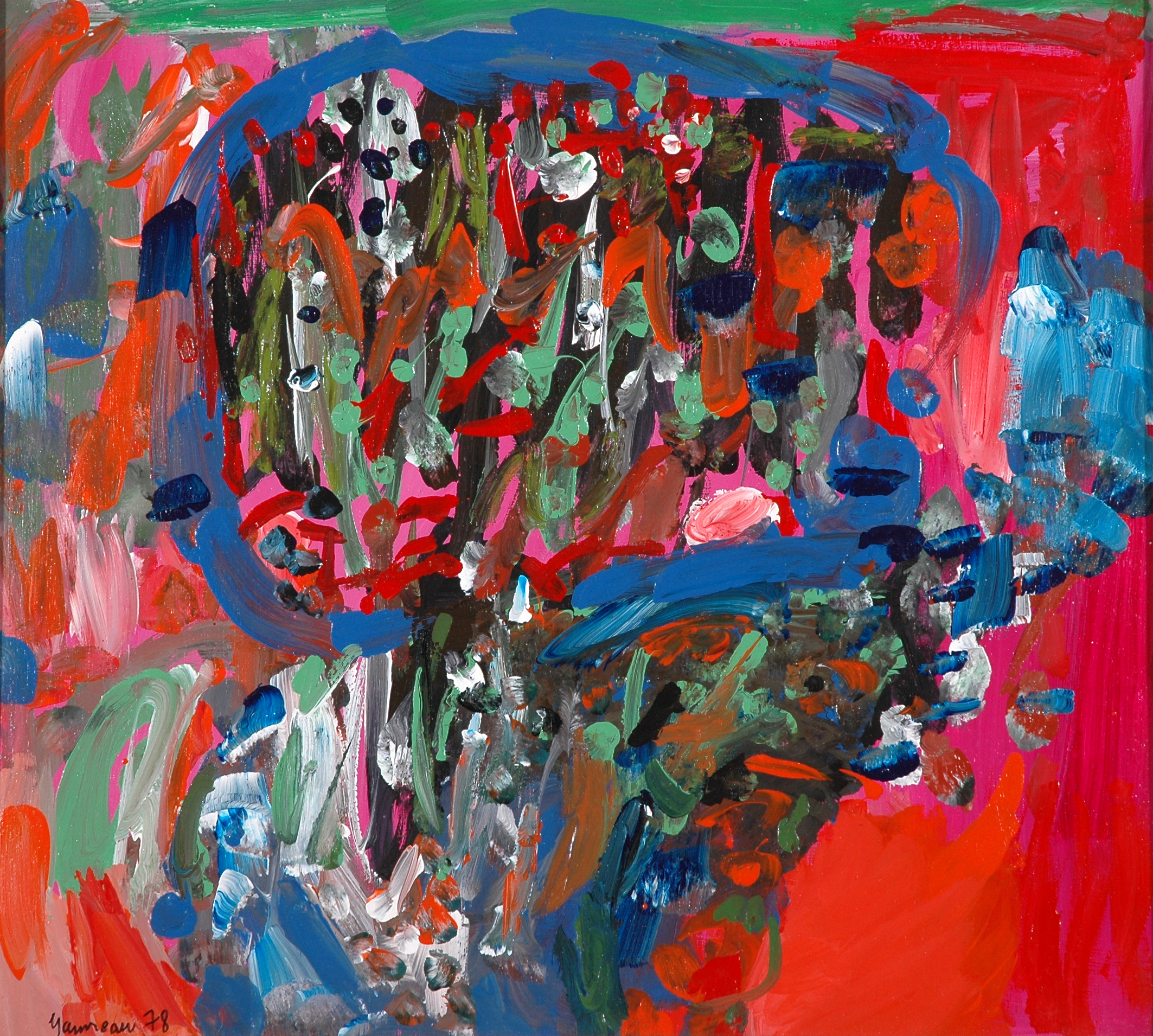
 Pierre Gauvreau (1922 –2011)was a Québécois painter who has also worked in film and television productions.He was born in Montreal, and studied at the École des Beaux-Arts de Montréal, today part of UQAM.
"Gauvreau was a signatory of the famous manifesto, Refus Global (Total Refusal), formed and published in 1948 by the Automatistes (1940s) and led by Borduas. The manifesto rejected formal academic strains of teaching and the Automatistes were heavily influenced by Surrealism and automatism. Of all the members, Gauvreau's favouritism towards a subconscious approach to painting: the freshness, the immediacy, and the freedom, solidified his work as "avant-garde". In 1977, after a hiatus of more than ten years during which his energies were absorbed by film and television, Gauvreau's colours intensified, his canvases grew larger, and he began working in a style that combined his earlier gestural brushwork with shapes and techniques associated usually with colour field and hard-edged painting: large areas of bright colour, geometric shapes, and the use of tape and collage to give sharply designated edges. Luxe, calme, et volupte" (Luxury, calm, and sensual pleasure) is the earliest example in this Retrospective.(gevik.com)


Sorel Etrog - Sculpture


 "Sorel Etrog was born in 1933 in Jassy, Romania and began his artistic schooling in 1945, and then in 1950 at the Tel-Aviv School of Fine Arts following his family’s emigration. In 1958, he assembled a solo exhibition and was granted a scholarship to study at the Brooklyn Museum Art Institution. A year lated, Toronto collector Samuel J. Zacks led him to discovery the city in which he would briefly live. For four years, Sorel Etrog went back and forth to and from his New York studio before finally settling down there in 1963.
He represented Canada at the Venise Biennale in 1966. His pieces were created both for the private and public sectors: Montreal’s Expo 67, the Sn Life Centre, the Los Angeles County Museum and the Olympic Parc in Seoul, Korea. This internationally-renowned artist has his work showcased around the globe. Sorel Etrog was accepted into the Order of Canada in 1994 and was made a Chevalier de l’Ordre des Arts et des Lettres by the French government in 1996.
Though bronze was Sorel Etrog’s favorite material to use, he also worked with others, including a few marble sculptures. The size of his pieces vary from small to monumental. In the last few years, the artist incorporated laminated metal sheets in his bank of materials.
Etrog was also interested in drawing (graphite, pastel and charcoal) and watercolors for both preliminary sketches and as a separate medium. As with his sculptures, the drawings explore both mechanics and biology in a harmonic way: mechanistic bodies, wrench-shaped hands, pure machines, blends, labyrinths and monsters. Like other artists form his generation, Etrog was influenced by the primitive arts and contemporary machinery. He uses them both for an infinite array of combinations."(artpublicmontreal.ca)