Exposition Art Blog: landscap painting
Showing posts with label landscap painting. Show all posts

Milena Olesinska


Oil painting on canvas 70cm x 50cm / November 2020

My Website 


Greg Dorosh


Frozen River
13" x 20" Oil on canvas.
This is a scene of Canmore Alberta, Canada when I was there back in 2016. It was -20 degrees C which was cold enough to start creating ice on the surface of this fast flowing river. The time of the day provided a beautiful view of the sun just above the Rocky Mountains.


Link to this painting


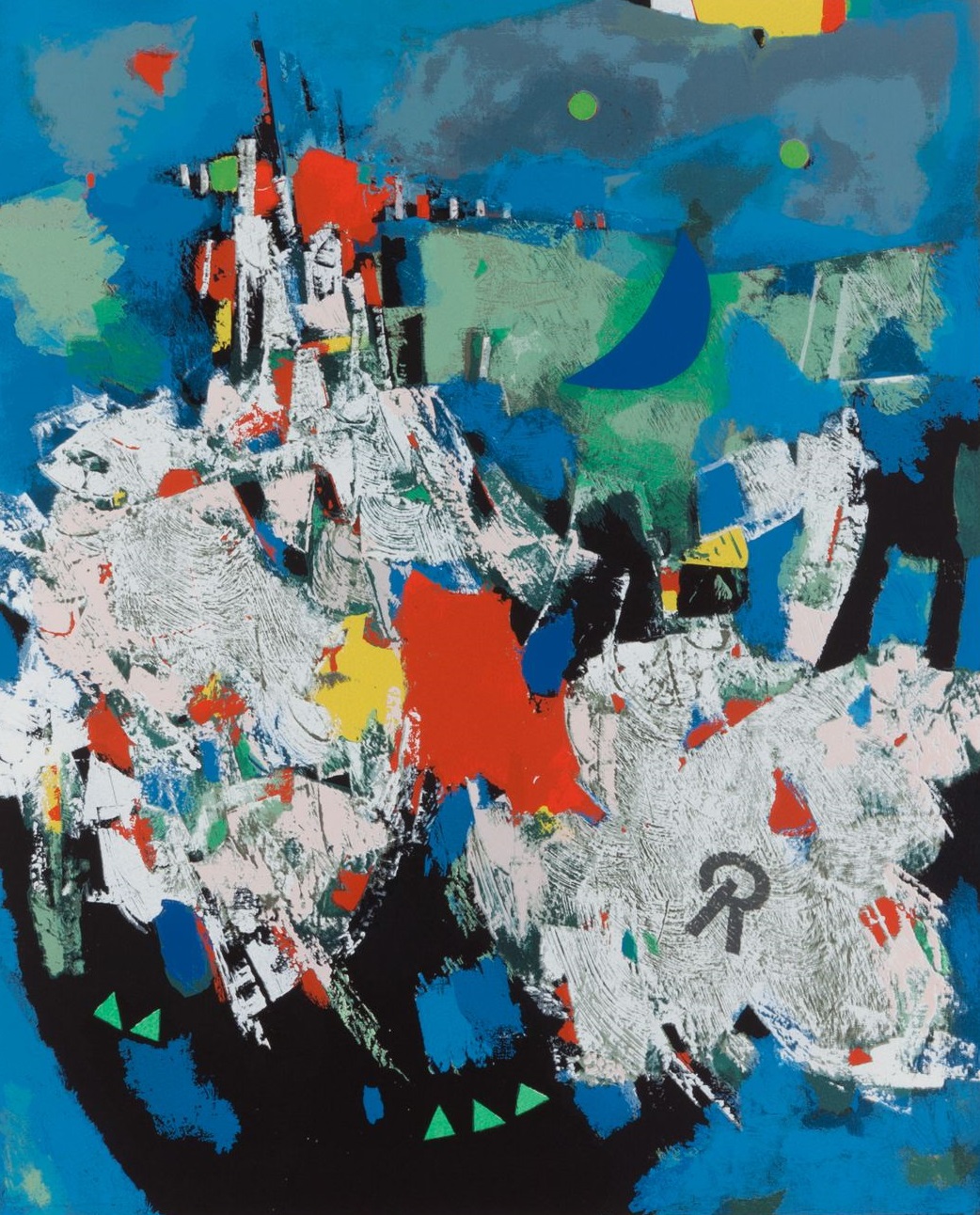
Luca Alinari - Fantastical Landscapes


Luca Alinari ( 1943 –  2019) was an Italian painter.
Alinari was born in Florence. Self-taught, he made his debut in 1968 with his first one-man show at the Galleria Inquadrature in Florence. During the 1970s he began an intense research on the free juxtaposition of objects and figures within a fantastical and suspended atmosphere, influenced by Neo-Dada and Pop Art research. During those years he experimented with various pictorial techniques, combining fluorescent colours, decalcomania, collage and photographic transpositions. Between 1972 and 1973 he exhibited in the main private galleries in Florence, presented by his friend the poet Alfonso Gatto.During the 1980s he gained official recognition through his participation in the 40th Venice Biennale (1982) and in the 11th Rome Quadriennale (1985). In 1993 he had his first retrospective mounted at the Royal Palace of Milan Museum, where he showed a group of works spanning his whole artistic career. The exhibition signalled the beginning of his series of fantastical landscapes characterised by bright, vivid colours and a pictorial technique combining thickly applied pigment with refined fields of smooth, transparent colour. Wikipedia


Ennio Morlotti


Ennio Morlotti ( 1910 – 1992) was an Italian painter of the Corrente de Vita movement started in Milan as a counterpoint to nationalistic Futurism and the Novecento Italiano movements. His figures show an affinity to the geometry of Cezanne and Matisse, but later works introduce elements of abstraction... Some figurative references of landscapes and still lifes were still present, but matter and colour (often laid on canvas with a spatula) became the protagonist of his works. In 1950 and 1951, he exhibited at the Caterine Viviano Gallery in New York, starting to be known outside Italy. Besides Venturi, Morlotti’s work was praised by other leading Italian critics such as Arcangeli, Longhi, Testori and Volpe. Arcangeli in particular included Morlotti among “gli ultimi naturalisti”, the last naturalist painters, as one of the last heirs of a Lombard tradition of figuration.


https://milenaolesinska.blogspot.com/p/blog-page_50.html

Mordecai Ardon - Mystery Landscape Painting


Mordecai Ardon (1896 –1992) was an Israeli painter.
Ardon was born Max Bronstein in 1896 in Tuchów, Galicia (then Austria-Hungary, now Poland). In 1933 he emigrated to Jerusalem in Mandate Palestine. He was granted Palestinian citizenship in 1936 and changed his name to Mordecai Ardon.
Beginning in the 1950s Ardon adopted a complex system of symbolic images in his paintings, taken from the Jewish Mystical tradition (Kabbalah), from the Bible and from a tangible reality. In his painting "Gates of Light", for example, he expressed "the inner mystery and timelessness of the landscape." His work seeks to impart a cosmic dimension to the present, linking it to antiquity and mystery. The same approach can be found in "At the Gates of Jerusalem" (1967), which shows the attempt to "convey his feelings about the cosmic significance of Israel’s return to the Old City of Jerusalem during the Six-Day War". "Bird near a yellow wall" (1950) demonstrates his simplistic involvement with the Holocaust, a subject to which he was one of the few Israeli artists to devote a phase of his work, at that time.As a teacher and director of the "New Bezalel", Ardon conveyed his sense of social involvement, his tendency towards Jewish mysticism and local mythology, and the combination of personal national symbols with reality-always stressing masterful technique. Wikipedia