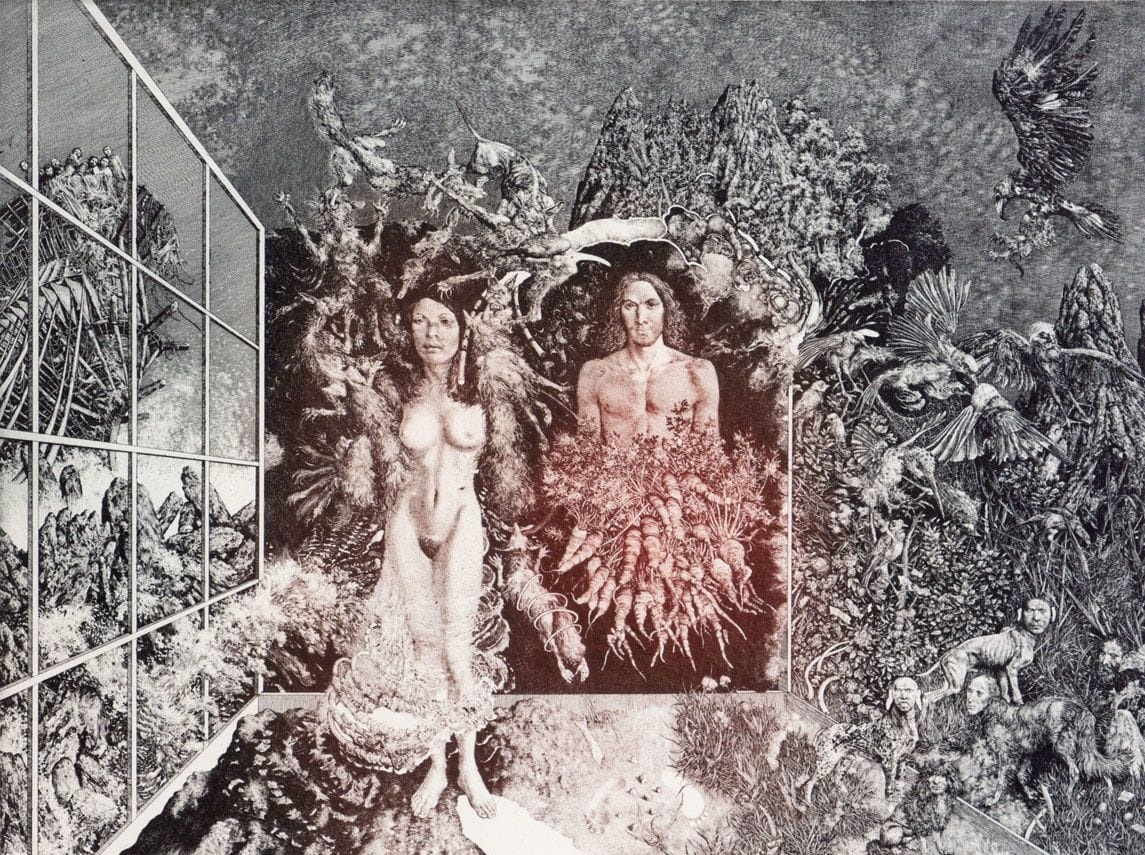
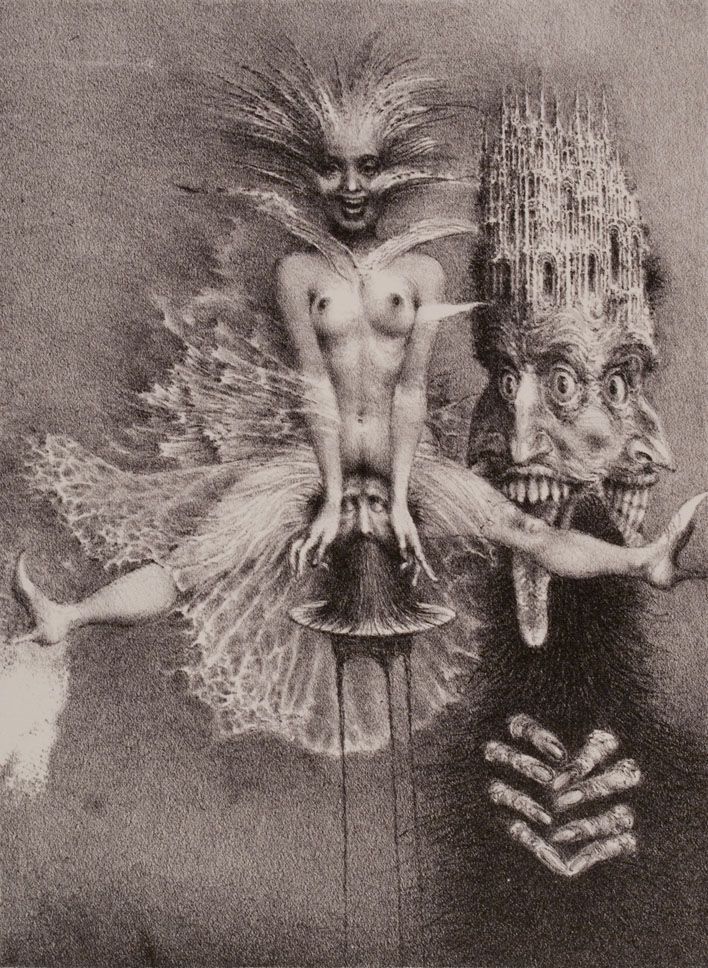
Bruno Canova was born in Bologna in 1925, was drafted in 1943 to military service in the Navy and shortly after he was arrested for attempting to organize a partisan group in La Spezia and interned in a labor camp in the Sudetenland German Brüx .After the liberation, he studied graphic design in the Boarding Schools of the “Convitti della Rinascita”, in Rome and Milan. Among his teachers: Luigi Veronesi, Max Huber, Albe Steiner, Lucio Lombardo Radice, Gabriele Mucchi. After his debut in 1949 in Prague, in an exhibition of Italian graphics and after having been, for some years, the political cartoonist of “L’Unità”, he devoted himself only to his work as an artist in Rome, the city where he would spend all his life and where he frequented, among others, Mario Mafai, Alberto Ziveri, Renato Guttuso, Renzo Vespignani, Salvatore Scarpitta, Ugo Attardi, Pier Paolo Pasolini. In 1965 he won the Premio Suzzara and participated in the Quadrennial of Rome, where his work was noticed by Carlo Ludovico Ragghianti, who wrote him a letter of great appreciation. In this period he develops a research on the city and its suburbs, and composes spreadsheets and drawings in black and white with a few chromatic elements in an assembly close to the experiences of historical avant-gardes. Draftsman and engraver of great quality, in the early eighties his path opens onto color and to a painting where the memory of the Roman School merges his analytical vision with the suggestions of the Northern Renaissance in a search which lasted until the last day. Marked as he was by his dramatic war experiences, from 1966 Bruno Canova worked continuously in the exhibition "The Art of War" that was exposed in public spaces in many Italian cities, with works where drawing and painting merge documents, newspapers and vintage posters, on the wake of the Dadaist collage and the outcomes are often close to certain conceptual experiences. Among his many exhibitions, we must remember his solo shows at the Villa Pignatelli in Naples (1975), at the Palazzo dei Diamanti in Ferrara (1976), at the National Central Library of Rome (1993) and in the Museum of Roman Laboratory of the University "La Sapienza" (1998 ), at the Quadrennial in Rome in 1965 and 1986, and the participation in the Italian Pavilion, section Lazio, 54th Venice Biennale at the Palazzo Venezia in Rome. He died in Lacco Ameno ( Ischia ) July 31, 2012.(.wikiart.org)