Exposition Art Blog: American sculptor
Showing posts with label American sculptor. Show all posts

Truman Tennis Lowe


 Truman Lowe, or Wakajahukga in Ho-Chunk, (American, Ho-Chunk, 1944–2019) is considered one of the foremost Native American artists of the twentieth and twenty-first centuries. Lowe was the youngest of six children and was raised in the Winnebago Indian Mission east of Black River Falls in west-central Wisconsin. He grew up alongside the Black River in the geographical and cultural homeland of the Ho-Ho-Chunk is one of twelve First Nations in the state of
Wisconsin and one of eleven tribes whose lands were forcibly ceded to the United States through
treaties in the nineteenth century.2 The origin stories of the Ho-Chunk Nation place these indigenous
people in the geographical area west of Lake Michigan, which became the Wisconsin Territory in 1836
and subsequently joined the Union as the thirtieth state in 1848.
Lowe's early work was inspired heavily by the education he was receiving. Paintings showing exercises in abstraction and geometric patterns in the style of Frank Stella are seen in paintings like Suzy (1968) and color theory works such as Yellow Over Green and Yellow Over Red (1969), the latter two which have since been destroyed. Working in clay, Lowe created egg-shaped sculptures that sat on coiled stands, Collection of Eggs and Unmatched Halves (c. 1968), giving a fantasy yet comic feel to his early experiments in art.
Sculpture classes taught him about the power of the line in artworks and its placement in nature. Lowe studied the works of Brâncuși, where he familiarized himself with geometry in sculpture, and Henry Moore's works regarding scale in sculpture.And with the popularity of plastic in the 1960s Lowe expanded his mediums to complete 3-D works including a life-size toaster of sheet plastic made from a sandwich sealer, complete with pieces of toast in the slot, recalling the soft sculpture works of Claes Oldenburg at the time.
It knowledge of and reverence for natural materials that instilled in Lowe his family’s and his community’s connection to the environment. The ethic of sustainable use of natural resources
was impressed upon him early on and he made judicious use and reuse of all the natural materials that
he collected throughout his career.


Barry Edward Le Va - Post-minimalism and Process Art


 Barry Edward Le Va (1941 – 2021) was an American sculptor and installation artist. Trained in his native California, he lived and worked in New York City. Le Va was among the leading figures of post-studio and process art to have emerged in the late 1960s. His abstract sculptures, installations, drawings, and editioned works are featured in major art collections around the world.
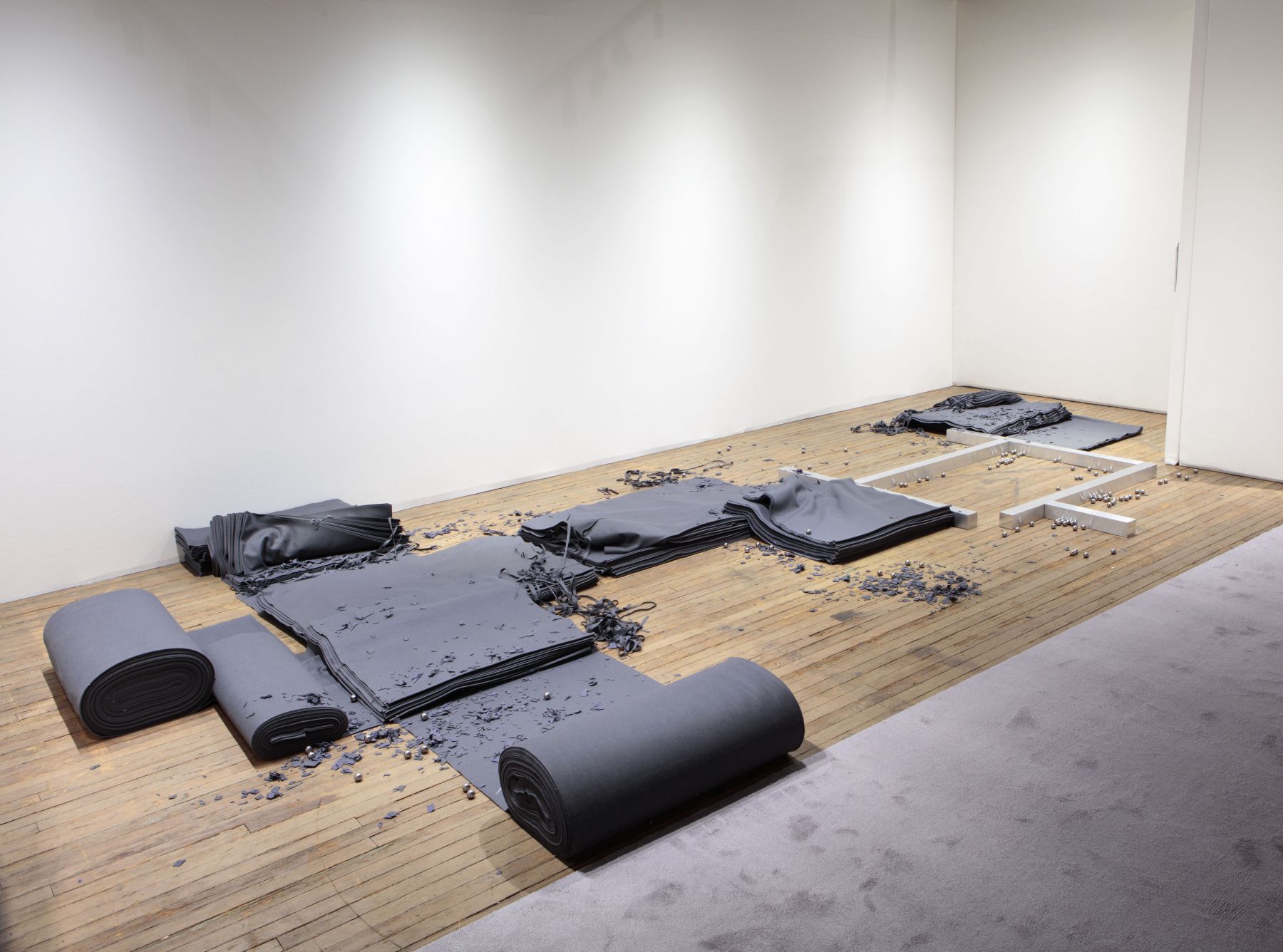
Le Va's pioneering scatter pieces on the floor, started in 1966, made him one of the first of the so-called Process artists. In 1969, he started to create works with cleavers serially embedded in walls or floors.More recently, he produced monumental abstract works and site-specific installations.
In 2005, Le Va's work was the subject of a major retrospective exhibition at the Institute of Contemporary Art, University of Pennsylvania, Philadelphia (ICA).The exhibition, Accumulated Vision, Barry Le Va, was accompanied by the publication of a comprehensive monograph of the artist's work. The ICA described Le Va's work as: "Since the late 1960s, the American artist Barry Le Va has used broken glass, meat cleavers, wool felt, ball bearings, powdered chalk, cast concrete, paper towels, linseed oil, a typewriter and a gun, among other things, to make his art. Part of a generation intent on knocking art off its pedestal, Le Va claimed the floor as his field of operations by scattering massive amounts of materials, or forms, to create works which he called "distributions." Apparently random, even chaotic, these installations are in fact premeditated and executed according to plan. Not surprisingly, drawing plays a significant role in the work of this artist whose formative training is in architecture. Le Va's distributions make him one of the leading practitioners of Post-minimalism and Process Art. But his own, preferred frame of reference comes not from recent art history, but from mystery novels. He has likened his installations to crime scenes and invites viewers to look for clues to reconstruct the, often violent, act or concept that underlies the..Wikipedia


Robert Morris - Conceptual Art


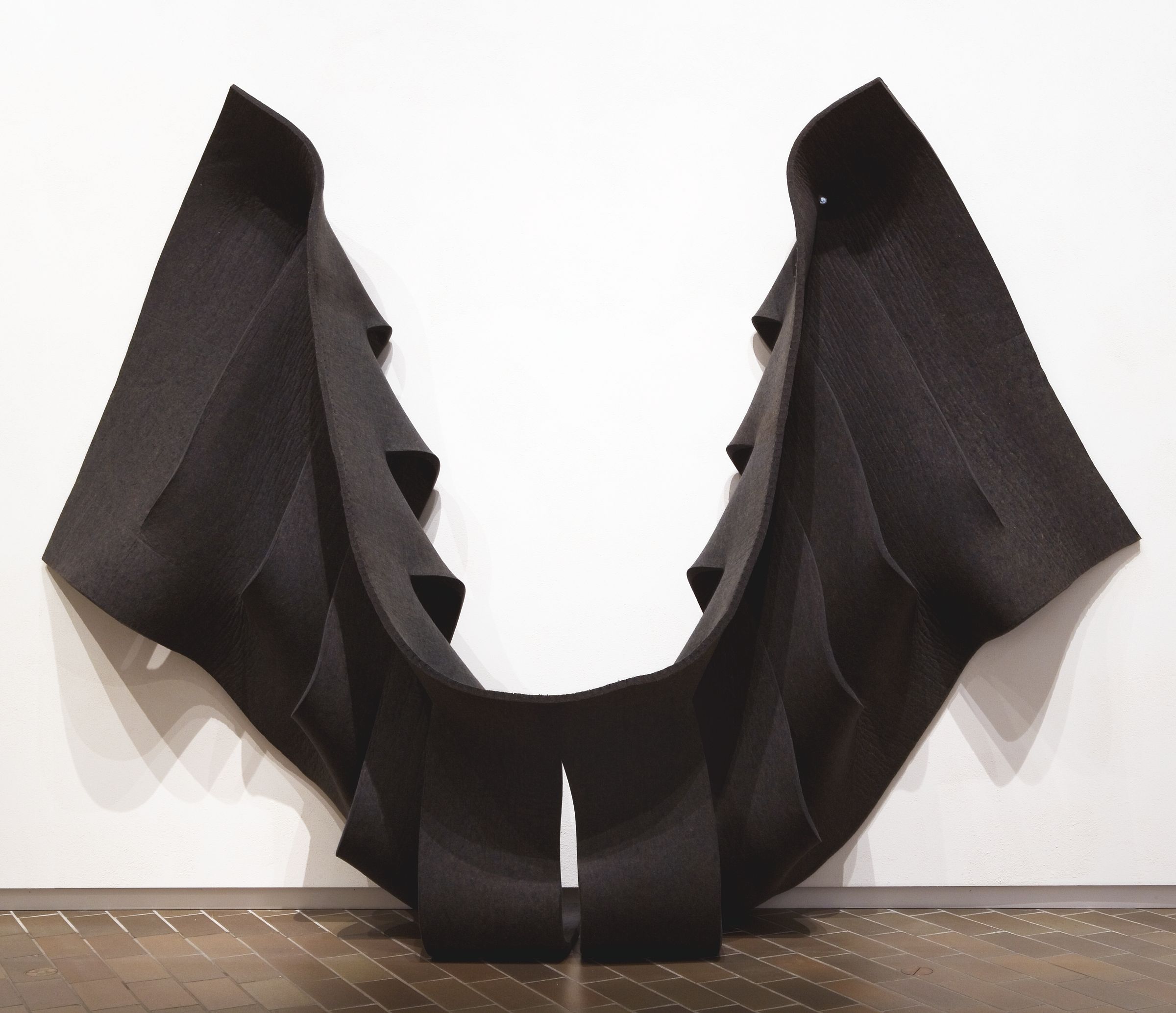
 Robert Morris (1931 - 2018 )was an American sculptor, conceptual artist and writer. He was regarded as having been one of the most prominent theorists of Minimalism along with Donald Judd but he also made important contributions to the development of performance art, land art, the Process Art movement, and installation art. Morris lived and worked in New York. In 2013 as part of the October Files, MIT Press published a volume on Morris, examining his work and influence, edited by Julia Bryan-Wilson
"Robert Morris has comported himself for decades as the least minimal of the original minimalists. While sharing most of the core group’s characteristics — including the complementary artist/writer mode — he has in both word and deed proved more committed than the others to contingency and experimentation. Alternating, often abruptly, between cool objects and evocations of calamity, his artistic outlook remains — as the spot-on title of his collected writings suggests — a Continuous Project Altered Daily. Though no slouch when it comes to minimal severity, his thinking often drifts closer in sensibility to Robert Smithson’s macro riffing than to Donald Judd’s ideological finalities.Minimalist theory made much of the viewer’s movement through space as part of what defined the sculptural. Morris, having come to this notion following a wider path of study than the others — a path that included engineering, art history, philosophy, and dance — found ways to follow intuitive offshoots that generated outward from minimalism’s basic premise. He took labyrinths and passageways, which were favored minimalist tropes, and superseded their phenomenological values with emotionally charged contexts that included prison architecture and Midwestern stockyards. Thus the jarring incongruence — to cite an extreme example — between his ascetic, process-oriented felt hangings of the 1970s and the apocalyptic Firestorm reliefs that soon followed. Keeping to a highly subjective route, he seems able to shuttle convincingly between the austere space of the artistically reductive and the emotionally charged arena of darker human experience, discovering along the way many disturbing links between the two."(hyperallergic.com)