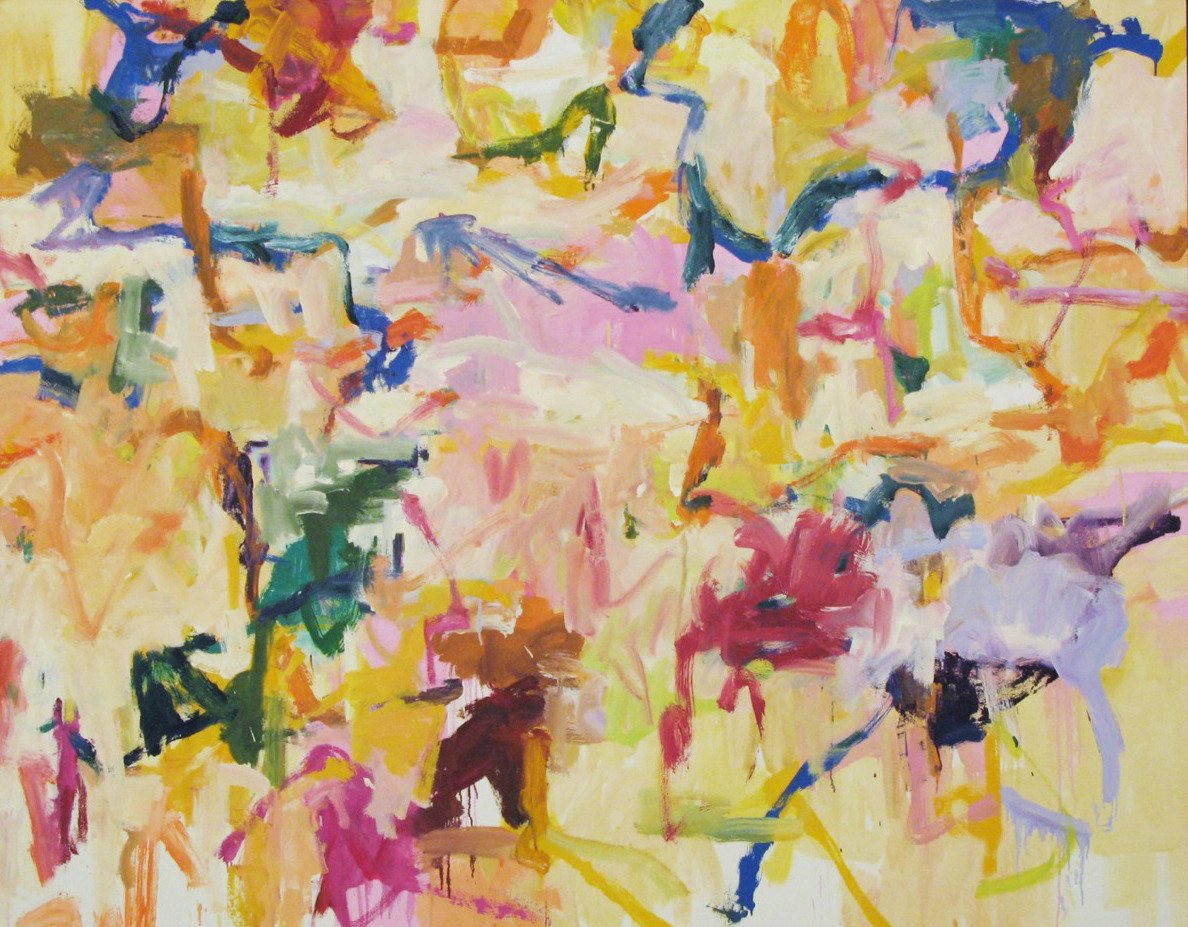
Sam Gilliam (1933 – 2022) was an American color field painter and lyrical abstractionist artist. Gilliam was associated with the Washington Color School, a group of Washington, D.C.-area artists that developed a form of abstract art from color field painting in the 1950s and 1960s. His works have also been described as belonging to abstract expressionism and lyrical abstraction. He worked on stretched, draped and wrapped canvas, and added sculptural 3D elements. He was recognized as the first artist to introduce the idea of a draped, painted canvas hanging without stretcher bars around 1965. This was a major contribution to the Color Field School and has had a lasting impact on the contemporary art canon
Painting is like silent poem, said Simonides, poet from ancient Greece.Paintings are icons, doors to the Platonian world above the heavens. Paintings on my blog are just those icons, which lead a viewer into the magic world of harmony and beauty. Artists who present their achievements on my blog have a very different cultural and national background, they represent variety of artistic traditions and schools
Sam Gilliam - American Contemporary Art
Edward Clark - Abstract Painting - Color Field
Edward Clark, also known as Ed Clark (1926 - 2019), is American abstract expressionist painter.
"Ed Clark is an American Color Field painter whose style was shaped by the years he spent in Paris in the early 1950s. As an African-American who had been raised in the segregated South, he found Paris tolerant, and the atmosphere encouraging. While there, he developed a sophisticated abstract style that was markedly influenced by the tachist painter Nicolas de Stael. His early work is remembered for his "push-broom technique," which encouraged his full physical involvement in painting. He is also noted for the monumental scale of his work, and the fact that he is one of the first painters to have used shaped canvases
Kikuo Saito - Lyrical Abstraction - Color Field
The composition of many of Saito's paintings was significantly influenced by and in dialogue with the geography of his theatre productions. Saito's dualistic nature took material form in the interplay between the collaborative theatre and the private realm of the painting studio. Art critic Karen Wilkin wrote that "if we are attentive, we discover that characters from his stage pieces have been reincarnated as abstract configurations within his paintings, reborn as the records of animated gestures that retain the individuality of their sources."
A commonality in the entire body of Saito's work, both on stage or on canvas, focuses on written signs. Repeated investigations of alphabet in Saito's work, both real and made-up, legible and obscured, speak to moments in his personal history.As a young immigrant in a country whose language he did not speak, Saito wrote space for himself in the already-established Color Field tradition by constructing his own painterly lexicon. Opposing motifs of free gestural brushtrokes and elegant, ordered lettering allude again to his double practice as painter and architect of poetic performance. Abstraction in Saito's work points to a meditation on the instabilities and impermanence of language and the mutability of meaning. A space opens once departing from structuralist systems of transmuting signs, and Saito fills that space with vibrant color. Wikipedia
Color Field - Kikuo Saito
"The composition of much of Saito's painted work was significantly influenced by and in dialogue with the geography of his theatre productions. A dualistic nature to Saito himself took material form in the interplay between the collaborative theatre and the personal, private realm of the painting studio. Art critic Karen Wilkin writes, if we are attentive, we discover that characters from his stage pieces have been reincarnated as abstract configurations within his paintings, reborn as the records of animated gestures that retain the individuality of their sources."
A commonality in the entire body of Saito's work, both on stage or on canvas, focuses on written signs. Repeated investigations of alphabet in Saito's work, both real and made-up, legible and obscured, speak to moments in his personal history.[4] As a young immigrant in a country whose language he did not speak, Saito wrote space for himself in the already-established Color Field tradition by constructing his own painterly lexicon. Opposing motifs of free gestural brushtrokes and elegant, ordered lettering allude again to his double practice as painter and architect of poetic performance. Abstraction in Saito's work points to a meditation on the instabilities and impermanence of language and the mutability of meaning. Departing from structuralist[disambiguation needed] systems of transmuting signs, a space opens that Saito fills with vibrant color."Wikipedia


.jpg)