Exposition Art Blog: printmaker
Showing posts with label printmaker. Show all posts

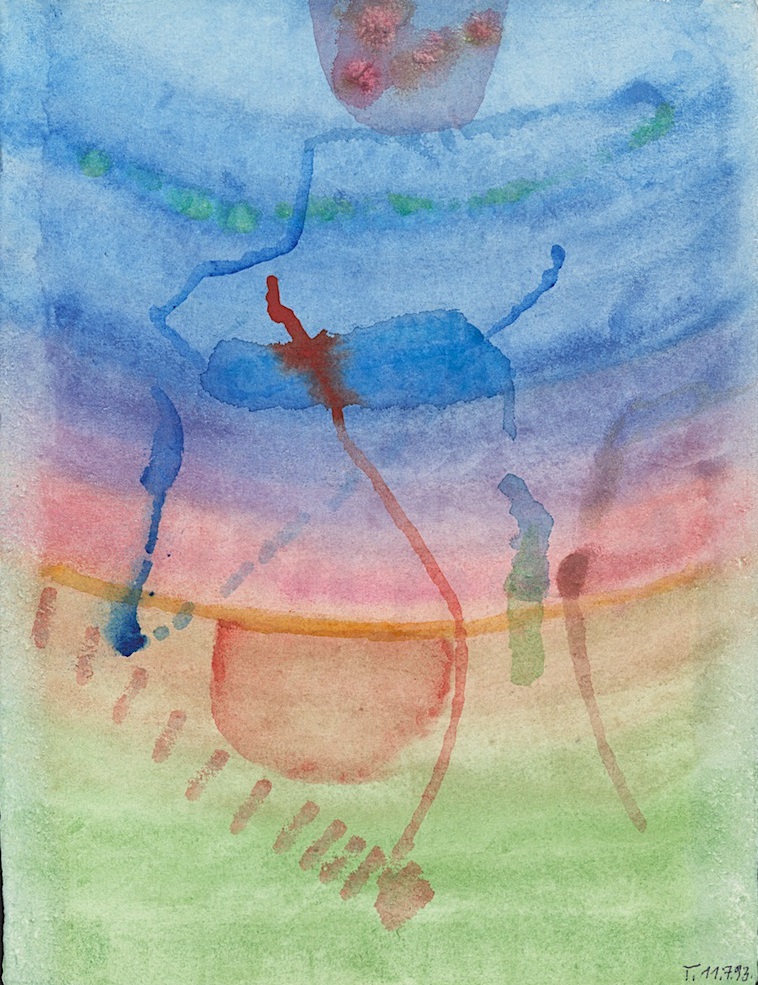
Heinz Trökes


Heinz Trökes (1913 –1997) was a German painter, printmaker and art teacher "I believe in the creative in the world and in people, that art will endure and that it is worth living in our century, despite everything. Don’t become timid, don’t let yourself be upset by big talk, doubt, smile, let yourself be surprised, even by yourself, experience our world with keen senses.The terrestrial zoo is large and has room for many species; the higher of them are our good fortune and our comfort. I would like to call them poets, who see our world in a new way, in colours, words, shades and equations, as we have not yet known it, who reveal unparalleled wealth."(troekes.com)


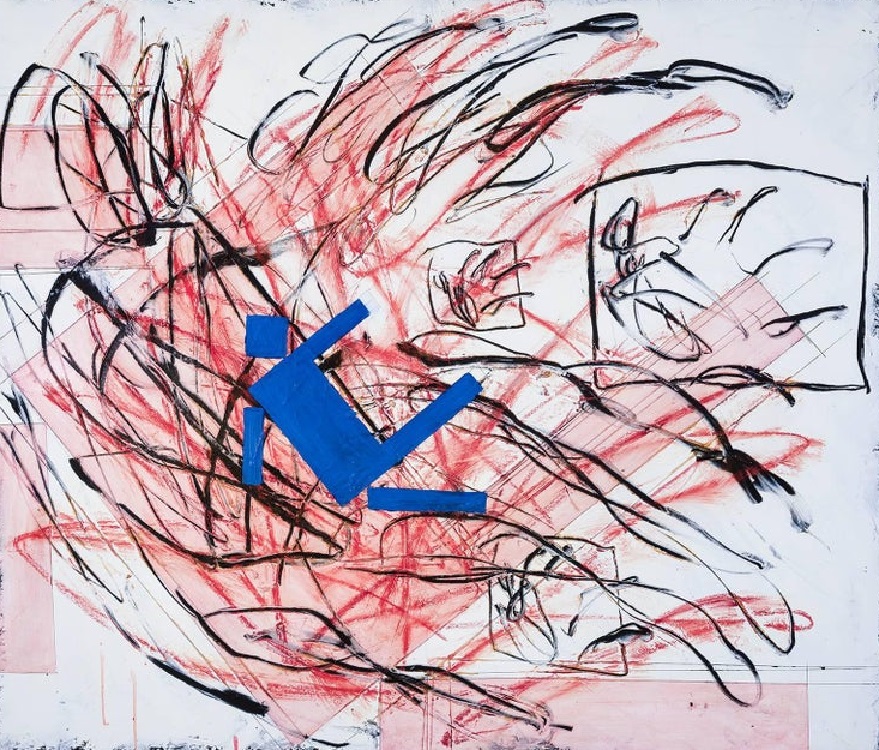
Modest Cuixart - European Contemporary Art


Modest Cuixart  (1925-2007)
"Painter, draftsman, printmaker and scenographer Spanish. He was born in Barcelona on November 2, 1925 and passed away in Palamós (Girona) on October 31, 2007.In 1944 he joined the Faculty of medicine, but abandoned it in 1946 to devote himself completely to painting. In 1948 he participated in the founding of the magazine Dau al set and in the Group of the same name, being the first and most important manifestation of Spanish surrealism of post-war linking innovative movements after the war with the avant-garde of the first third of the century, together with Arnau Puig, Joan Brossa, Tharrats and Tàpies. Two years later, took part in the "second week of art" organized by the "School of Altamira", where he became friends with Willi Baumeister, Lloréns Artigas, Luis Felipe Vivanco and Ricardo Gullón, among others.In 1951 he travelled to France, alternating her residence between Lyon and Paris. His first paintings and drawings, in the Decade of the 1940s, are assigned to expressionism. Then it went through a surreal stage linked to fantastic and dreamlike, images in the time of "Dau to Set". In the Decade of the fifties evolved into a painting informalist and material that uses the "dripping" and collage, to end up going to a painting which will progressively accentuating of expressionist figuration, with a special interest in the female figure and "erotic" images. Cuixart Antigone of the Ballet Moderne de Paris made a substantial graphic works, as well as decorations and theatrical costumes, including those carried out for the ballet in 1964. In 1958 he won prize Torres García and in 1959 the painting prize of the 'V biennial of São Paulo".The Dau al Set room organized in 1975 a sample retrospective which incorporated his work from the first steps of 1942. Representative pieces of each of the phases crossed by Cuixart, from his time there could see magicista and surrealist of Dau al Set, up to the abarrocada and neomodernista figuration of recent times, passing through his abstract phase of calligrams, "dripping", collages and painting material from mid-1950s, and the period through which blooms materic and the viscous exuberancias of informalism diluted slowly giving space to those sensual presence and obsessive frivolous woman with Hat plant, disturbing allegories of the grim reaper who populate his latest paintings. Despite the incessant changes and fluctuations of the interest of the painter between the materials and the strictly formal, exists in Cuixart a constant that gives unity to the whole of his contribution: the magical element, the use of a hermetic language of symbols, the embodiment of a dark mystery magma; in the words of the poet Joan Perucho: "Cuixart is taca les mans amb the fosca". "(thebiography.us)


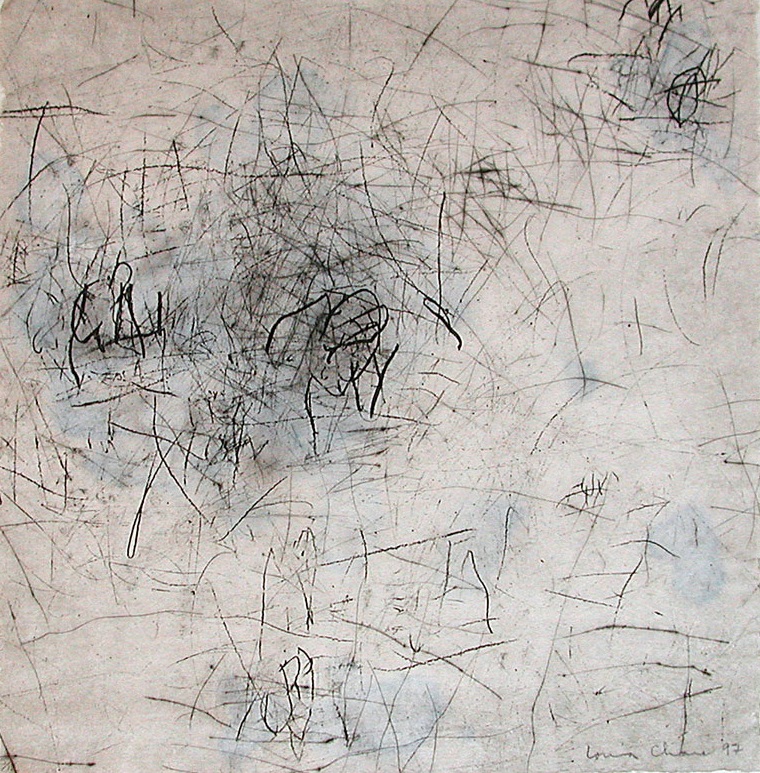
Louisa Lizbeth Chase - American Neo-Expressionism


Louisa Lizbeth Chase (1951 – 2016) was an American neo-expressionist painter and printmaker.
Louisa Chase is known for her use of schematically drawn body parts (i.e. hands, feet, torsos) and elements of landscape, separately or combined. She used a bright color palette and geometric forms. Chase paid special attention to the brushstrokes and markings in wood in her pieces. Chase’s work shows influence from New Image Painting and Neo-Expressionism.
Chase’s paintings often have a sense of juxtaposition between disturbing imagery and lightness or even humor of style. “When peopled, her fragments of place are inhabited by partial figures: torsos, hands, feet. They are hovering or falling or drowning or being assumed into the sky.”This imagery is contrasted by the cartoonish style with which Chase would symbolize these body parts, the many energetic brushstrokes and the bold colors she would use. Swimmer, in the collection of the Honolulu Museum of Art, is an example of Chase's use of cartoonish human bodies and body parts rendered in geometric shapes. Wikipedia


Robert Juniper - Australian Landscapes


"Robert Litchfield Juniper, AM (7 January 1929 – 20 December 2012) was an Australian artist, art teacher, illustrator, painter, printmaker and sculptor.Robert Juniper has been a significant figure in contemporary Australian painting since the 1960's and is recognised as a 'Living Treasure' in his home state of Western Australia . He has exhibited in London (Whitechapel, Tate galleries), and has twice been awarded the prestigious Wynne Prize for landscape painting. In 1984 he received an Honorary Doctorate from the University of Western Australia , for his contribution to contemporary Australian art. In November 2005 a park in Perth was named after him by the Minister for Culture and Arts called Juniper Gardens , which showcases his magnificent bronze sculptures. Robert's work has shaped the way Australian's have imagined their country. He is best known and highly respected for his poetic and visionary approach to landscape, particularly the outback and desert.. His landscapes are a psychological and pictorial interpretation of space, blending his feelings about the landscape with what is visible to the eye. Although identifiable objects appear within his landscapes, the images are often metaphorical and the landscape represented stretches far further than the eye can see." ( Wagner Art Gallery )