Exposition Art Blog: contemporary art
Showing posts with label contemporary art. Show all posts

Herbert Gentry - Expressionist Paintings

 "Artist Herbert Gentry (1919-2003) made vibrant expressionist paintings of figures and faces, mixing global influences and African American experience. Referring to his childhood during the Harlem Renaissance, Gentry asserted “Harlem prepared me for Paris.” After completing military service in World War II, Herb Gentry returned to Paris for art school - and found himself in the heart of the expatriate American community in Montparnasse. Gentry moved to Scandinavia in 1959, but always kept a studio in Paris. In 1969, he returned to New York and became a resident of the famous Chelsea Hotel. At home on both continents, Herbert Gentry resided, painted and exhibited on both sides of the Atlantic. His work is represented in important national and international museum collections."(herbertgentry.com)
   “I paint what I experience, who I am, in the Black world, especially in America, there’s a thing that you can’t forget where you came from, you paint from your experiences, who you are”
"Although Gentry may not be as well-known as some of his contemporaries, his influence on artists and musicians of his time spans continents. However, because he spent so much time traveling, he never established a firm enough reputation in any one place. He painted in a semi-figural abstract style, suggesting images of humans, masks, animals and objects caught in a web of circular brush strokes, encompassed by flat, bright color. He has suggested that his works are uncalculated- coming from his subconscious- painting what he feels as he feels it. Gentry’s striking images are the product of his exposure to exotic people and places throughout his lifetime.   "It’s the magic that does the painting, and the magic is within. I can’t see having substance without having magic in the painting. I use hands, fingers, I’ll use anything at that point, it depends. ... I believe sometimes you use the thing nearest if it’s possible. ... The main thing is to get that idea over quickly. Because that feeling, that thought is a very short thought, as an artist it doesn’t last a long time. If you can get it down right away, work with it technically later on. For example, you see a form...should I...shouldn’t I...PUT IT DOWN! Then technically, if it doesn’t fit or you didn’t do it right, you can work with it. But that feeling, that idea, that spiritual thing, you just put it down right then!" (-Herbert Gentry, Oral history interview with Herbert Gentry, 1991 May 23, Archives of American Art, Smithsonian Institution.)"(spaniermanmodern.com)


Jannis Kounellis – The Man Who Turned Everyday Materials into Art Revolution


Jannis Kounellis (1936–2017) was a Greek-born artist whose radical installations helped define the Arte Povera movement, one of the most influential avant-garde currents in post-war European art. Celebrated for his ability to transform humble, everyday materials into profound artistic statements, Kounellis challenged the boundaries between art and life, creating works that were both visceral and intellectually provocative.

Born on March 23, 1936, in Piraeus, Greece, Kounellis initially trained as a painter. He studied art in Athens before moving to Rome, where he enrolled at the Accademia di Belle Arti. It was in Italy that his artistic language truly matured. Although he began his career as a painter, a decisive shift occurred in 1967 when he became deeply involved with Arte Povera. This Italian movement sought to dismantle the conventions of the established art world, as well as broader societal norms dictated by government, industry, and consumer culture. Arte Povera artists rejected sleek, industrial aesthetics in favor of raw, “poor” materials and a more direct, experiential approach to art-making.

Kounellis quickly became one of the movement’s most distinctive voices. He moved away from traditional painting toward large-scale installations that juxtaposed seemingly unrelated objects and materials. Stone, cotton, coal, old bed frames, and doors became recurring elements in his vocabulary. These choices were never arbitrary; through unexpected combinations, Kounellis evoked themes of memory, history, migration, and the passage of time.

One of the most compelling aspects of his practice was the incorporation of real life — whether simulated or literal — into the sanctified space of the gallery. He famously installed live birds in cages alongside paintings and sculptures. In other works, he introduced the sound of a Bach score, adding a temporal and auditory dimension to the visual experience. Perhaps his most iconic and frequently recreated installation involved placing twelve live horses inside galleries or museum spaces. These powerful animals, standing calmly amid white walls and silent spectators, created a striking collision between nature, history, and the institutional art world. The horses embodied vitality, strength, and an untamed presence that no static sculpture could replicate.

Kounellis’s work resonated strongly with audiences and critics alike. He achieved significant international recognition and was invited to participate in some of the world’s most prestigious exhibitions, including documenta in Kassel and the Venice Biennale. His installations consistently provoked dialogue about the role of the artist, the meaning of materials, and the relationship between art and everyday existence.

On February 16, 2017, Jannis Kounellis passed away in Rome at the age of 80. His death marked the end of a remarkable career that spanned more than five decades, yet his influence continues to reverberate in contemporary art. Today, his works are studied not only for their historical importance within Arte Povera but also for their enduring ability to transform ordinary matter into something poetic, political, and deeply human.

Kounellis once described his approach as a way of “bringing the world into the museum.” By doing so, he expanded the very definition of sculpture and installation art. His legacy lies in the quiet power of his gestures: the recognition that art does not need to imitate life when it can embrace and confront it directly. Through coal, horses, cotton, and song, Jannis Kounellis reminded us that the most potent art often emerges from the simplest, most authentic encounters between materials, space, and human experience.


Nicholas Hondrogen contemporary abstract painting

 Nicholas Hondrogen (1952-2007) was a prolific painter, sculptor, and filmmaker. A part of the art-star generation of 1980s New York, Hondrogen had more in common and spirit with the Minimalists and Conceptualists of decades prior. The artist began his career in Paris in the early 1970s following an accelerated course of study at the Boston Museum School. Achieving almost immediate recognition in Europe, Hondrogen enjoyed numerous solo exhibitions and was collected by both individuals and notable public institutions. He returned to the U.S. in the early 1980s, settling in New York City where he founded a successful design and construction business and refocused his art toward filmmaking. Hondrogen’s award-winning 1997 film, Perfect Moment, created after his move to Los Angeles, documents the life-defining recollections of a wide-range of individuals both famous (Philip Glass, Vincent Gallo, Norman Lear) and unknown. Hondrogen was the recipient of two Pollack-Krasner grants in 2000 and 2005.
The Nicholas Hondrogen Trust was formed in February 2007 at the time of the artist’s death. Hondrogen’s long time patron and supporter Jeff Vespa was chosen to chair the estate, with the artist’s brother John acting as a trustee. Hondrogen's Mumonkan Series marked the Trust’s inaugural show.(wunderarts.com)


Jess Collins: The Mysterious Alchemist of American Art

 Jess (Jess Collins) – American Artist

Jess Collins (August 6, 1923 – January 2, 2004), known simply as Jess, was a distinctive American visual artist celebrated for his unique paintings, collages, and drawings. Born Burgess Franklin Collins in Long Beach, California, he later rejected his family name and became known professionally as Jess.

Jess grew up surrounded by literature and classical music. As a child, he read L. Frank Baum’s Oz books, Edgar Allan Poe, and Marcel Proust, while listening to Beethoven, Mahler, Sibelius, and Brahms. He also created scrapbooks with his great-aunt — an experience he later identified as the origin of his lifelong collage practice.

His artistic work is deeply influenced by themes of alchemy, mythology, the occult, chemistry, and male beauty. Jess developed a highly personal and symbolic visual language that stood apart from mainstream art movements of his time.

Notable Works and Series

One of his most important series is Translations (1959–1976), consisting of heavily textured, impasto paintings created in a meticulous paint-by-number style. These works reinterpret found images into lush, dreamlike compositions. Six paintings from this series were exhibited at the Wadsworth Atheneum in 1975.

Jess also created elaborate murals in the late 1950s for the Berkeley home of renowned film critic Pauline Kael. These fantastical, Romantic-style murals still adorn the walls today.

In addition to painting, Jess was a master of collage. He famously repurposed vintage book illustrations and comic strips — most notably transforming the Dick Tracy strip into his own subversive series called Tricky Cad.

His final major work, the large-scale drawing Narkissos (over 6 x 5 feet), is considered a masterpiece and is part of the permanent collection of the San Francisco Museum of Modern Art (SFMOMA).

Artistic Legacy

Jess’s art is appreciated for its poetic sensibility, intricate detail, and deep engagement with myth and mysticism. Though he worked largely outside the spotlight of major art trends, his work continues to influence contemporary artists interested in collage, symbolism, and alternative narratives.

Today, Jess is recognized as one of the most original and enigmatic figures in post-war American art.


Milena Olesinska - Surrealism


My art refers to surrealism, in a broad sense, Broad, because I have excluded typical surrealistic landscape and reached to the simplified image, to the form of the poster. Unraveling leading ideas in my paintings allows me to communicate freely with recipients and to guide them trough symbolic reality of my art. 

My wesite 


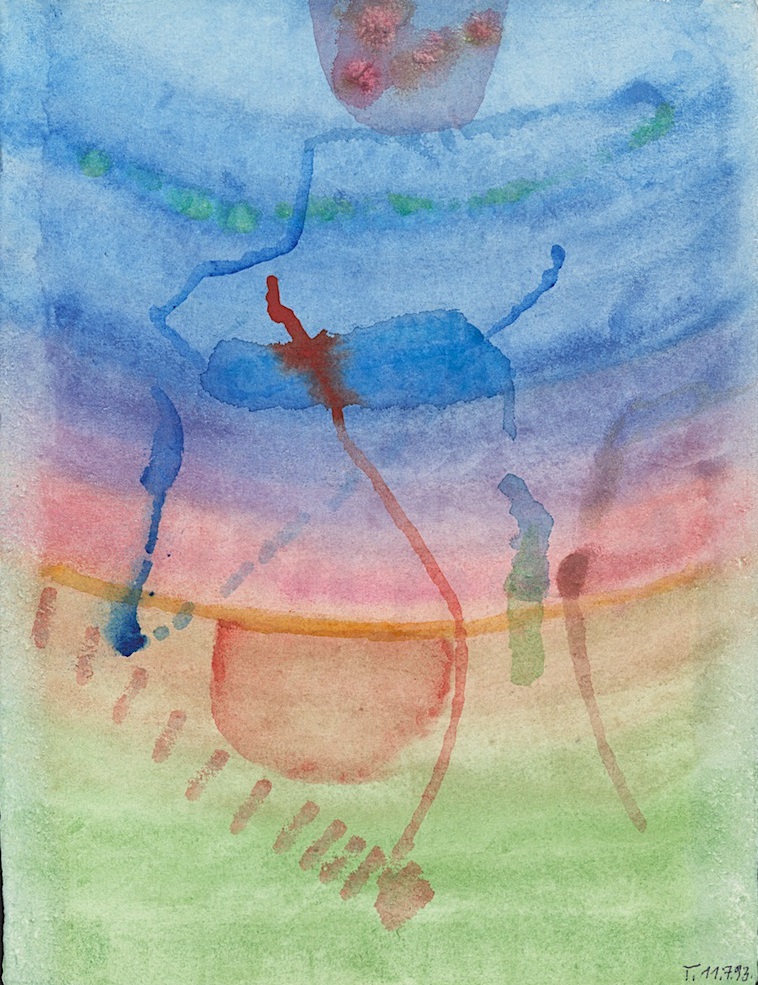
Heinz Trökes


Heinz Trökes (1913 –1997) was a German painter, printmaker and art teacher "I believe in the creative in the world and in people, that art will endure and that it is worth living in our century, despite everything. Don’t become timid, don’t let yourself be upset by big talk, doubt, smile, let yourself be surprised, even by yourself, experience our world with keen senses.The terrestrial zoo is large and has room for many species; the higher of them are our good fortune and our comfort. I would like to call them poets, who see our world in a new way, in colours, words, shades and equations, as we have not yet known it, who reveal unparalleled wealth."(troekes.com)