Exposition Art Blog: performance artis
Showing posts with label performance artis. Show all posts

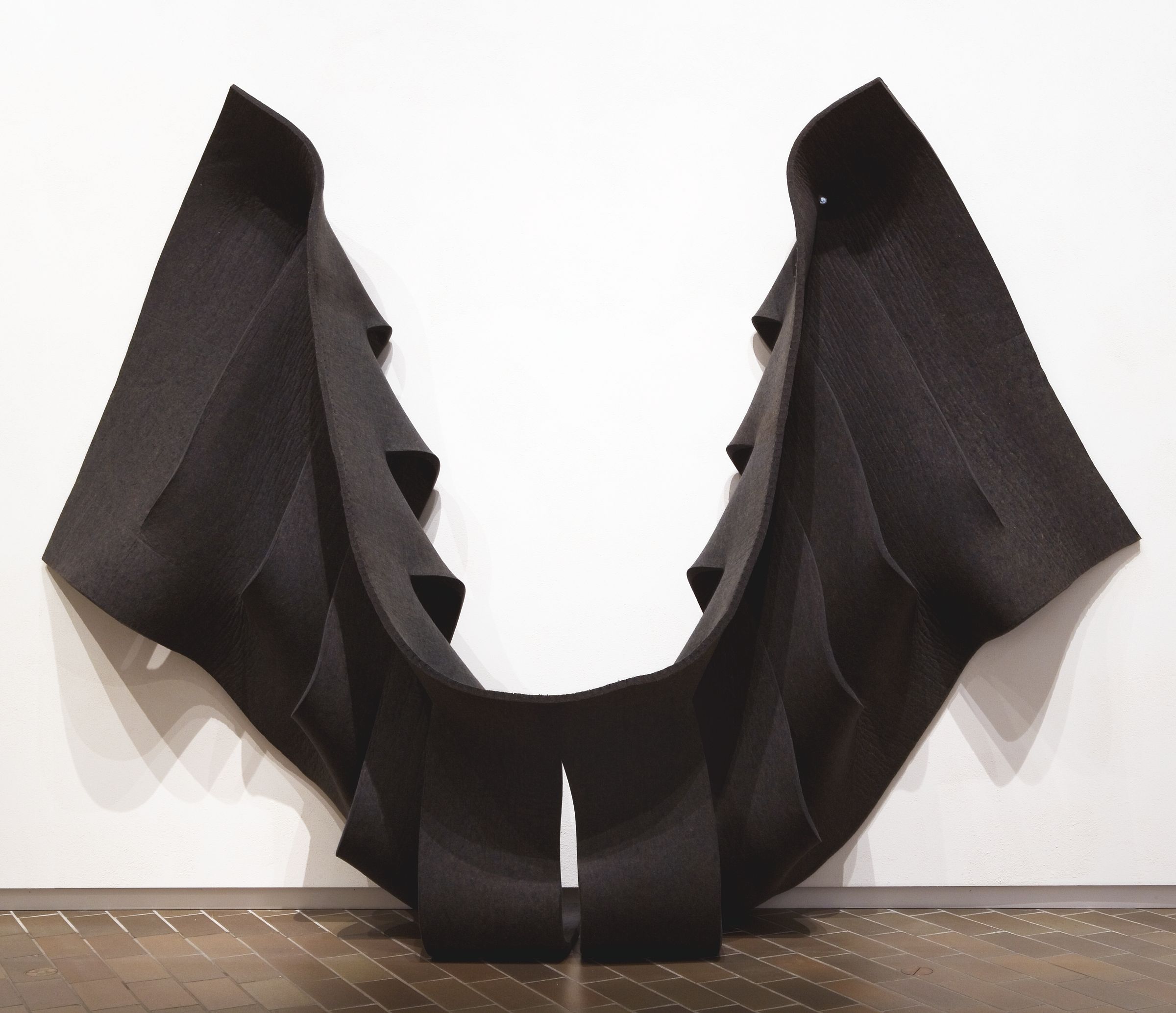
Robert Morris - Conceptual Art


 Robert Morris (1931 - 2018 )was an American sculptor, conceptual artist and writer. He was regarded as having been one of the most prominent theorists of Minimalism along with Donald Judd but he also made important contributions to the development of performance art, land art, the Process Art movement, and installation art. Morris lived and worked in New York. In 2013 as part of the October Files, MIT Press published a volume on Morris, examining his work and influence, edited by Julia Bryan-Wilson
"Robert Morris has comported himself for decades as the least minimal of the original minimalists. While sharing most of the core group’s characteristics — including the complementary artist/writer mode — he has in both word and deed proved more committed than the others to contingency and experimentation. Alternating, often abruptly, between cool objects and evocations of calamity, his artistic outlook remains — as the spot-on title of his collected writings suggests — a Continuous Project Altered Daily. Though no slouch when it comes to minimal severity, his thinking often drifts closer in sensibility to Robert Smithson’s macro riffing than to Donald Judd’s ideological finalities.Minimalist theory made much of the viewer’s movement through space as part of what defined the sculptural. Morris, having come to this notion following a wider path of study than the others — a path that included engineering, art history, philosophy, and dance — found ways to follow intuitive offshoots that generated outward from minimalism’s basic premise. He took labyrinths and passageways, which were favored minimalist tropes, and superseded their phenomenological values with emotionally charged contexts that included prison architecture and Midwestern stockyards. Thus the jarring incongruence — to cite an extreme example — between his ascetic, process-oriented felt hangings of the 1970s and the apocalyptic Firestorm reliefs that soon followed. Keeping to a highly subjective route, he seems able to shuttle convincingly between the austere space of the artistically reductive and the emotionally charged arena of darker human experience, discovering along the way many disturbing links between the two."(hyperallergic.com)


Bernard Aubertin


"Bernard Aubertin was an artist best known for his red monochromatic paintings and association with the ZERO movement. Born in 1934 in Fontenay-aux-Roses, France, he initially studied decorative art until meeting Yves Klein in 1957, who encouraged him toward abstract art. Aubertin’s first monochrome works were created in 1958 and featured canvases covered in materials such as nails, bolts, and screws all painted in red. By 1961, he officially joined the ZERO group, seeking to create a detached, expressionless approach to art making. Later in his career, his practice evolved to incorporate performance, and he became known for setting fire to his own work and exhibiting the remains, as in Livre Brûlé (1974), where the artist set fire to a book and displayed the charred remains of its pages and bindings. In 2009, Aubertin’s work was the subject of an exhibition at the Foundation for Concrete Art in Reutlingen, Germany, the same city where he died on August 31, 2015."(artnet )


Gustav Metzger - Auto-Destructive Art


Gustav Metzger (10 April 1926, Nuremberg – 1 March 2017, London) was an artist and political activist who developed the concept of Auto-Destructive Art and the Art Strike. Together with John Sharkey, he initiated the Destruction in Art Symposium in 1966.
Metzger was recognised for his protests in the political and artistic realms.His experience of twentieth century society's destructive capabilities led Metzger to a concentrated 'formulation of what destruction is and what it might be in relation to art.' He was known as a leading exponent of the Auto-Destructive Art and the Art Strike movements. He was also active in the Committee of 100 - a 'named' memberIn 1959, Metzger published the first auto-destructive manifesto Auto-Destructive Art. This was given as a lecture to the Architectural Association School of Architecture (AA) in 1964, which was taken over by students as an artistic 'Happening'. The Architectural Association published, in 2015, a facsimile edition of Metzger's lecture transcript. In 1962 he participated in the Festival of Misfits organised by members of the Fluxus group, at Gallery One, London.Guitarist Pete Townshend from The Who studied with Metzger, and during the 1960s, Metzger's work was projected on screens at The Who concerts.In 2005, he selected EASTinternational which he proclaimed to be "The art exhibition without the art."Throughout the 60 years that Metzger produced politically engaged works, he incorporated materials ranging from trash to old newspapers, liquid crystals to industrial materials, and even acid."
From 29 September to 8 November 2009, the Serpentine Gallery featured the most extensive exhibition in the UK of his work.[5] Exhibits included the installation Flailing Trees, 15 upturned willow trees embedded in a block of concrete, symbolising a world turned upside down by global warming. He felt that artists are especially threatened, because so many rely on nature as a big inspiration. Metzger stated that "artists have a special part to play in opposing extinction, if only on a theoretical, intellectual basis."Wikipedia


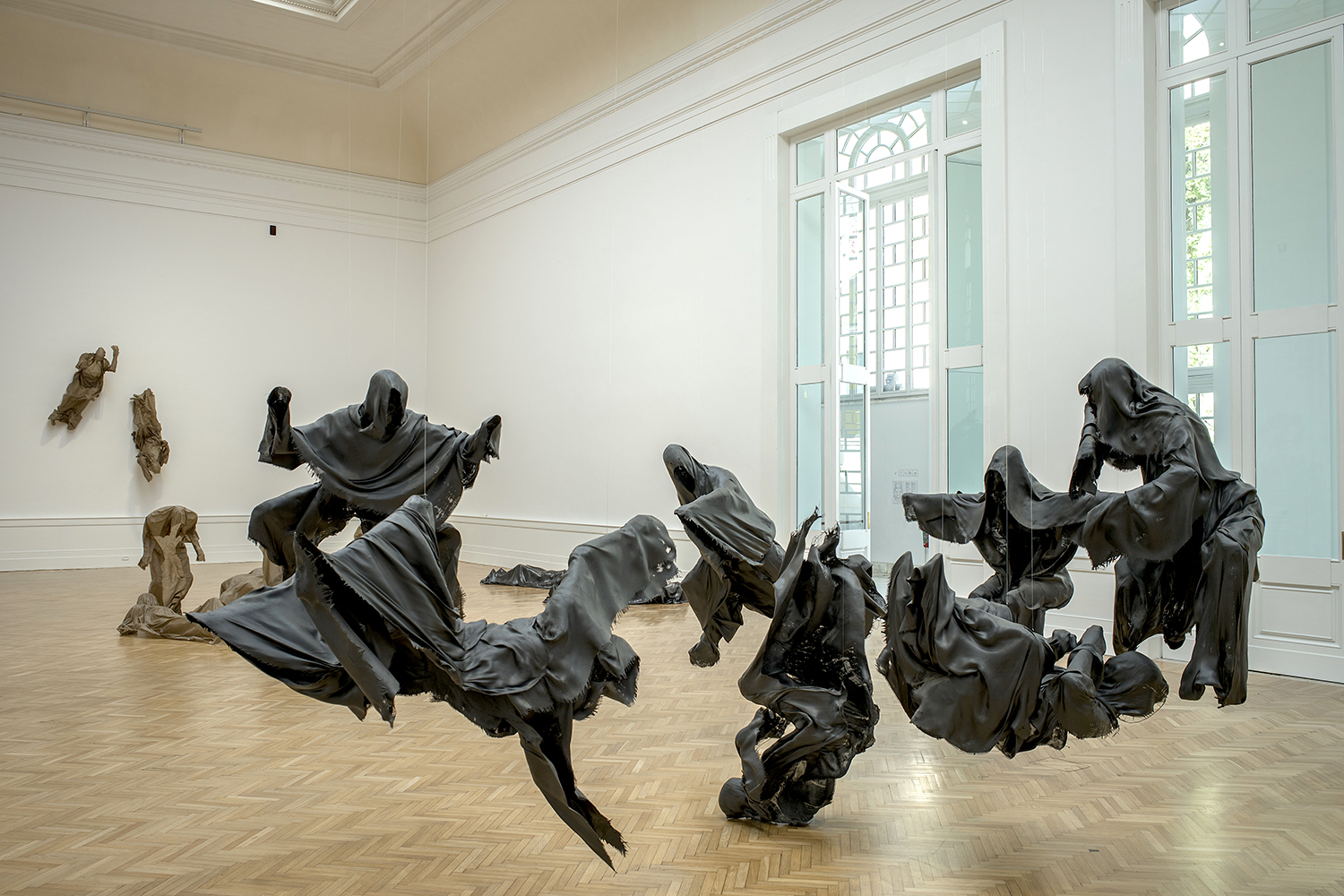
Robert Morris - Spectral Shrouds - Conceptual Art

Robert Morris (1931 - 2018 )was an American sculptor, conceptual artist and writer. He was regarded as having been one of the most prominent theorists of Minimalism along with Donald Judd but he also made important contributions to the development of performance art, land art, the Process Art movement, and installation art. Morris lived and worked in New York. In 2013 as part of the October Files, MIT Press published a volume on Morris, examining his work and influence, edited by Julia Bryan-Wilson
"Robert Morris has comported himself for decades as the least minimal of the original minimalists. While sharing most of the core group’s characteristics — including the complementary artist/writer mode — he has in both word and deed proved more committed than the others to contingency and experimentation. Alternating, often abruptly, between cool objects and evocations of calamity, his artistic outlook remains — as the spot-on title of his collected writings suggests — a Continuous Project Altered Daily. Though no slouch when it comes to minimal severity, his thinking often drifts closer in sensibility to Robert Smithson’s macro riffing than to Donald Judd’s ideological finalities.Minimalist theory made much of the viewer’s movement through space as part of what defined the sculptural. Morris, having come to this notion following a wider path of study than the others — a path that included engineering, art history, philosophy, and dance — found ways to follow intuitive offshoots that generated outward from minimalism’s basic premise. He took labyrinths and passageways, which were favored minimalist tropes, and superseded their phenomenological values with emotionally charged contexts that included prison architecture and Midwestern stockyards. Thus the jarring incongruence — to cite an extreme example — between his ascetic, process-oriented felt hangings of the 1970s and the apocalyptic Firestorm reliefs that soon followed. Keeping to a highly subjective route, he seems able to shuttle convincingly between the austere space of the artistically reductive and the emotionally charged arena of darker human experience, discovering along the way many disturbing links between the two."(hyperallergic.com)