Exposition Art Blog: surrealist artist
Showing posts with label surrealist artist. Show all posts

Joan Miró


 Joan Miró (1893 –1983) was a Spanish painter, sculptor, and ceramicist born in Barcelona. A museum dedicated to his work, the Fundació Joan Miró, was established in his native city of Barcelona in 1975, and another, the Fundació Pilar i Joan Miró, was established in his adoptive city of Palma de Mallorca in 1981.
Earning international acclaim, his work has been interpreted as Surrealism but with a personal style, sometimes also veering into Fauvism and Expressionism. He was notable for his interest in the unconscious or the subconscious mind, reflected in his re-creation of the childlike. His difficult to classify works also had a manifestation of Catalan pride. In numerous interviews dating from the 1930s onwards, Miró expressed contempt for conventional painting methods as a way of supporting bourgeois society, and declared an "assassination of painting" in favour of upsetting the visual elements of established painting.(Wikipedia)
"Via his own Surrealism-inspired exploration, Miró invented a new kind of pictorial space in which carefully rendered objects issuing strictly from the artist's imagination became juxtaposed with basic, recognizable forms. His use of interior emotion to drive abstract expression would become a great influence on the Abstract Expressionists.Even though he pared his forms to abstract schematics or pictorial signs and gestures Miró's art never settled into complete non-objectivity. Rather, he devoted his career to exploring various means by which to dismantle traditional precepts of representation.Miró balanced the kind of spontaneity and automatism encouraged by the Surrealists with meticulous planning and rendering to achieve finished works that, because of their precision, seemed plausibly representational despite their considerable level of abstraction.Miró often worked with a limited palette, yet the colors he used were bold and expressive. His chromatic explorations, which emphasized the potential of fields of unblended color to respond to one another, as well as his flat backgrounds with mild gradations of color, were valuable resources, providing inspiration for Color Field painters such as Helen Frankenthaler.Miró was a modern renegade who refused to limit himself to visual exploration in a single medium. While he explored certain themes such as that of Mother and Child repeatedly throughout his long career, he did so in a variety of media from painting and printmaking to sculpture and ceramics, often achieving surprising and disparate results."(theartstory.org)\

Inspirations


Milena Olesinska - Surreal pastel drawings


My art refers to surrealism, in a broad sense, Broad, because I have excluded typical surrealistic landscape and reached to the simplified image, to the form of the poster. Unraveling leading ideas in my paintings allows me to communicate freely with recipients and to guide them trough symbolic reality of my art.


https://milenaolesinska.blogspot.com/p/blog-page_50.html

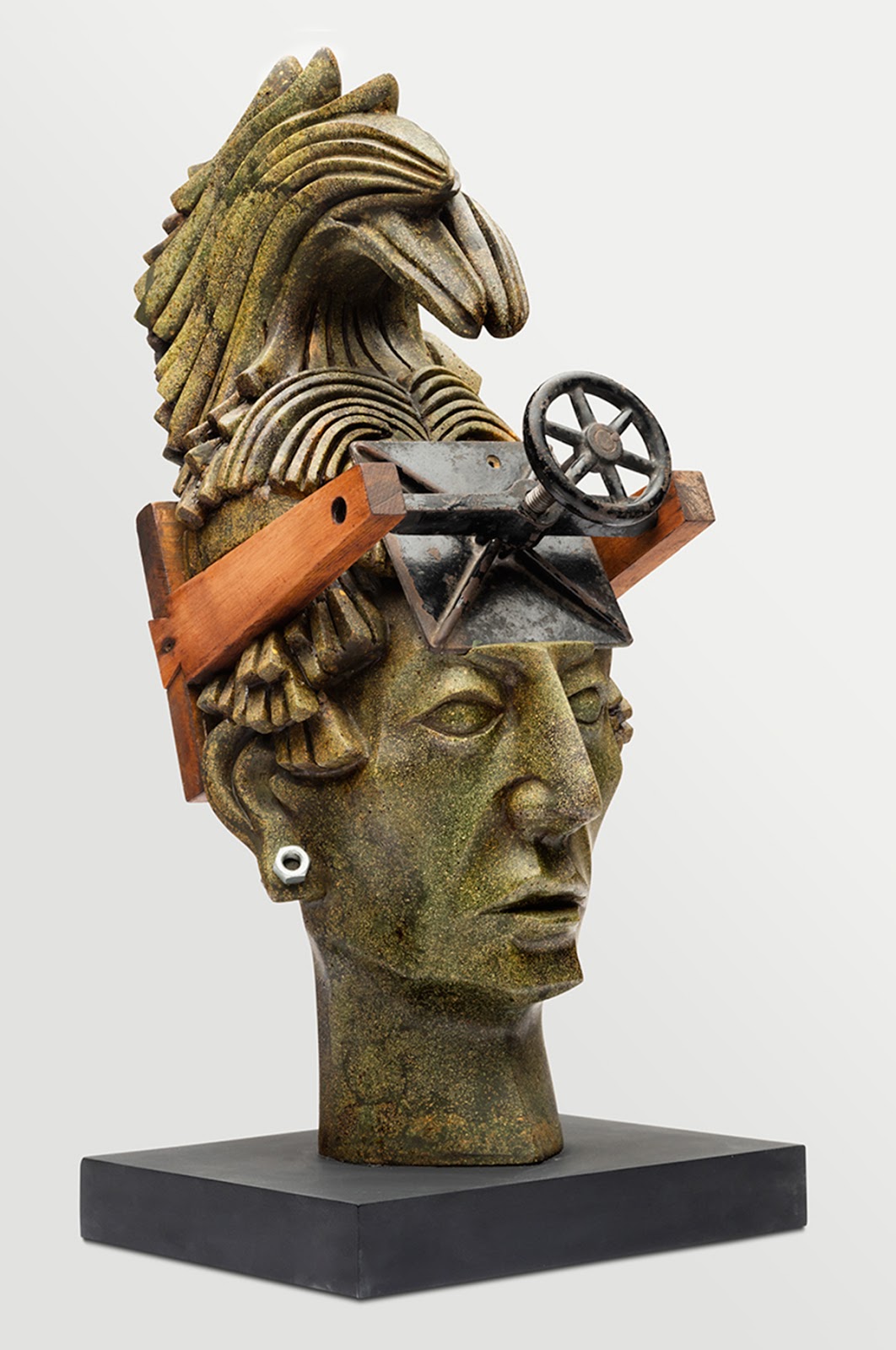
Jose Sacal - Mexican Contemporary Sculpture


Jose Sacal Micha (25 September 1944 – 4 October 2018) was a Mexican sculptor and ceramist born in Cuernavaca, Morelos. His work has been interpreted as Surrealism.As a young man, Sacal studied in the Instituto Regional de Bellas Artes, del Estado de Morelos, Antiguo Molino De Sto. Dominigo, INBA, and with Arthur Khronengold and Enrique Altamirano. In 2008, the Latino Museum of History, Art and Culture in Los Angeles featured an exhibit José Sacal, Contemporary Sculpture from Mexico. His art was about the culture of Mexico, immigrant's life, and critical of the Mexican political environment. He was critical of President Enrique Peña Nieto.
Sacal died of leukemia in Mexico City on 4 October 2018 at the age of 74.


Gray Foy - Surrealism


"Gray Foy (1922–2012) was a mid twentieth-century American artist who created a visionary body of drawings from 1941 to 1975. His drawings are generally divided into two phases. First, from 1941–48, the artist drew figurative Surrealist landscapes and interiors. Then beginning in the late 1940s, he concentrated on botanical subject matter, both naturalistic and imagined
At his second one-person exhibition at Durlacher's in 1957, his observations of nature had matured, as evidenced by the intricate biological invention in such works as Uprooted Plants (1955, Whitney Museum of American Art). As his work evolved through the 1950s, the artist developed an understanding of constant change in nature and honed his ability to depict such metamorphosis.In the three decades Foy was active, he found a way to convey his fertile awareness of nature's disorder as well as its order by refining his technical prowess. Achieved by a delicate feathering technique, the edges of the depicted organic matter gradually disappear as lighter and lighter pencil pressure traverses the sheet.About 1957 Foy began a series of related still lifes that involve leaves or branches wrapped by human hands into clusters or sheaves, or assembled by birds into nests. With its inner pinkish radiance and veined leaf surfaces, Cluster of Leaves (ca. 1957), for example, quivers with the power of an incubating egg. These drawings are metaphors for efforts to control the untamed sprawl of natural vegetation.In one group of works, Foy developed an additional illustrative mechanism, preparing the drawing paper with a teeming texture, introducing earthy tones and chlorophyll-like colorations. The activated surfaces simulate organic matter such as soil incrustation, moldy walls, lichen-covered rocks, or pond scum. In his book The Language of Ornament, art historian James Trilling described the effect: "Gray Foy’s drawing evokes the richness of a living coral reef, or the cheerfully haunted rocks that provide a background to some of the finest Persian miniatures."Wikipedia