Exposition Art Blog: Contemporary Visual Artist
Showing posts with label Contemporary Visual Artist. Show all posts

Robert Morris - Conceptual Art


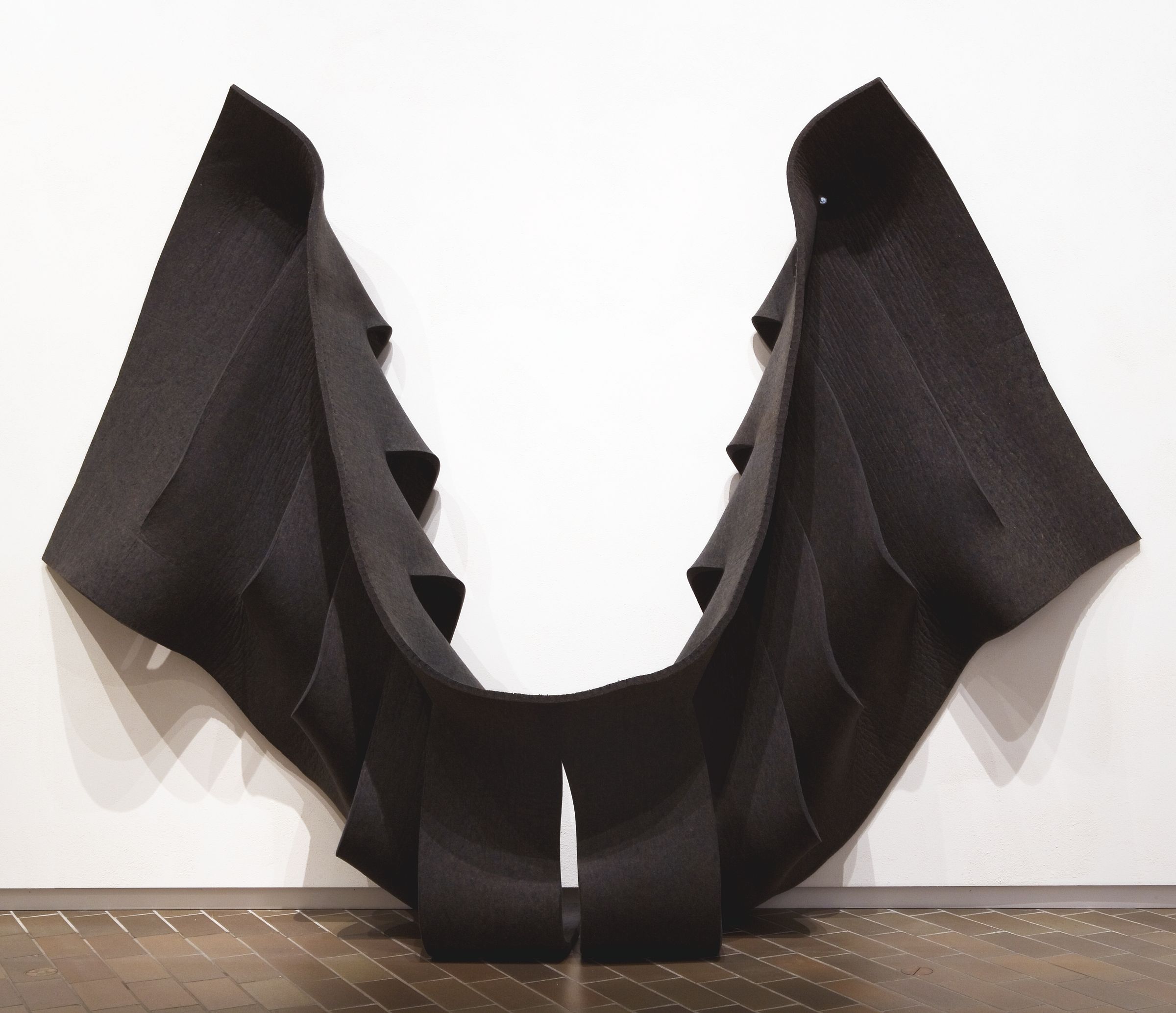
 Robert Morris (1931 - 2018 )was an American sculptor, conceptual artist and writer. He was regarded as having been one of the most prominent theorists of Minimalism along with Donald Judd but he also made important contributions to the development of performance art, land art, the Process Art movement, and installation art. Morris lived and worked in New York. In 2013 as part of the October Files, MIT Press published a volume on Morris, examining his work and influence, edited by Julia Bryan-Wilson
"Robert Morris has comported himself for decades as the least minimal of the original minimalists. While sharing most of the core group’s characteristics — including the complementary artist/writer mode — he has in both word and deed proved more committed than the others to contingency and experimentation. Alternating, often abruptly, between cool objects and evocations of calamity, his artistic outlook remains — as the spot-on title of his collected writings suggests — a Continuous Project Altered Daily. Though no slouch when it comes to minimal severity, his thinking often drifts closer in sensibility to Robert Smithson’s macro riffing than to Donald Judd’s ideological finalities.Minimalist theory made much of the viewer’s movement through space as part of what defined the sculptural. Morris, having come to this notion following a wider path of study than the others — a path that included engineering, art history, philosophy, and dance — found ways to follow intuitive offshoots that generated outward from minimalism’s basic premise. He took labyrinths and passageways, which were favored minimalist tropes, and superseded their phenomenological values with emotionally charged contexts that included prison architecture and Midwestern stockyards. Thus the jarring incongruence — to cite an extreme example — between his ascetic, process-oriented felt hangings of the 1970s and the apocalyptic Firestorm reliefs that soon followed. Keeping to a highly subjective route, he seems able to shuttle convincingly between the austere space of the artistically reductive and the emotionally charged arena of darker human experience, discovering along the way many disturbing links between the two."(hyperallergic.com)


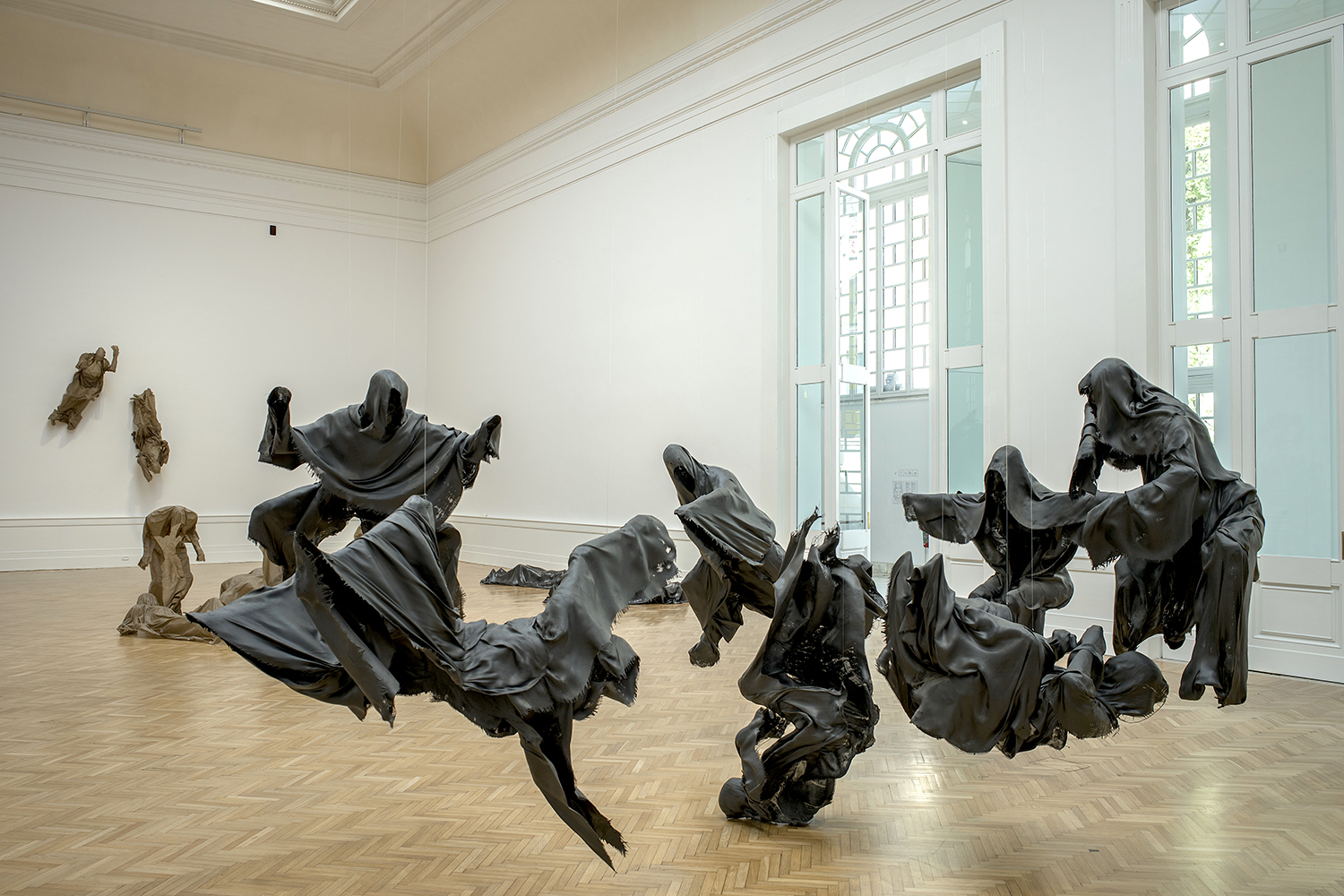
Robert Morris - Spectral Shrouds - Conceptual Art

Robert Morris (1931 - 2018 )was an American sculptor, conceptual artist and writer. He was regarded as having been one of the most prominent theorists of Minimalism along with Donald Judd but he also made important contributions to the development of performance art, land art, the Process Art movement, and installation art. Morris lived and worked in New York. In 2013 as part of the October Files, MIT Press published a volume on Morris, examining his work and influence, edited by Julia Bryan-Wilson
"Robert Morris has comported himself for decades as the least minimal of the original minimalists. While sharing most of the core group’s characteristics — including the complementary artist/writer mode — he has in both word and deed proved more committed than the others to contingency and experimentation. Alternating, often abruptly, between cool objects and evocations of calamity, his artistic outlook remains — as the spot-on title of his collected writings suggests — a Continuous Project Altered Daily. Though no slouch when it comes to minimal severity, his thinking often drifts closer in sensibility to Robert Smithson’s macro riffing than to Donald Judd’s ideological finalities.Minimalist theory made much of the viewer’s movement through space as part of what defined the sculptural. Morris, having come to this notion following a wider path of study than the others — a path that included engineering, art history, philosophy, and dance — found ways to follow intuitive offshoots that generated outward from minimalism’s basic premise. He took labyrinths and passageways, which were favored minimalist tropes, and superseded their phenomenological values with emotionally charged contexts that included prison architecture and Midwestern stockyards. Thus the jarring incongruence — to cite an extreme example — between his ascetic, process-oriented felt hangings of the 1970s and the apocalyptic Firestorm reliefs that soon followed. Keeping to a highly subjective route, he seems able to shuttle convincingly between the austere space of the artistically reductive and the emotionally charged arena of darker human experience, discovering along the way many disturbing links between the two."(hyperallergic.com)






Burhan Dogancay - Painting and collage

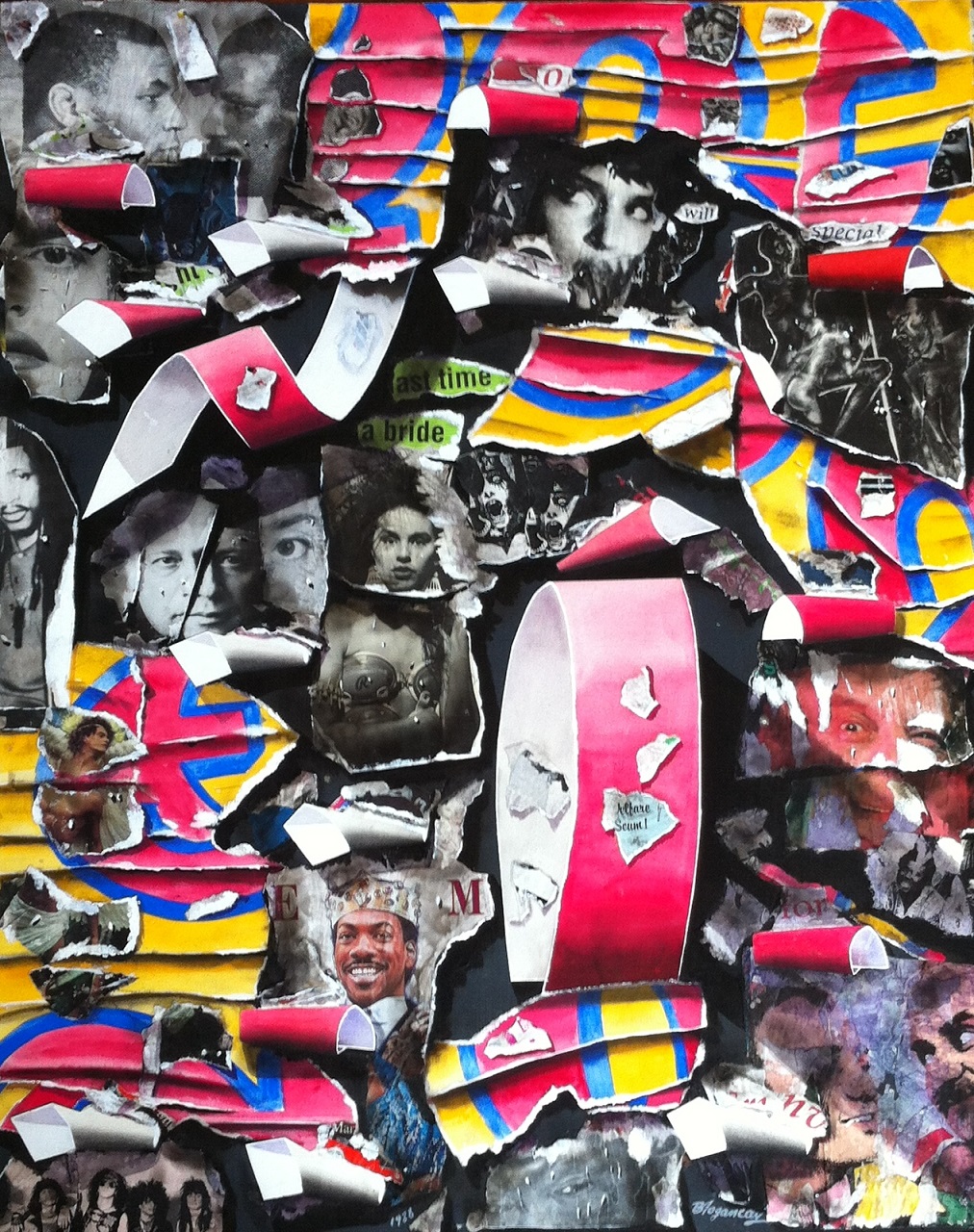
Burhan Dogancay (11 September 1929 – 16 January 2013) was a Turkish-American artist. Dogancay is best known for tracking walls in various cities across the world for half a century, integrating them in his artistic work.
With posters and objects gathered from walls forming the main ingredient for his work, it is only logical that Dogancay's preferred medium has been predominantly 'collage' and to some extent 'fumage'. Dogancay re-creates the look of urban billboards, graffiti-covered wall surfaces, as well as broken or neglected entrances such as windows and doors in different series. The only masters with whom he compares himself are those from the last heroic period of art that he experienced and in which he was an active participant, notably Robert Rauschenberg and Jasper Johns. Dogancay, however, has always preferred to reproduce fragments of wall surface in their mutual relations just as he found them, and with minimal adjustment of color or position, rather than up-end them or combine them casually in the Rauschenberg manner.In large measure his practice has been one of simulation in the spirit of record-keeping, carried out with the collector's rather than the scavenger's eye. In many cases, his paintings evoke the decay and destruction of the city, the alienated feeling that urban life is in ruins and out of control, and that we cannot put the pieces together again. Pictorial fragments are often detached from their original context and rearranged in new, sometimes inscrutable combinations. So the diversifications of his complex and uniformly experimental painterly oeuvre will always range from photographic realism to abstraction, from pop art to material image/montage/collage. In the 1970s and 1980s he gained fame with his interpretation of urban walls in his signature ribbons series, which in contrast to his collaged billboard works such as the Cones Series, Doors Series or Alexander's Walls consist of clean paper strips and their calligraphically-shaped shadows. These brightly intense curvilinear forms seem to burst forth from flat, solid-colored backgrounds. The graceful ribbonlike shapes take on a three-dimensional quality, especially as suggested by the implied shadows.  This series later gave rise to alucobond–aluminum composite shadow sculptures and Aubusson Tapestries.Wikipedia


Rana Salama - Contemporary Visual Artist

Alexandria, Egypt.

 After 5 years of schooling in the art of interior design, Rana discovered a new outlet to express her emotions. Abstract art became a life changing endeavor. Each piece became intertwined with a story and she began to live each new creation, referring to them as her babies. Rana loves the freedom and creativity that she finds in abstract, inspired by unlimited creativity and the openness to be unique. Incorporating several techniques and tools to her style, this pursuant artist has been featured in art exhibitions throughout Egypt, featuring artists from countries such as Jordan, Syria, Iraq, Canada and more. She has also been successful in sales to countries including USA , Egypt, Kuwait,Lebanon, Australia and the Philippines. Rana's (one of a kind) creations are a must own for any collector. Be sure to keep your eyes open, because this artist has drive and potential to thrive in a global market.
"Happiness, positivity and pride are my pillars for success. The key to producing a piece of valuable Art that goes beyond your living room wall is to tell a sentimental story that really captures and challenges your thoughts. This is what really differentiates one artist from another."