Exposition Art Blog

Kuno Gonschior

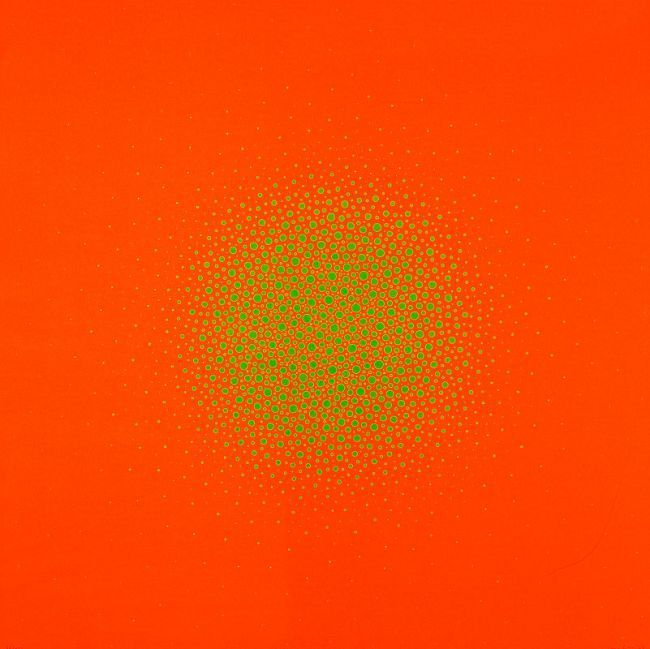
Kuno Gonschior (10 September 1933 in Wanne-Eickel – 16 March 2010 in Bochum) was a German painter.From 1957 to 1961, Gonschior studied painting at the Kunstakademie Düsseldorf. In 1959, he was one of the first students of Karl Otto Götz, his classmates being Gotthard Graubner and HA Schult.From 1961 to 1963 he studied at the University of Cologne. In 1972, he became lecturer at the Pädagogische Hochschule Münster. From 1982 to 2000, he was a professor of painting at the Hochschule für Bildende Künste Berlin.Gonschior's early work with its intuitive, almost monochrome strokes of the brush was influenced by Götz's abstract style. Later, during the 1960s, he created paintings out of characteristic dots placed next to each other, combining fluorescent, complementary colors such as red and green. As a result, extreme vibrations are triggered in the human eye. He also painted large, abstract landscapes merging and melting thick paint in rich colors. Furthermore, he was inspired by the color theories of Josef Albers. From 1968, he created colored multi-room installations.In 1977, the artist participated in the documenta 6 in Kassel. After that date, he primarily exhibited in the USA and in Japan. In 1999, he received the Deutscher Kritikerpreis.Wikipedia


Ruth Eckstein

Ruth Eckstein was born in Nuremberg, Germany on May 11, 1916. As a teenager she worked in her father’s fabric store and then took an early interest in art. She met George (Gunther) Eckstein, a friend of her brother Gus. George worked in a family toy business and was active in left-leaning political activities. In 1933, the Nazis arrested him and he spent several months in jail. After his release, he fled to Switzerland and then to Paris, where Ruth joined him.Ruth and George lived in Paris for five years and were active members of the German refugee community. They married and continued their business of making and selling stuffed toys. It was in Paris that their first daughter, Margaret, was born. In 1939, fearing a Nazi invasion, George and Ruth left Paris for New York City.
Eckstein continued her painting studies in New York, taking classes at the Museum of Modern Art, and with Stuart Davis at The New School for Social Research. With the encouragement of Harry Sternberg, her teacher at the Long Island North Shore Community Art Center, Ms. Eckstein enrolled at the Art Students League in New York, where she immersed herself in printmaking techniques as well as painting and drawing. She studied with Sternberg, Julian Levi and V. Vytlacil. Later, intrigued by the woodcut technique of printmaker Seong Moy, Eckstein studied with him at the Pratt Graphic Art Center, also studying etching techniques with Roberto DeLamonica.
Eckstein's work evolved through her printmaking and related painting and collage, to achieve a majestic tranquility, through pared down compositions and subtle modulations of color and shape.George and Ruth subsequently left the city for Manhasset, New York and then Great Neck, NY.George died in 1995 and in 2003, Ruth moved to Newton, Massachusetts, to be close to her daughter and her family. She lived in Lasell Village, where she took courses, and continued with her art. No longer with room for her own studio, she took up a new medium that required less space: ceramics.Ruth Eckstein died in Newton, Massachusetts on November 23, 2011.(annexgalleries.com)


Installation art and assemblage sculptore Edward Kienholz

Edward Kienholz (October 23, 1927 – June 10, 1994) was an American installation artist and assemblage sculptor whose work was highly critical of aspects of modern life. From 1972 onwards, he assembled much of his artwork in close collaboration with his artistic partner and fifth wife, Nancy Reddin Kienholz.
Despite his lack of formal artistic training, Kienholz began to employ his mechanical and carpentry skills in making collage paintings and reliefs assembled from materials salvaged from the alleys and sidewalks of the city.In 1958 he sold his share of the Ferus Gallery to buy a Los Angeles house and studio and to concentrate on his art, creating free-standing, large-scale environmental tableaux. He continued to participate in activities at the Ferus Gallery, mounting a show of his first assemblage works in 1959.
In 1961, Kienholz completed his first large-scale installation, Roxy's, a room-sized environment which he showed at the Ferus Gallery in 1962. Set in the year 1943, Roxy's depicts Kienholz’s memories of his youthful encounters in a Nevada brothel complete with antique furniture, a 30’s era jukebox, vintage sundries, and satirical characters assembled from castoff pieces of junk. This artwork later caused a stir at the documenta 4 exhibition in 1968.A 1966 show at the Los Angeles County Museum of Art (LACMA) drew considerable controversy over his assemblage, Back Seat Dodge ‘38 (1964). The Los Angeles County Board of Supervisors called it "revolting, pornographic and blasphemous" and threatened to withhold financing for the museum unless the tableau was removed from view. A compromise was reached under which the sculpture's car door would remain closed and guarded, to be opened only on the request of a museum patron who was over 18, and only if no children were present in the gallery. The uproar led to more than 200 people lining up to see the work the day the show opened. Ever since, Back Seat Dodge ’38 has drawn crowds. LACMA did not formally acquire the work until 1986.


 In 1966, Kienholz began to spend summers in Hope, Idaho, while still maintaining studio space in Los Angeles. Also around that time, he produced a series of Concept Tableaux, which consisted of framed text descriptions of artwork that did not yet exist. He would sell these works of early Conceptual Art (though the term was not in widespread use at the time) for a modest sum, giving the buyer the right (upon payment of a larger fee) to have Kienholz actually construct the artwork. He sold a number of Concept Tableaux, but only The State Hospital progressed to a completed artwork.
Kienholz's assemblages of found objects—the detritus of modern existence, often including figures cast from life—are at times vulgar, brutal, and gruesome, confronting the viewer with questions about human existence and the inhumanity of twentieth-century society. Regarding found materials he said, in 1977, "I really begin to understand any society by going through its junk stores and flea markets. It is a form of education and historical orientation for me. I can see the results of ideas in what is thrown away by a culture."


 Kienholz occasionally incorporated defunct or operating radios or televisions into their works, sometimes adding sound and moving images to the overall effect. Live animals were selectively included as crucial elements in some installations, providing motion and sound that contrasted starkly with frozen tableaus of decay and degradation. For example, The Wait, a dismal scene of a lonely skeletal woman surrounded by memories and waiting for death, incorporates a cage with a live parakeet cheerfully chirping and hopping about. The bird is considered an integral part of the installation, but requires special attention to insure that it remains healthy and active, as described in the Whitney Museum's online catalog and video.Another well-known work, The State Hospital, incorporates a pair of black goldfish swimming in each of two glass goldfish bowls representing the head of an inmate suffering with mental illness.Kienholz's work commented savagely on racism, aging, mental illness, sexual stereotypes, poverty, greed, corruption, imperialism, patriotism, religion, alienation, and most of all, moral hypocrisy. Because of their satirical and antiestablishment tones, their works have often been linked to the funk art movement based in San Francisco in the 1960s.Although he was an atheist and despised feigned religiosity, Keinholz carefully preserved an anonymous store window shrine discovered in Spokane, Washington. Calling this found outsider artwork The Jesus Corner, Keinholz exhibited it in a Spokane museum in 1984, and then showed it at the San Francisco Museum of Modern Art. Ten years later, Keinholz insisted on selling it at a reduced price to the Missoula Art Museum in Missoula, Montana, to insure that it would be on view in an environment he felt comfortable with.Wikipedia


Robert Sterling Neuman

Robert Sterling Neuman (9 September, 1926 – 20 June 2015) was an American abstract painter and print maker and an art teacher.Neuman's career as an artist spanned over sixty years, with a resulting body of work that "defies traditional expectations of what an artist's canon should look like". As an artist, he took "a staunchly individualistic approach to his work by never giving in to fads, the demands of the commercial sector or bowing before the critics".Instead, his body of work is characterized by extended series of paintings that explore a particular motif or symbol and are heavily influenced by events in the artist’s own life, in addition to global culture and history.At the beginning of his artistic career, Neuman's work followed in the vein of traditional Abstract Expressionism. Later on, although Neuman continued to use abstract forms in his work and to define himself as an Expressionist, he focused more on the use of symbols in his work. His unique approach to abstract painting prompted former Boston Globe art critic Robert Taylor, to refer to Neuman's works as "emblematic abstraction”Neuman's style is additionally distinguished by his uncompromisingly bold color palette that is reminiscent of Klee, Miró, Seurat, Kandinsky and early 20th century German Expressionists. These bold washes of color are often juxtaposed with graphical, geometric forms influenced by his love of drawing. Neuman frequently incorporates pencil into his works "to define the edges of otherwise illimitable suffusions of color.nother important technique that Neuman incorporates is the inclusion of stamping and taping off areas to define planes of space. As his career progressed, such use of mixed media techniques and collage became more common.


 Neuman has worked on 16 series of paintings, including his earliest and most recent works, each representing a response to a different symbol, place or idea in a distinct visual language. His earliest works reflect post-war America and are filled with ominous and dark titles and color palettes. Neuman explored this theme by experimenting with different medium, such as duco paint and sand on masonite and a new, abstracted subject matter. Neuman's first major series was The Black Paintings. This series was catalyzed by his experience studying in a still war- ravaged Germany as a Fulbright Fellow in 1953 under the tutelage of German Expressionist, Willi Baumeister. The Black Paintings’ uncharacteristically dark color palette was influenced by "the reactionary impulses to World War II that had rippled through the art world".Today, The Black Paintings serve as a glimpse into the lingering desolation of Germany in the 1950s by one of the few American artists to witness it first-hand.
After The Black Paintings, Neuman began exploring the expressive nature of color. This dramatic shift was influenced by his time studying in Barcelona as a Guggenheim Fellow. His Barcelona Series, begun in 1956, is defined by his attempts to create a universally relevant style of art, which, in this case, captured his impressions of the motion and light of the narrow streets of Old Barcelona. With the advent of the 1960s, Neuman explored the potential of abstraction more fervently than ever. During this decade, he created his Abstract Landscape, Abstract Figures and his Diamond Canvas Series before experimenting further with the use of symbols.


 His next series, Pedazos Del Mundo, begun in 1961, is the first of Neuman's series to prominently utilize symbolism as a means of expression and has become his most celebrated body of work. When speaking of the series, Neuman has remarked, "The world is in pieces culturally: liquids, solids, gases, languages, every way you can think about it... so I painted a circle and I made it in pieces”. Pedazos exhibits "the full bloom of the graphical flair and unfailing liveliness that distinguishes Neuman’s style for the next half century". Neuman continued to use the symbol of the circle in Space Signs, begun in 1966, by using tin cans, beer bottles, lamp shades and other round objects "to stamp out resplendent orbs of color over pulsating geometric landscapes". Stacks and Piles, begun in 1975, saw Neuman's return to earth. When creating this series he was influenced by cairns, a man-made pile of stones traditionally found on hiking trails. Neuman translated the cairns into heaps of shapes, piled skyward on canvases that reached upwards of eight feet high.
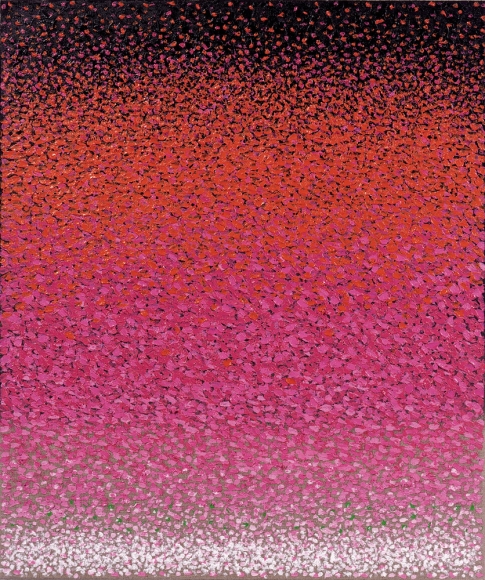
In 1980, Neuman began the Lame Deer Series. Lame Deer was inspired by a visit to a Native American reservation close to the Battle of Little Big Horn in Lame Deer, Montana. Visiting the historic site spurred Neuman to visually relate the Western American landscape in a way he felt had not been done before. History is hidden in each vividly chromatic landscape where the most prominent symbol is the teepee— each has the skin stripped away, and resembles "…drawings on a cave wall, remnants of a people continually in flight.” Ultimately, the Lame Deer series was meant to bring attention to the plight of the Native Americans. As the 1980s progressed, Neuman explored new avenues of visual expression. His Rose Paintings, begun in 1982, are monochromatic, sumptuous and textural landscapes, using the applied technique of tachisme. Meanwhile, the Voyage Series, begun in 1986, saw Neuman exploring the symbolism of knots, often seen in Celtic, Viking and Moorish art, as a metaphor for travelling through life. Neuman's new works, created during the 1990s to present day, are a visual melting pot of many of his earlier series including Alhambra, Barcelona and Rose Paintings. The gestural compositions and broad flat panes of color look back to his earliest days as an Abstract Expressionist. Each work is still distinct from what has come before and begins to define what will come next.Wikipedia


John Gerald Zimmerman

John Gerald Zimmerman (30 October 1927 in Pacoima, California – 3 August 2002 in Monterey, California) was an American magazine photographer.He was among the first sports photographers to use remote controlled cameras for unique camera placements, and was "a pioneer in the use of motor-driven camera sequences, slit cameras and double-shutter designs to show athletes in motion.Zimmerman was interested in photography from an early age. His father, John L. Zimmerman, a gaffer at Metro-Goldwyn-Mayer Studios, taught him the basics and bought him a 4×5 view camera. He joined a photographic hobby club in junior high school and spent afternoons developing film with friends in their mothers’ kitchens.Zimmerman took a three-year photography course at John C. Fremont High School in Los Angeles, where he was taught by Hollywood cinematographer Clarence Bach.After graduating high school, Zimmerman was a Navy photographer. In 1950, he landed a job as a staff photographer at the Time bureau in Washington D.C. On his first assignment on November 1, 1950, Zimmerman was driving away from the White House with a group of photographers when two Puerto Rican nationalists stormed nearby Blair House, attempting to assassinate President Truman. Hearing gunshots, the photographers rushed out of the car. Zimmerman had a camera around his neck where as the others had locked theirs in the trunk. Zimmerman got the first photos of the attack, which were published in both Time and Life.
In 1952, Zimmerman moved to Atlanta. During his time there he shot a series of noteworthy assignments for Ebony depicting the experiences of African Americans in the Jim Crow South and the Midwest.


From 1964 until his retirement in 1991, Zimmerman worked for all the major magazines, covering notable subjects from every aspect of American popular culture.Four of his Time covers are in the Smithsonian’s National Portrait Gallery: politician Jerry Brown,baseball player Rod Carew,actress Diane Lane[13] and Olympic figure skater Dorothy Hamill.
Photographing the Olympic Games was a constant throughout his career. He covered six Summer Olympic Games, starting with Melbourne in 1956  and ending in 1984, with four Winter Olympic Games in between. One of Zimmerman’s favorite Olympic assignments was taking the "Big Picture" for the LA Olympics in 1984. The "Big Picture" was a group portrait of 18,000 people, ranging from Mayor Tom Bradley, local community leaders, celebrities, the City Ballet and L.A. Dodgers to the UCLA Football team. It was displayed as a 30 × 80 ft. billboard at various places around the city, to welcome visitors and athletes to the Games.
On meeting Zimmerman in 1972 sports photographer Rich Clarkson said:
 had known and admired him for years, watching how he did things technically that no one had ever tried before - such as modifying a Hulcher to produce beautiful pictures of runners with colors streaking from behind them as they ran. John did this at the Olympic trials in Eugene, Or. and believe it or not, he put up a black background and lights on a curve and did this very stylized illustration during an actual competition. The pictures were beautiful.Beginning in the 1970s, Zimmerman worked in the more lucrative arena of print advertising and photographed advertising campaigns for Marlboro, Ford, Chrysler, AT&T, Exxon, G.E., Pepsi and Coca-Cola, among others.Wikipedia